
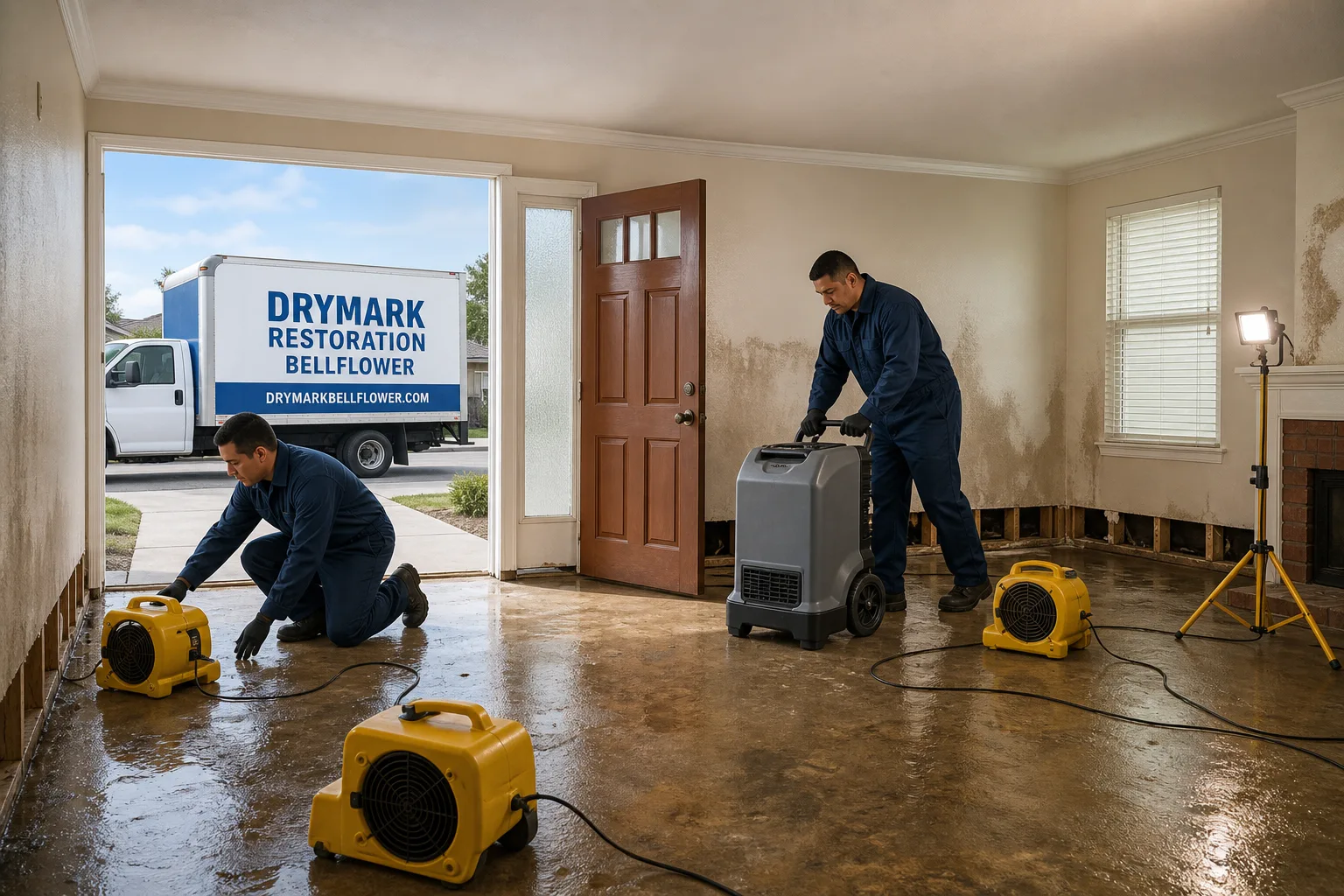
Free visual inspection and a written scope of work before any mitigation begins - photos, moisture readings, and drying logs go in your claim file
The scope we write is the scope we bill. Anything new gets shown to you, in writing, before we touch it.
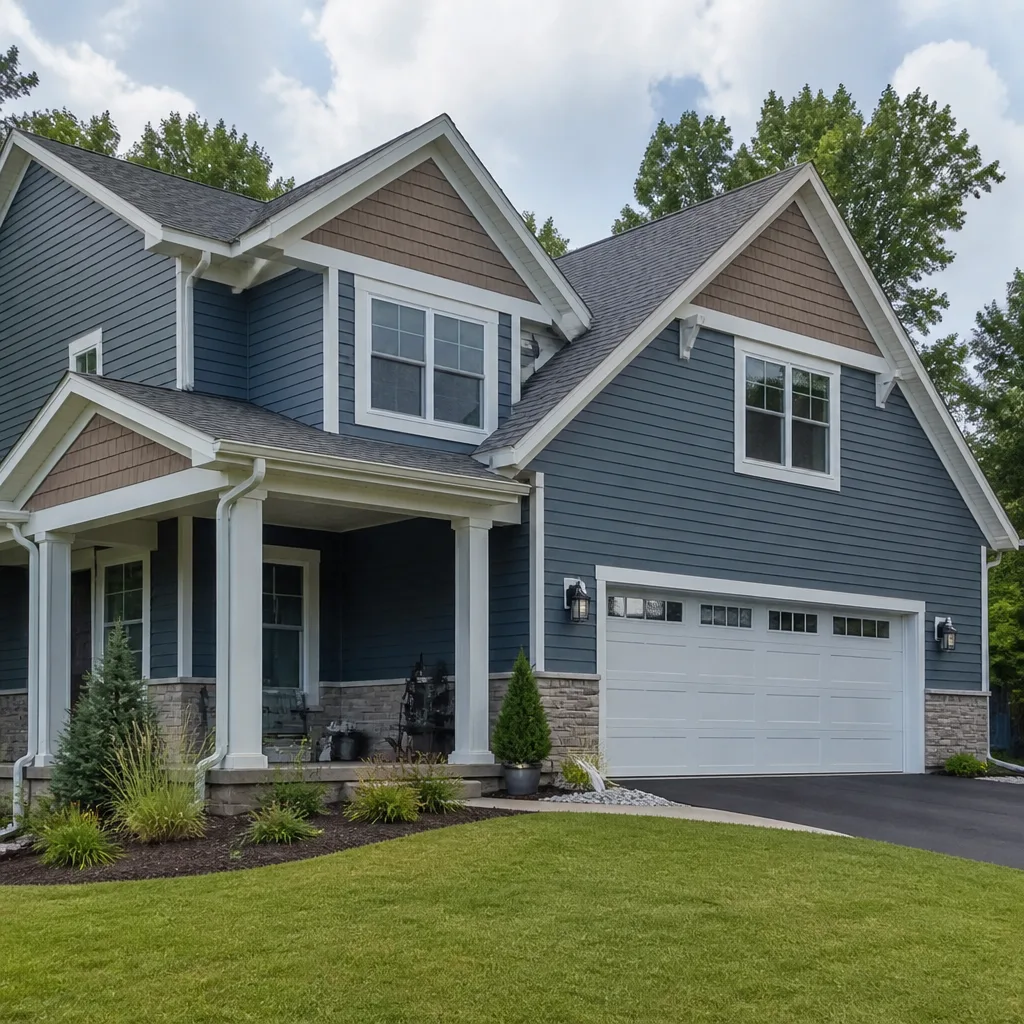
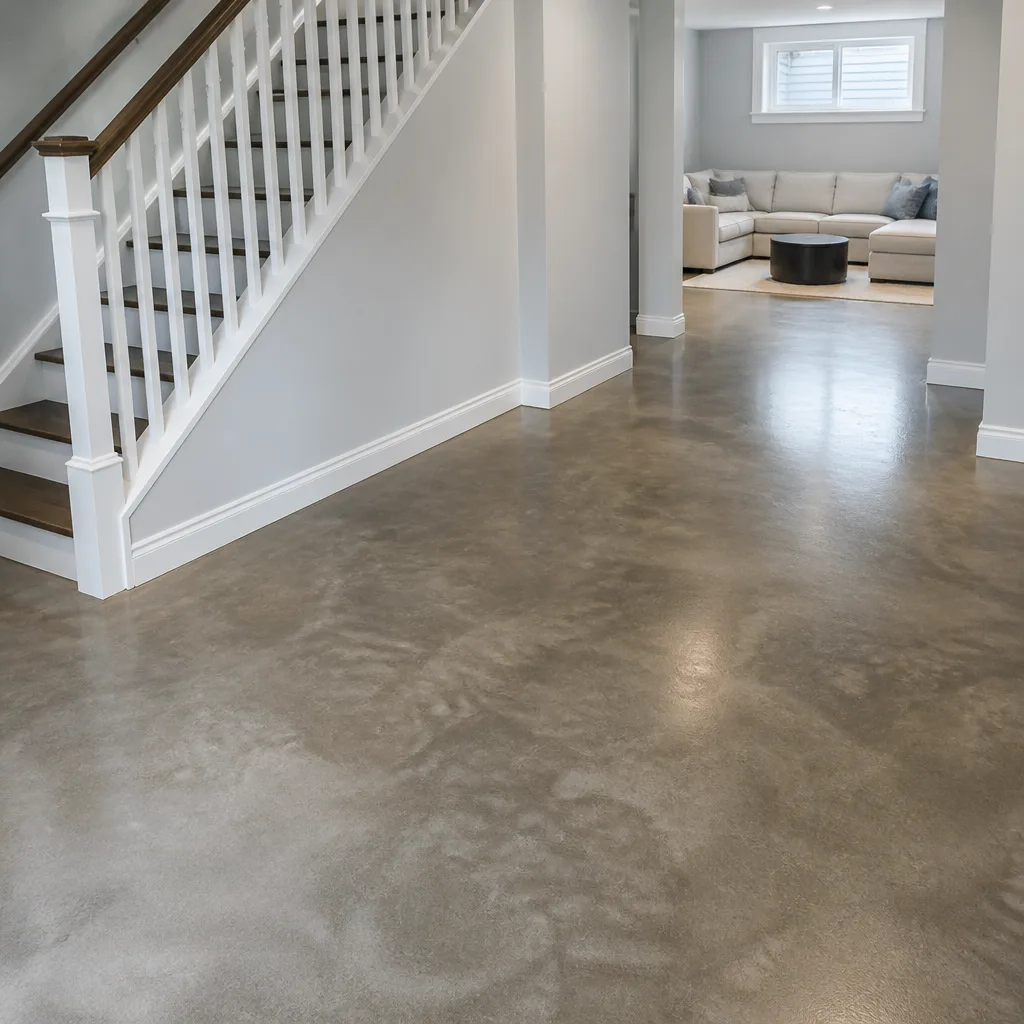
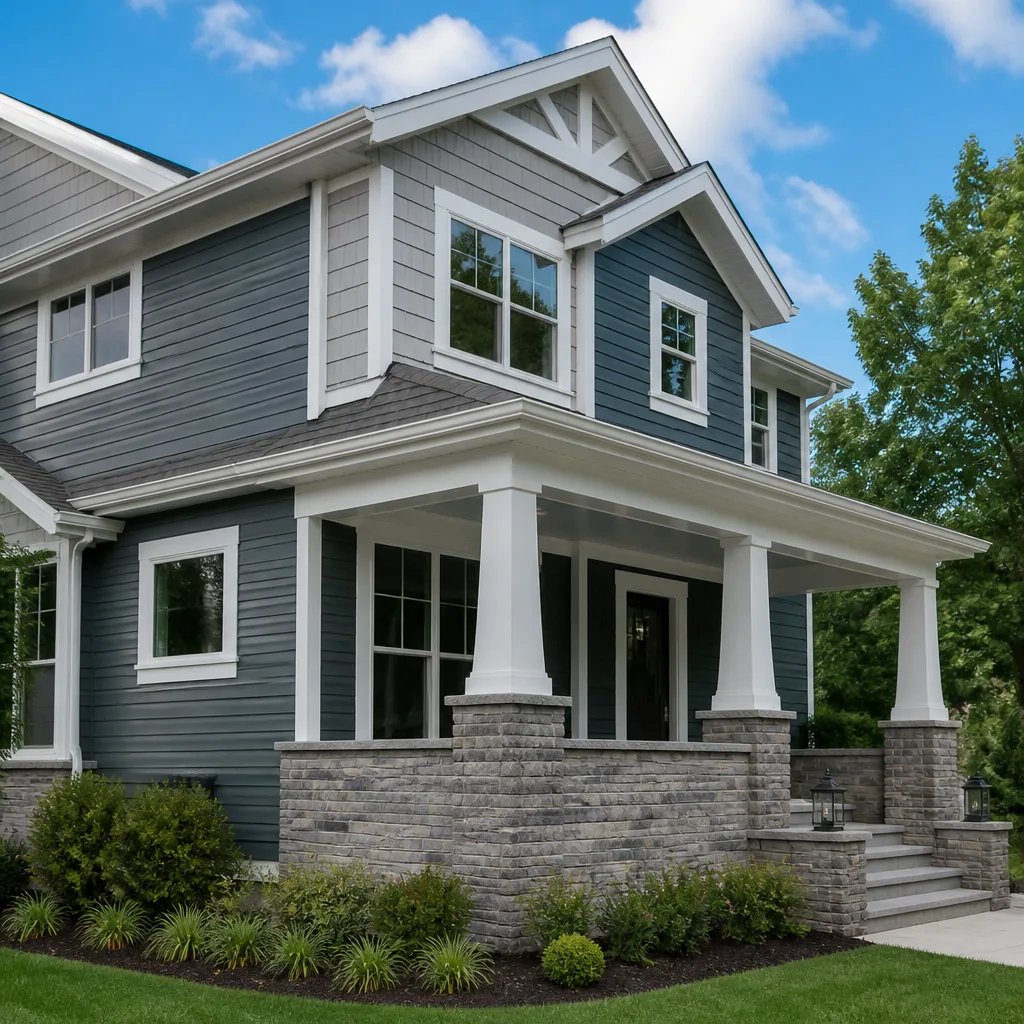
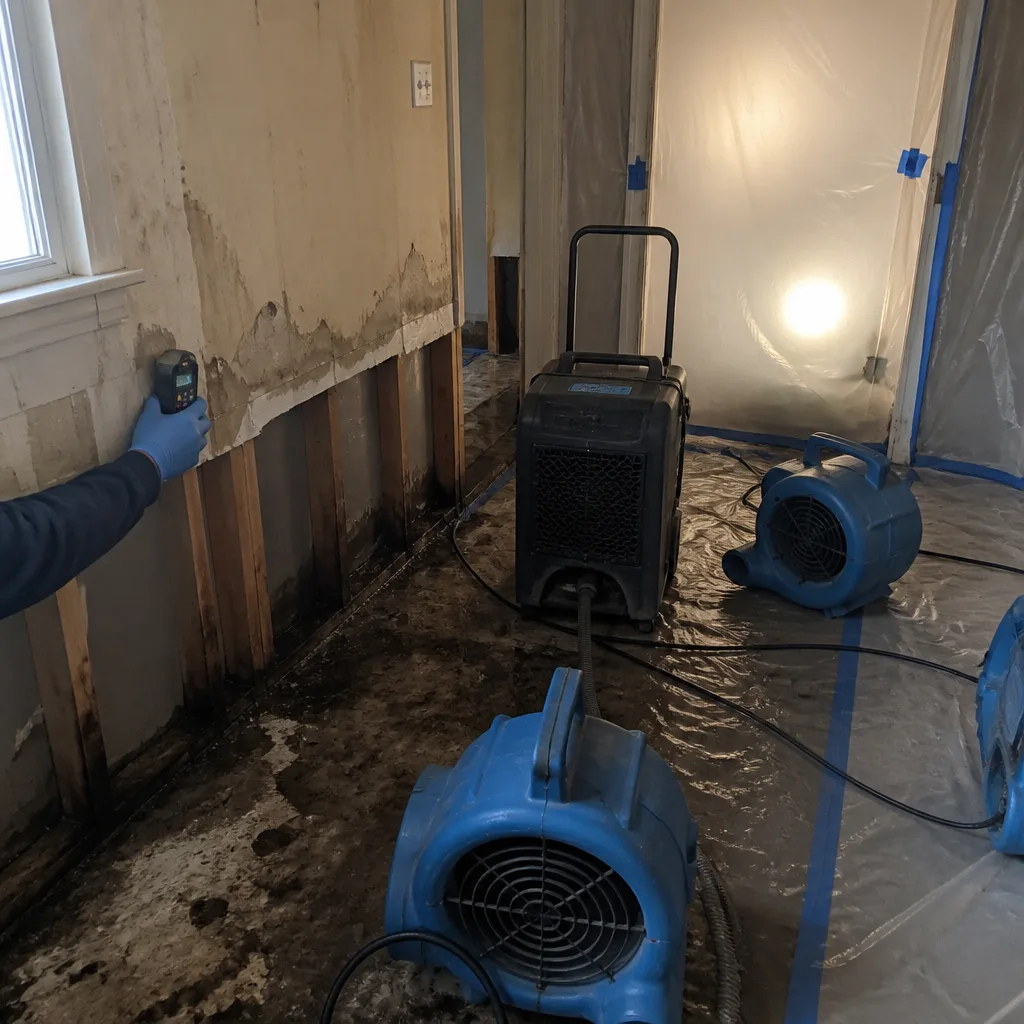 Before
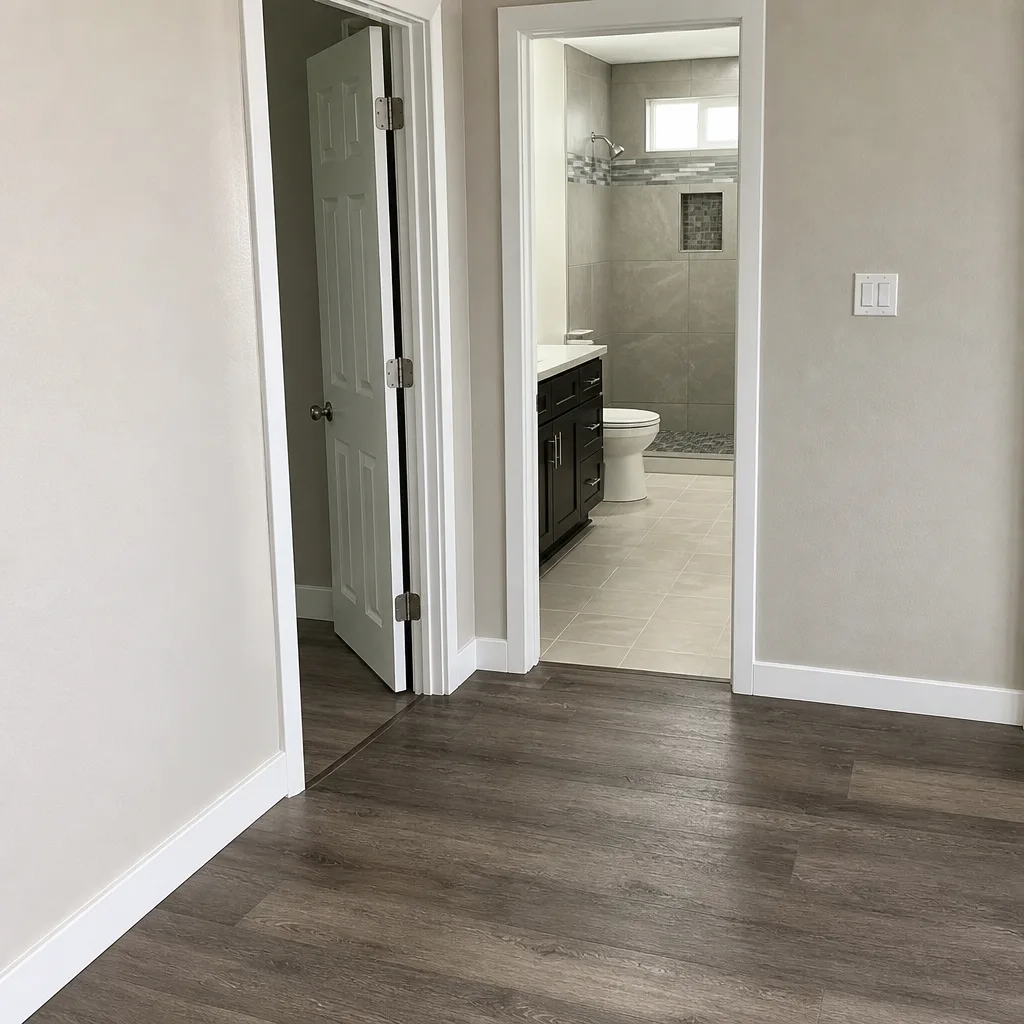 After
After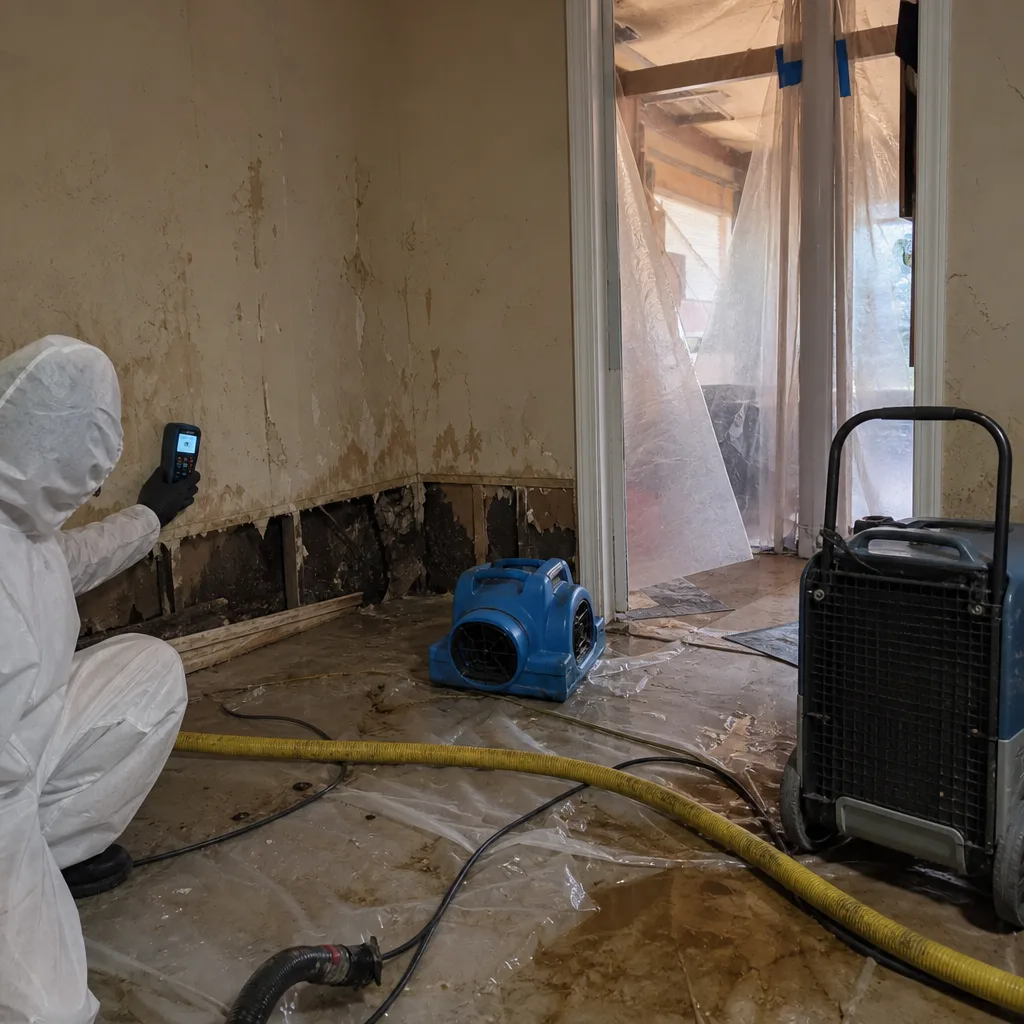 Before
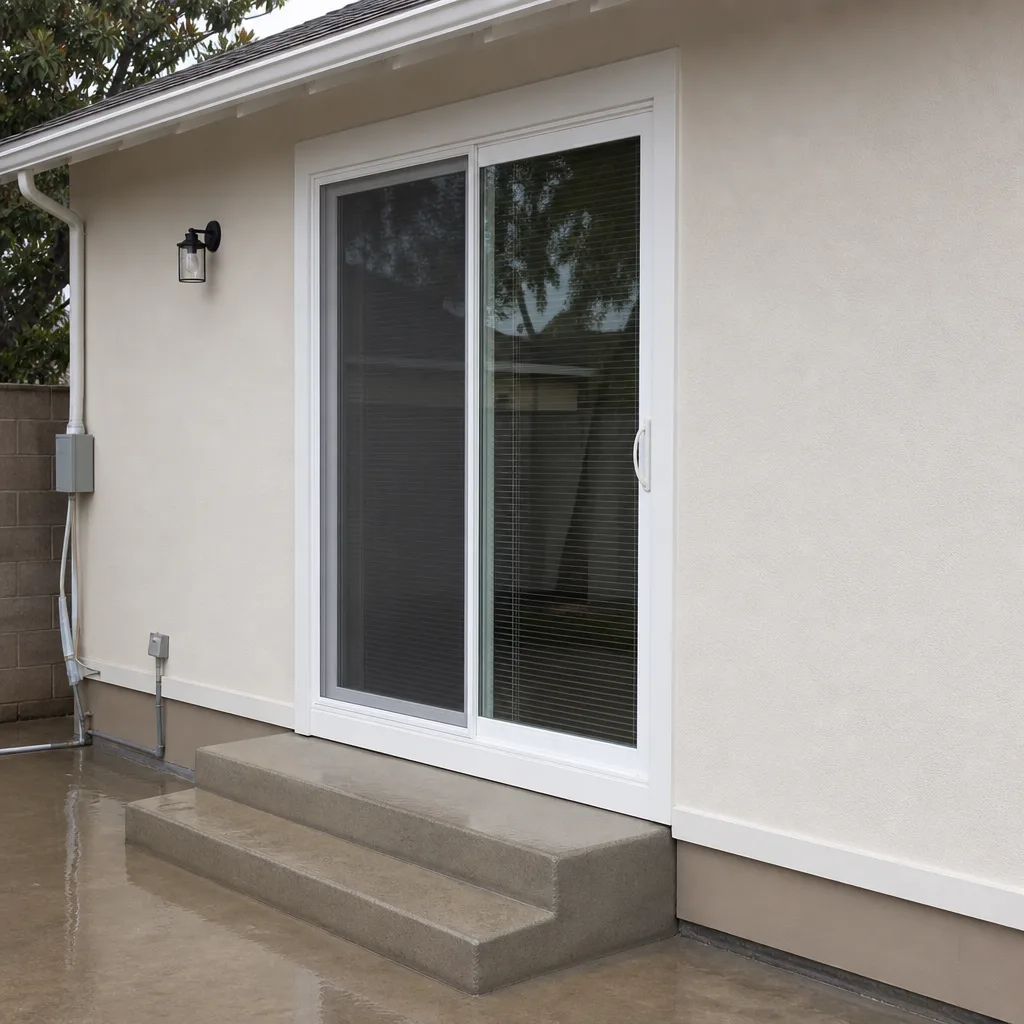 After
After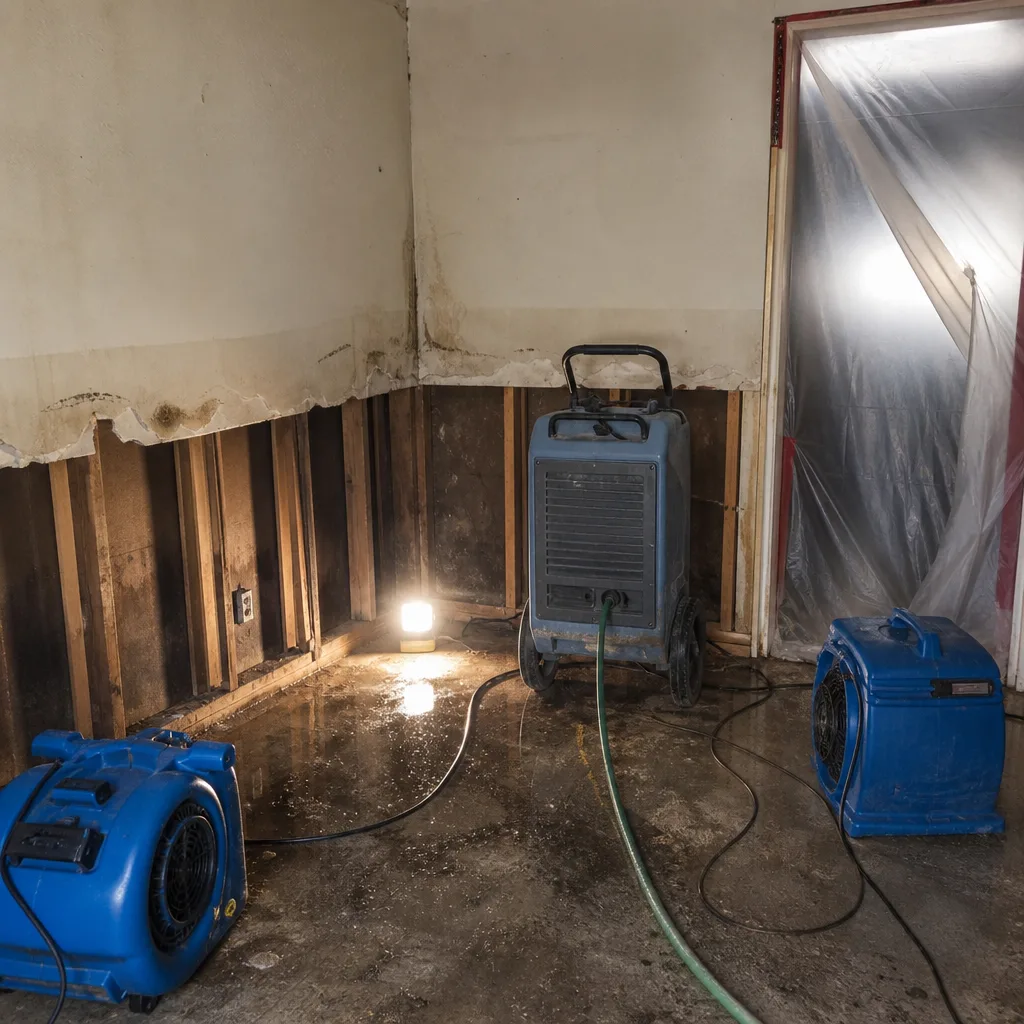 Before
 After
AfterFast, Reliable Mold Remediation Across Downey
Mold remediation in Downey typically costs $1,800-$4,500 for a standard single-family home, with most projects completed in 3-5 business days after the written scope is approved. We dispatch crews to Downey from our Los Angeles office, and our live dispatchers answer every call at (424) 347-8338 - no voicemail, no next-business-day callback while moisture is still moving through your walls.
Downey’s post-war housing stock presents a specific remediation challenge that generic mold companies miss. The 1945-1965 slab-on-grade tract homes built for North American Aviation workers weren’t designed with modern vapor barriers or drainage planes, and decades of hard Colorado River-blend water from the Metropolitan Water District has corroded the galvanized supply lines buried in those slabs. When a slab leaks, water doesn’t just pool where you see it. Our crews know to map moisture laterally across entire floor plans, not just treat the visible stain.
Why DryMark Restoration Bellflower Is Downey’s Preferred Mold Remediation Company
We’ve restored homes in Downey since 2011, and our documentation-first approach was built by a former claims adjuster who watched too many homeowners lose coverage over missing drying logs. Every Downey job gets a written price before work starts - Haven Standard, Clause 1 - plus a photo record on every visit and daily moisture readings logged to IICRC standards. Adjusters in Downey know our paperwork.
Our response time to Downey neighborhoods is typically under 90 minutes for emergency calls. We know the alley-load access patterns in the dense tract blocks off Paramount Boulevard and Lakewood Boulevard, where narrow driveways and shared utility easements complicate equipment placement. That local knowledge means we arrive with the right gear configuration instead of improvising on your driveway.
Our Mold Remediation team is background-checked, uniformed, and licensed - we put the license number on every estimate. The 365-Day Done Right Promise under The Haven Standard applies to every Downey job, and we offer a Free Second Opinion on any competitor’s written estimate at no charge.
Our Mold Remediation Services in Downey
Mold Inspection & Testing
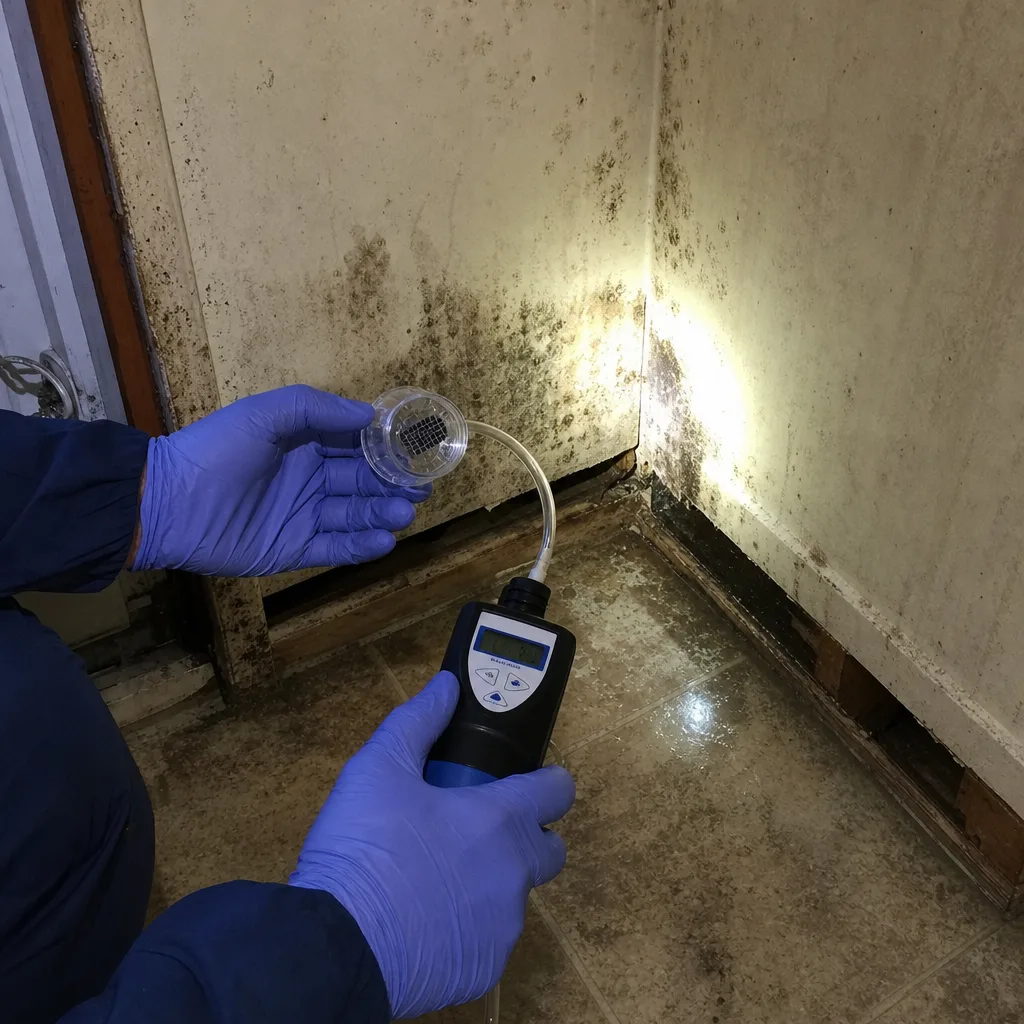
A proper mold inspection in a 1950s Downey tract home starts with understanding what you’re walking into. Original cast iron drain lines, asbestos floor tile, and lead paint are common in this uniform housing stock, and cutting into walls without testing creates a compliance problem that stalls your insurance claim. We document pre-existing conditions before demolition, test for asbestos per California Code of Regulations Title 8, Section 1529, and use moisture meters, thermal imaging, and air sampling to map the full extent of colonization - not just the visible patch.
In Downey specifically, we always check for moisture migration through Whittier Narrows shear cracks in slab foundations. These hairline channels, left in thousands of homes after the 1987 earthquake, can wick water laterally into wall cavities that show no surface staining. Our inspections include slab-perimeter moisture mapping and vapor pressure differential readings to find these hidden pathways.
Mold Removal
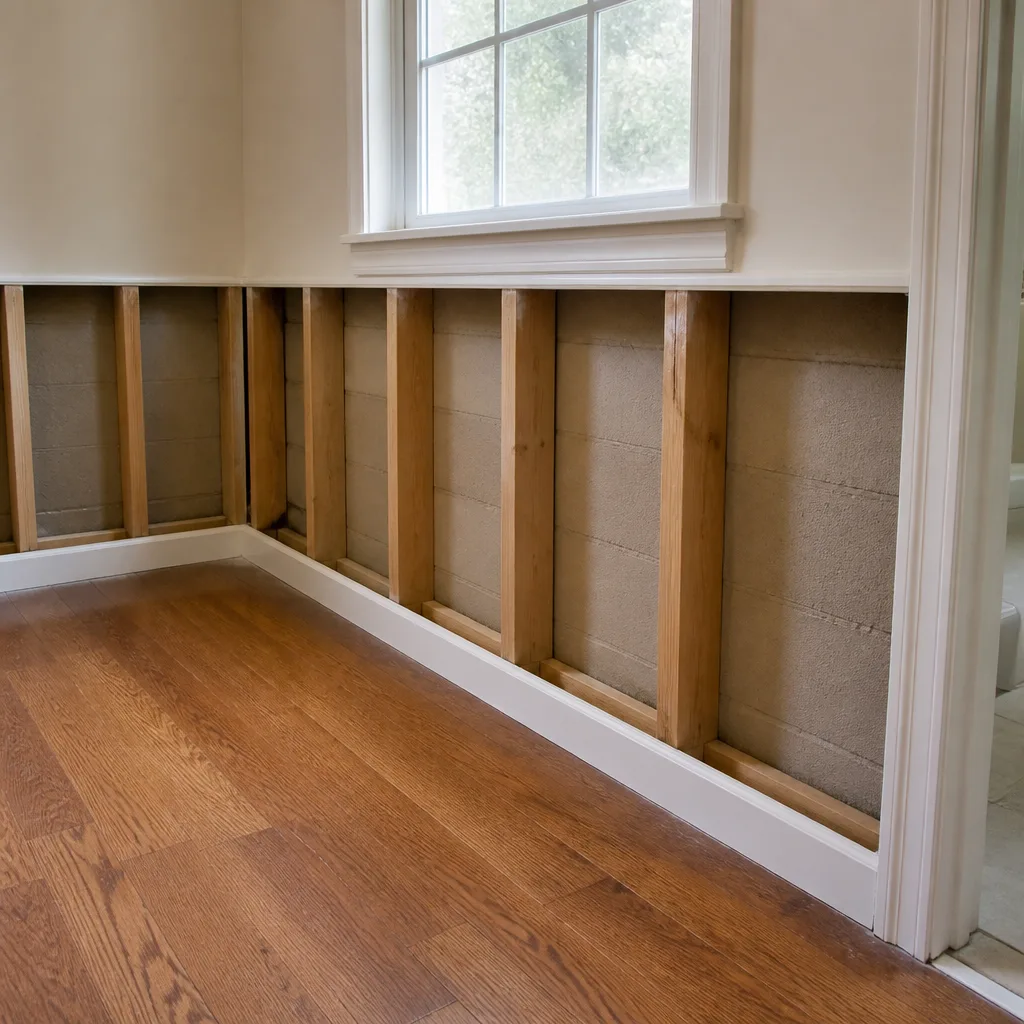
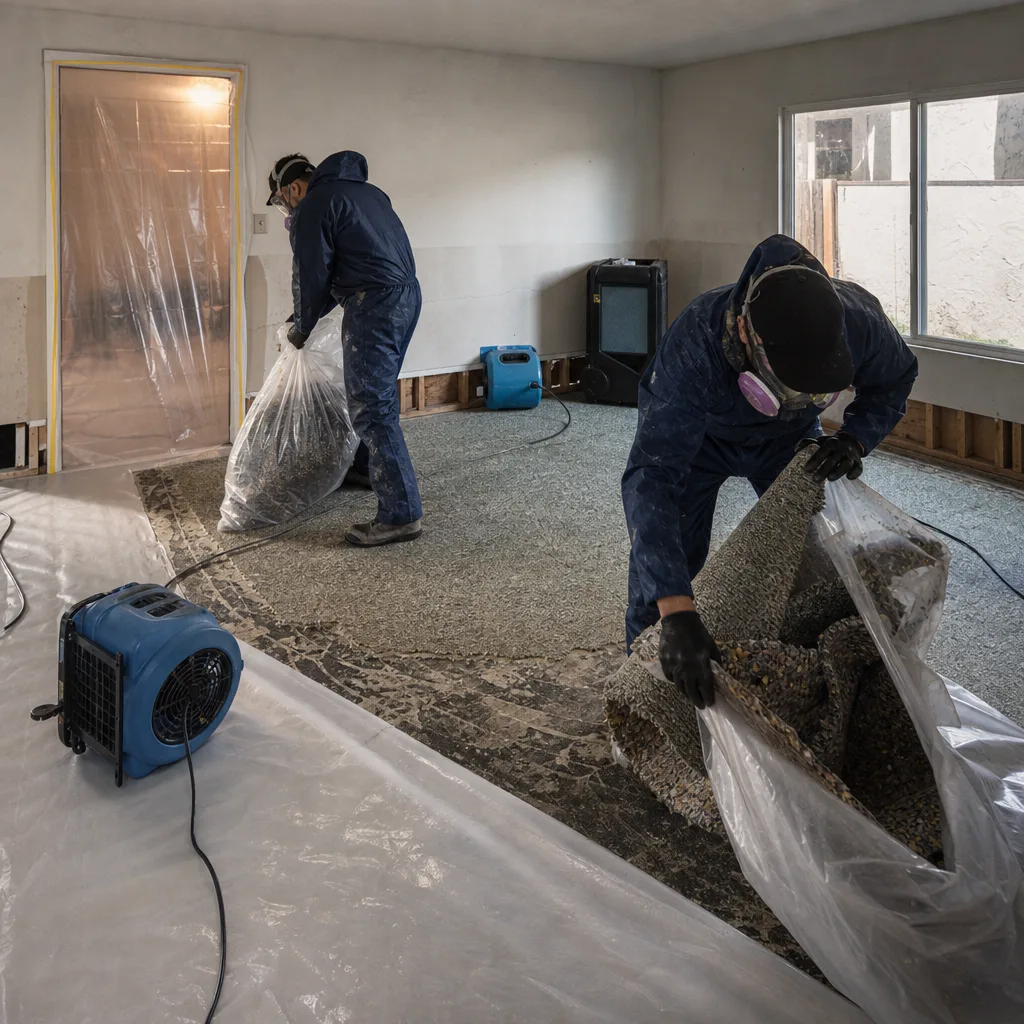
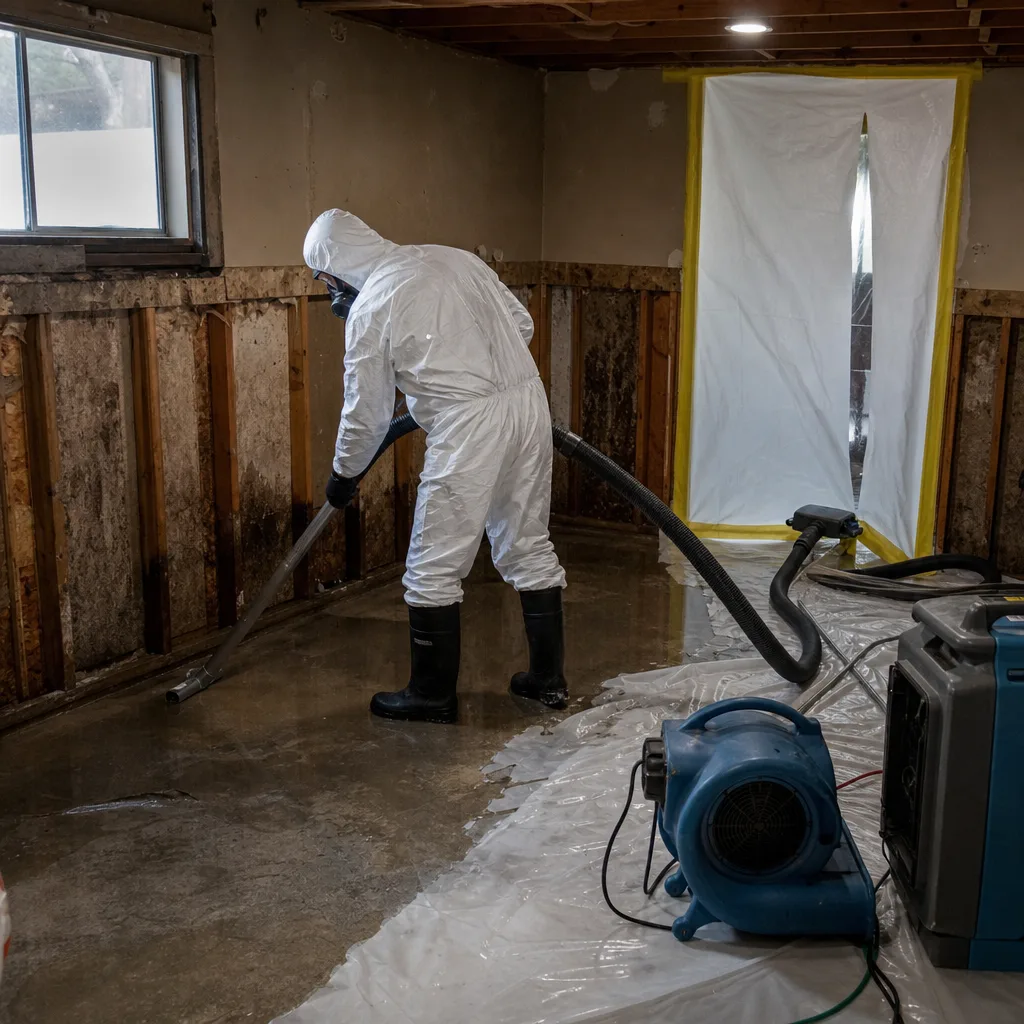
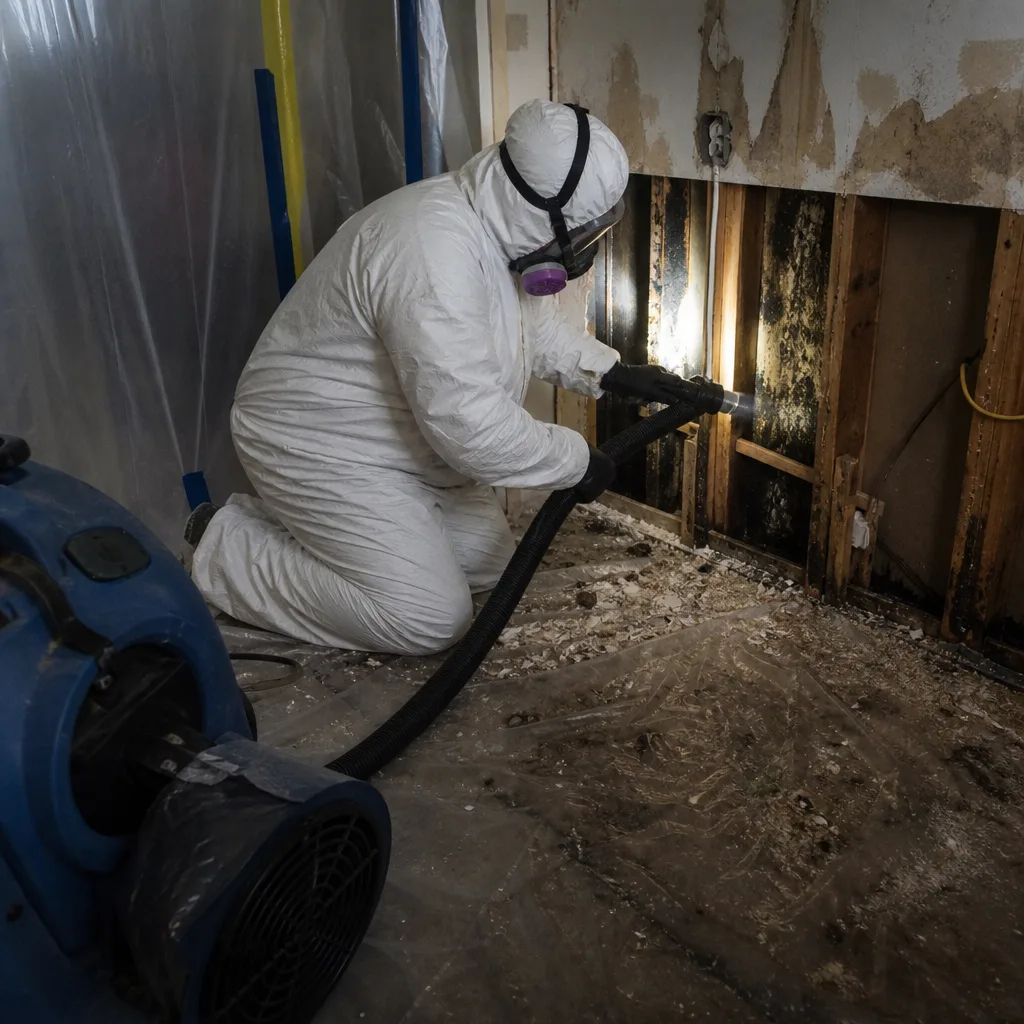
Removal in Downey follows IICRC S520 standards for professional mold remediation, with containment barriers erected room-by-room to prevent cross-contamination. We classify affected materials by permeability - drywall and insulation are typically removed, while solid wood framing is treated with antimicrobial agents and HEPA-vacuumed. Every bagged load is documented with photos for your adjuster.
The age of Downey’s housing stock means we regularly encounter original single-wall construction with no vapor barrier between stucco and framing. This assembly traps moisture differently than modern construction, and our removal protocols account for the extended drying time these walls require.
Black Mold Remediation
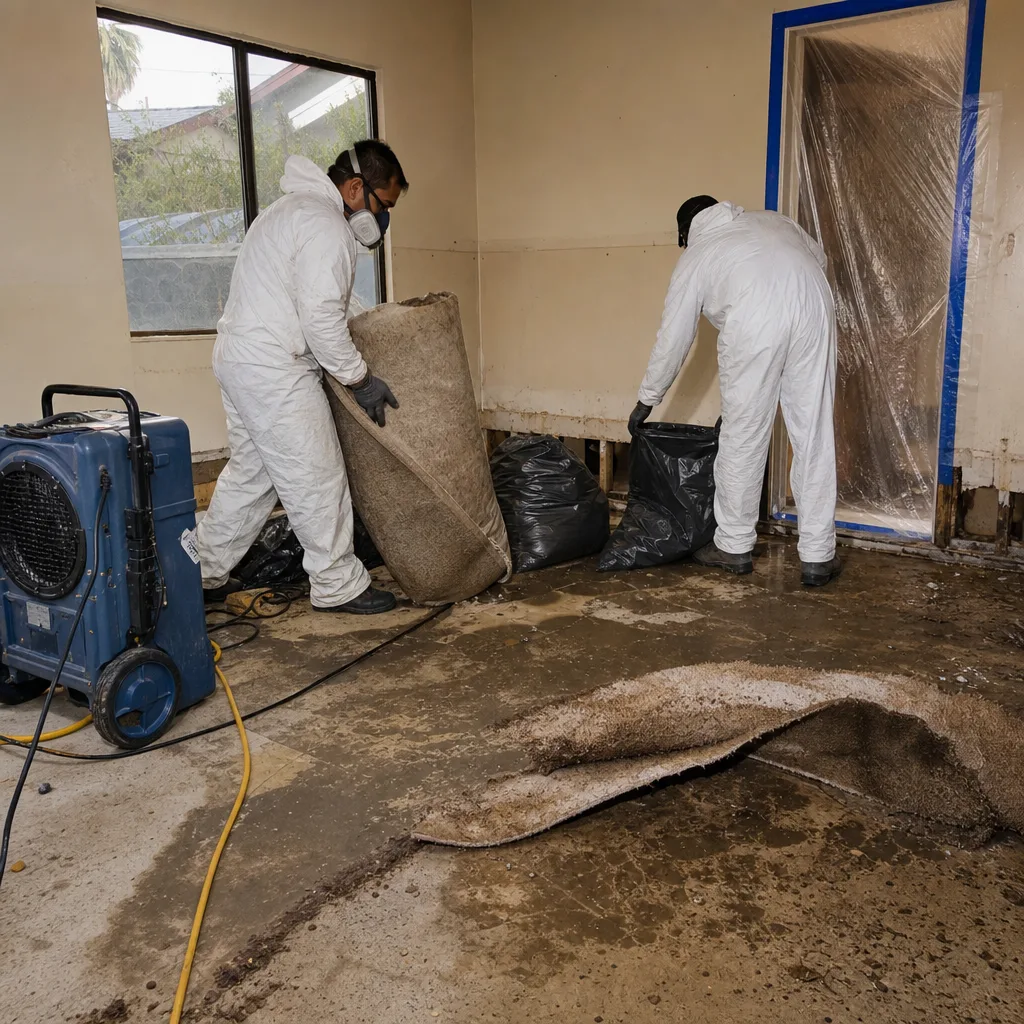
Stachybotrys chartarum - the mold species commonly called “black mold” - requires the same containment and removal protocols as any toxigenic mold, with additional air quality monitoring during the project. In Downey, we see Stachybotrys most often in homes with chronic slab leaks where the moisture source was never properly dried, or where previous remediation treated surface mold without addressing the water pathway.
Our black mold protocol includes pre- and post-remediation air sampling, with lab results included in your documentation package. We don’t declare a job complete until third-party verification confirms airborne spore counts have returned to background levels.
Air Quality Restoration
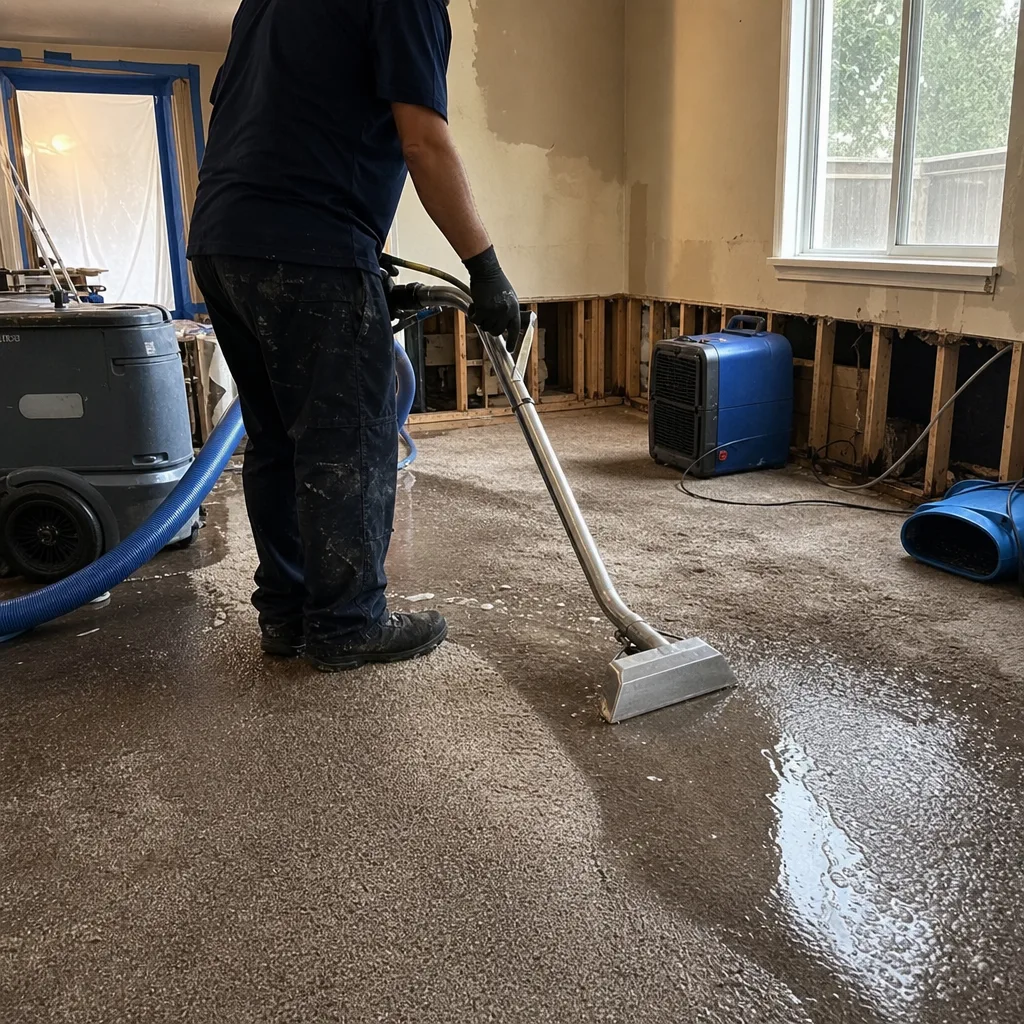
After mold removal, we restore breathable air through HEPA filtration, negative air machines, and targeted ventilation. In Downey’s dense tract housing, where homes sit close on narrow lots, cross-contamination to neighboring units is a real risk - especially in townhomes with shared wall assemblies. Our air quality restoration includes corridor and adjacent-unit monitoring where applicable.
We deploy Phoenix and XPOWER air scrubbers rated at 99.97% efficiency at 0.3 microns, with airflow calculations based on your specific cubic footage. The equipment runs until post-remediation testing confirms clearance, not on an arbitrary timeline.
Moisture & Humidity Control
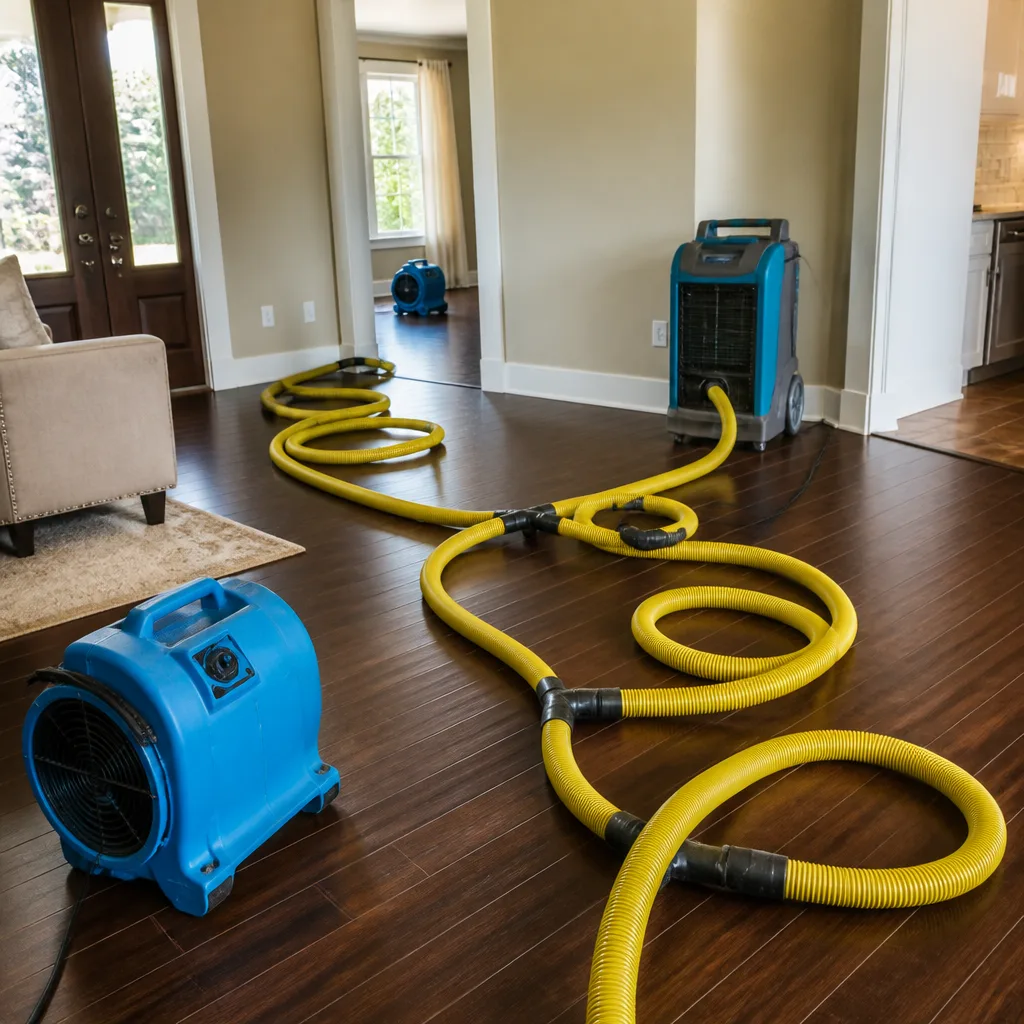
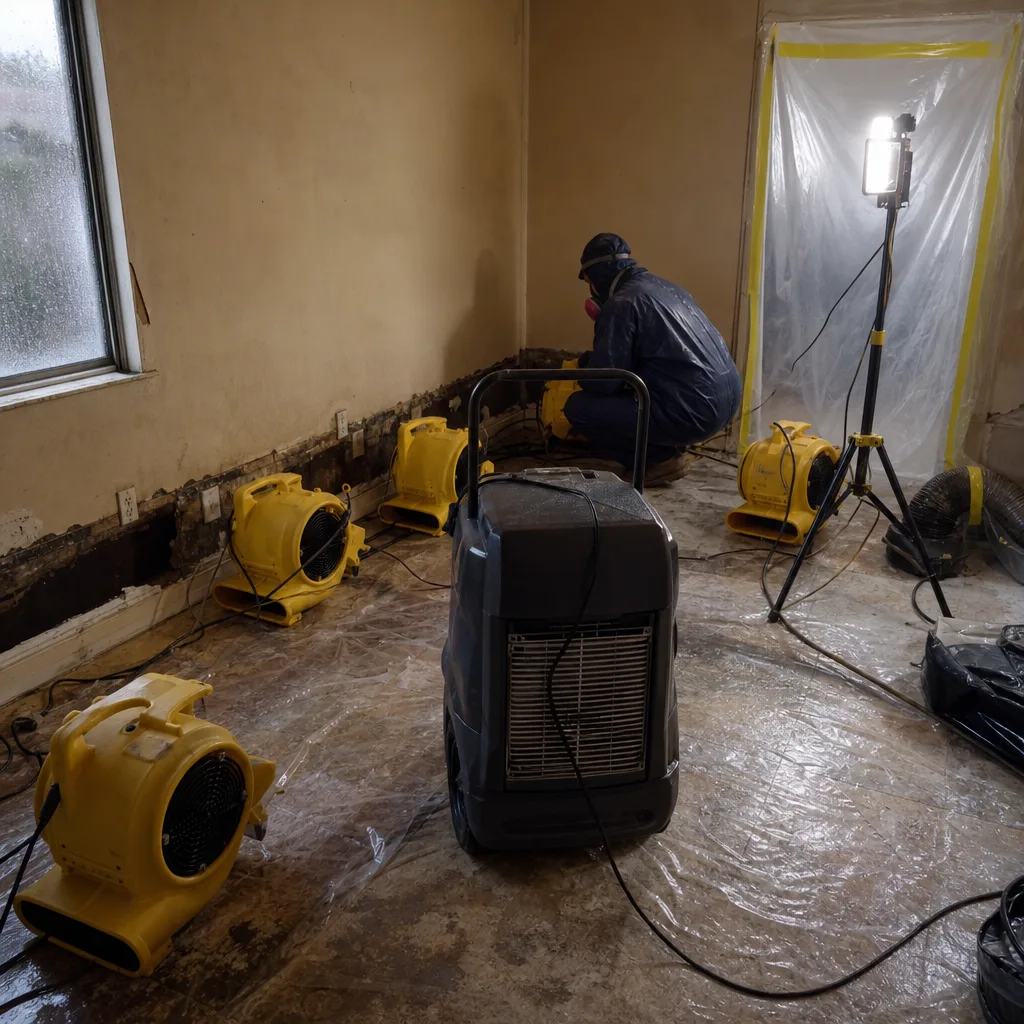
Structural drying is where most mold jobs fail in Downey. The combination of slab foundations, Whittier Narrows shear cracks, and alley-load access constraints creates a perfect storm: crews bring undersized equipment because they can’t park a full trailer, then never achieve the vapor pressure differential needed to pull moisture from deep in the slab.
We solve this with Injectidry mat drying systems for slab surfaces and Dri-Eaz LGR dehumidifiers sized to the actual cubic footage of your affected space. Daily psychrometric data - temperature, relative humidity, and specific humidity - is logged and delivered as part of your documentation package. This is the evidence that turns your restoration invoice into a payable claim.
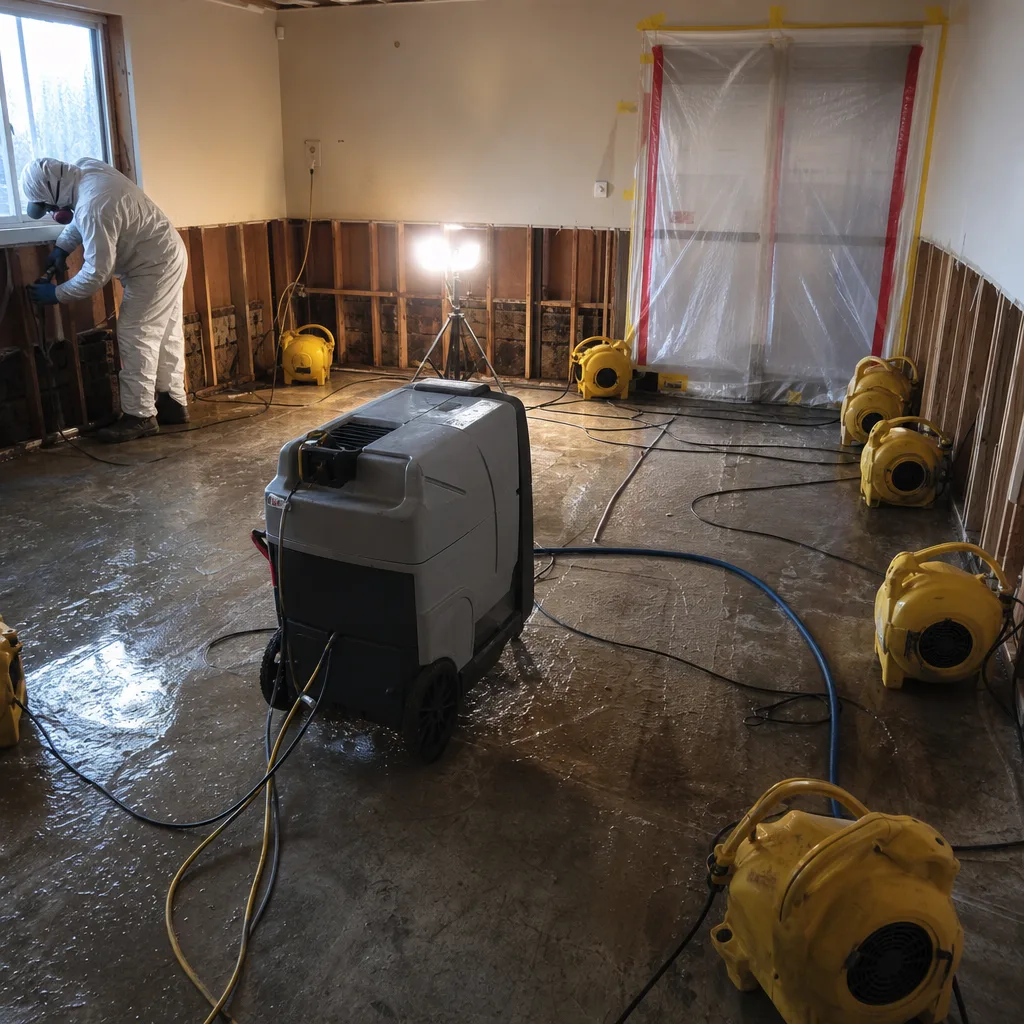
What happens when you call
- 1
A real person answersNo phone trees - you reach a local pro.
- 2
You get an upfront price rangeHonest numbers before anyone is dispatched.
- 3
A background-checked tech heads outLicensed & insured, dispatched right away.
- 4
You approve before work beginsNothing starts until you say go.
 Before
 After
AfterTrusted Brands We Service in Downey
Our Downey crews deploy professional-grade drying and air quality equipment from Phoenix, XPOWER, and Dri-Eaz - brands specified by major insurers because their performance data holds up in claims review. We stock HEPA filters, antimicrobial agents, and replacement desiccant locally, so equipment stays online through multi-day drying cycles without waiting for parts. For slab homes with limited access, our Injectidry systems run through standard doorways and operate at the lower amperage that older Downey electrical panels can safely supply.
Common Mold Remediation Problems We See in Downey Homes
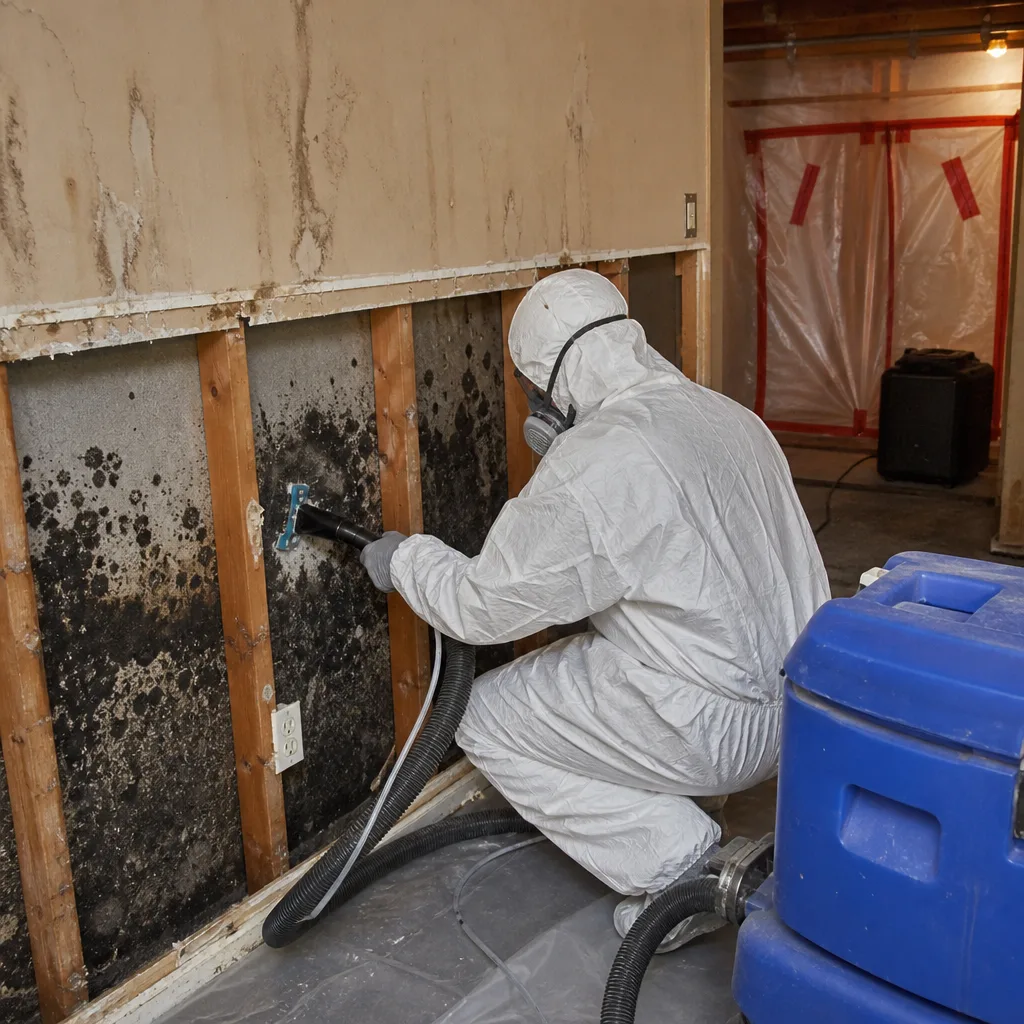
- Moisture traveling through Whittier Narrows shear cracks. The 1987 earthquake left hairline cracks in thousands of Downey slab foundations. Decades later, these channels wick water from slab leaks into wall cavities rooms away from the source. Crews who treat only the visible mold miss the pathway, and mold returns within weeks.
- Undersized drying equipment in alley-load tracts. Narrow driveways and shared easements in Downey’s dense post-war blocks force some crews to leave equipment on the street or bring undersized units. The drying never reaches pre-loss condition, and mold recolonizes behind the new paint.
- Asbestos and lead paint surprises during demolition. Original 1945-1965 floor tile and lead-based paint are still present in most Downey tract homes. Cutting into walls without testing creates a regulatory violation, stops work, and complicates your insurance scope.
- Category 3 water from slab leaks misidentified as Category 1. Water that has passed through corroding galvanized supply lines and expansive clay soil before entering your home is not clean water. Misclassification leads to inadequate antimicrobial treatment and persistent mold problems.
Pricing for Mold Remediation in Downey, CA
Mold remediation in Downey runs $1,800-$4,500 for most single-family homes, with pricing driven by three factors: the square footage of affected and contained space, the classification of water that caused the damage (Category 1, 2, or 3), and whether asbestos or lead abatement is required before demolition can begin.
| Service | Typical Range in Downey |
|---|---|
| Mold inspection & testing | $350-$650 |
| Containment & air scrubbing (per room) | $400-$800 |
| Mold removal & antimicrobial treatment | $1,200-$3,200 |
| Structural drying (per day, equipment) | $180-$320 |
| Post-remediation air quality testing | $250-$450 |
Homes with Whittier Narrows shear crack moisture pathways, or those requiring asbestos floor tile abatement before wall demolition, fall at the higher end of these ranges. We deliver a written price before any work starts - Haven Standard, Clause 1 - with no scope-creep additions once the crew is inside. Bring a competitor’s written estimate and we’ll review it at no charge. Call (424) 347-8338 for your written scope.
We Also Serve Cities Near Downey
Our crews work across the southeast LA Basin, including Downey and neighboring Paramount, Bellflower, Norwalk, and Lynwood. Dispatch and scheduling are coordinated from our Los Angeles office, with local crews serving each community. The same documentation standards - written price first, photo record on every visit, daily moisture logs - apply to every job in every city.
Serving Downey, CA - Our Local Coverage Area
We’re based in the Downey area and know this community well. Use the map below to see our service coverage - if you’re nearby, we can almost certainly help.
FAQs - Mold Remediation in Downey
Because the moisture pathway was never fully mapped or dried. In Downey’s 1945-1965 slab homes, water from slab leaks frequently travels laterally through Whittier Narrows shear cracks in the foundation, saturating wall cavities that show no visible damage. Crews who treat surface mold without Injectidry mat drying or wall-cavity dehumidification leave active moisture behind. We document the full moisture map with thermal imaging and daily readings before declaring a job complete. Call (424) 347-8338 for a second opinion on any previous remediation.
Mold colonization begins in 24-72 hours under favorable conditions, and Downey’s warm LA Basin climate accelerates growth year-round. The real problem in slab homes is that leaks often run for weeks or months before detection, by which time mold is established behind baseboards and inside wall cavities. If you’ve had a slab leak, assume hidden colonization until proven otherwise with moisture mapping and air sampling. Our inspectors carry the equipment to verify this on the first visit.
Category 3 water - grossly contaminated water containing pathogens - triggers more extensive removal requirements under IICRC standards. In Downey, slab leaks often qualify as Category 3 because water has passed through corroding galvanized pipes, expansive clay soil, and potentially sewage-contaminated subgrade before entering the living space. This classification means porous materials like drywall, insulation, and carpet pad must be removed rather than cleaned, and antimicrobial treatment is mandatory rather than optional. We classify water correctly on every job and document the rationale for your adjuster.
Expect us to test for asbestos floor tile and lead paint before cutting anything, document pre-existing conditions with photos, and map moisture across the full floor plan - not just the visible stain. We’ll check slab-perimeter readings specifically for Whittier Narrows shear crack pathways, and we’ll ask about your water history: when the leak started, when it was repaired, and whether previous drying was documented with daily logs. The inspection takes 2-3 hours for a typical 1,200-square-foot home, and you’ll receive a written scope with photos within 24 hours.
Yes. We configure equipment specifically for Downey’s alley-load and narrow-driveway tracts - Injectidry systems that fit through standard gates, Phoenix and XPOWER units sized for smaller cubic footage, and hose runs that don’t block neighbor access. We document the access constraints in your photo record so your adjuster understands why specific equipment was selected. Alley access is a planning problem, not an excuse for undersized drying.
We were called to a 1950s stucco tract home off Paramount Boulevard near the Rio Hondo corridor after a slab leak from corroding galvanized supply lines pushed Category 3 water up through the flooring. During demolition, our tech found the moisture had traveled laterally through a pre-existing Whittier Narrows shear crack in the slab, saturating a bedroom wall that showed zero visible water damage. We used Injectidry mat drying for the wall cavity and Dri-Eaz dehumidification for the room, then ran antimicrobial treatment and logged daily moisture readings for the adjuster’s scope of work.
Call (424) 347-8338 for a free written estimate. Live dispatchers answer 24 hours a day, 7 days a week - no voicemail. Every Downey job is covered by our 365-Day Done Right Promise under The Haven Standard.
Written by Alicia Brennan, Owner at Back to Dry Restoration, serving Downey since 2011.