
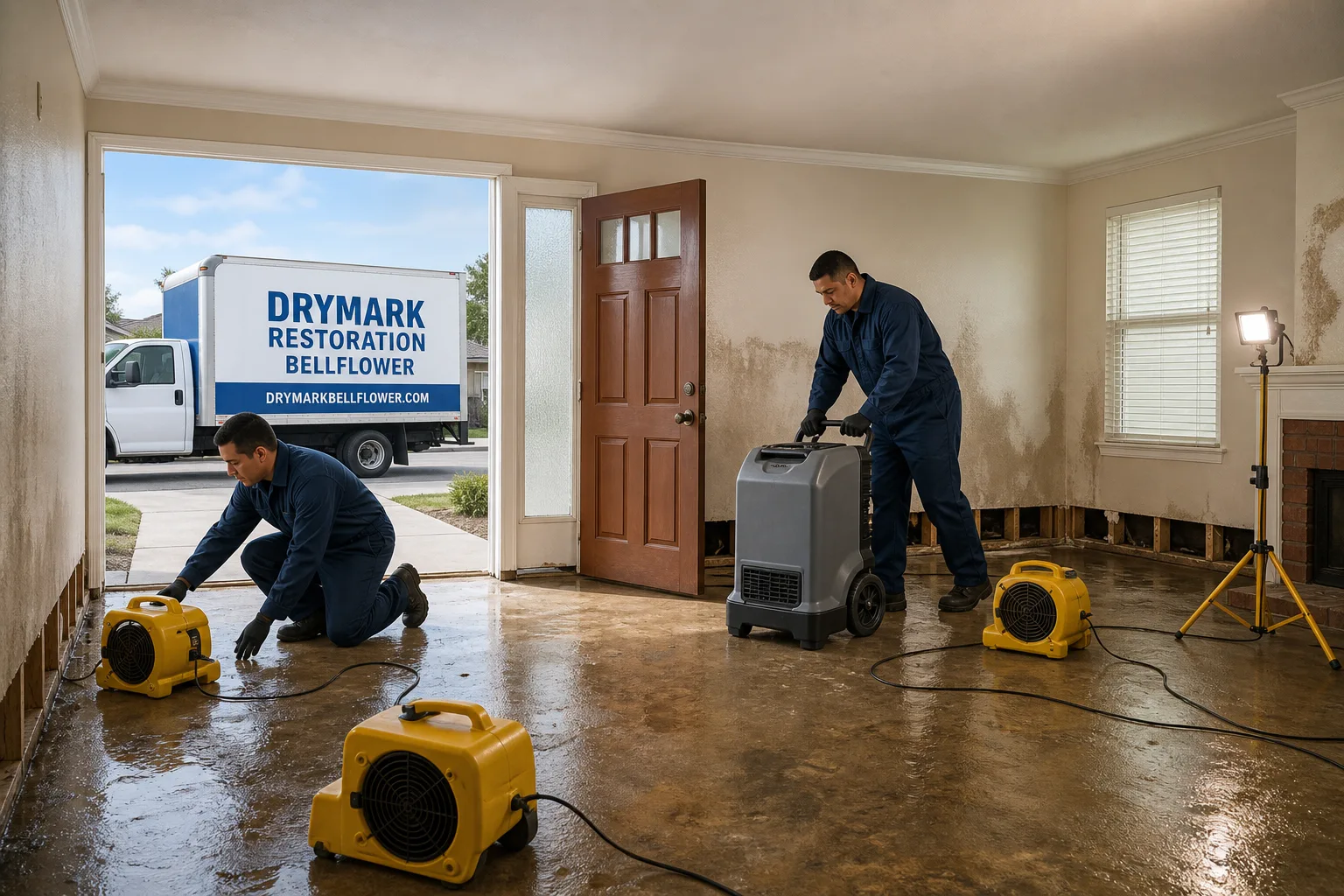
Free visual inspection and a written scope of work before any mitigation begins - photos, moisture readings, and drying logs go in your claim file
The scope we write is the scope we bill. Anything new gets shown to you, in writing, before we touch it.
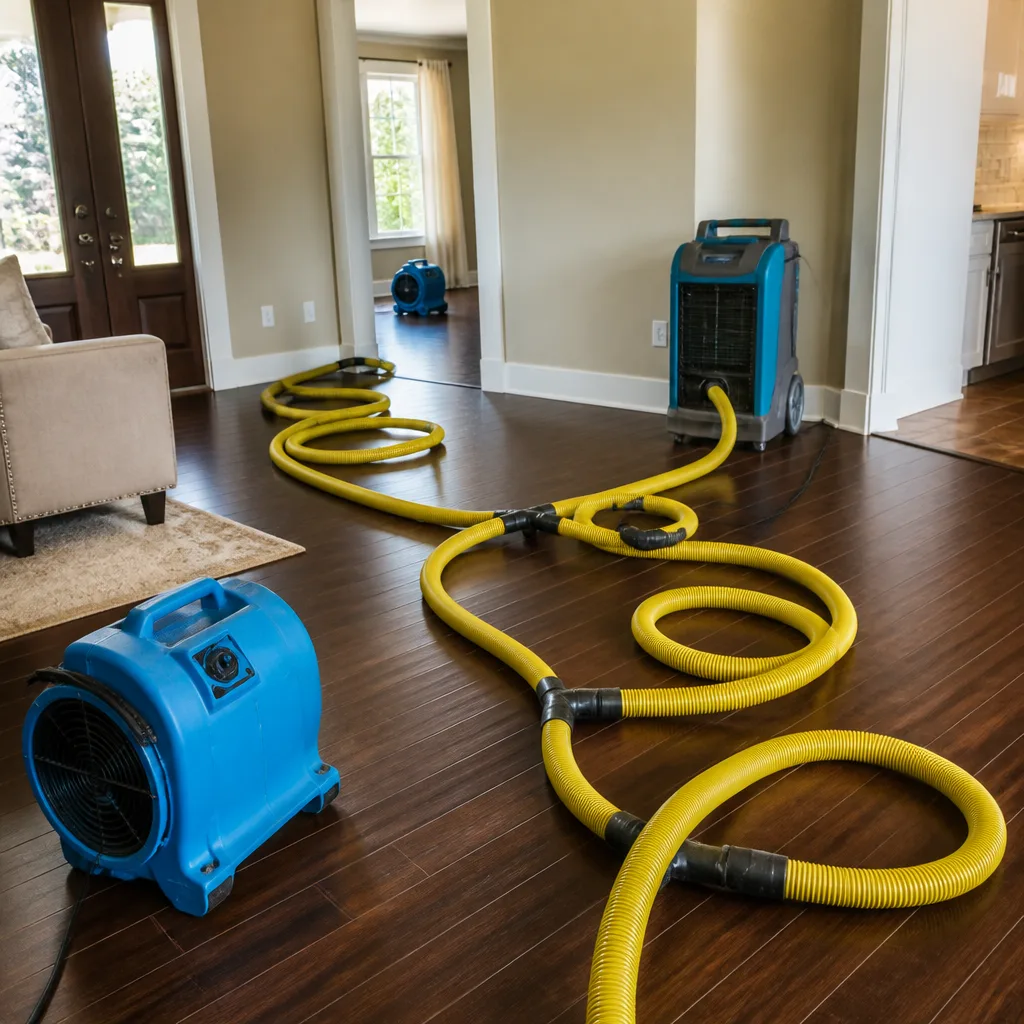
 Before
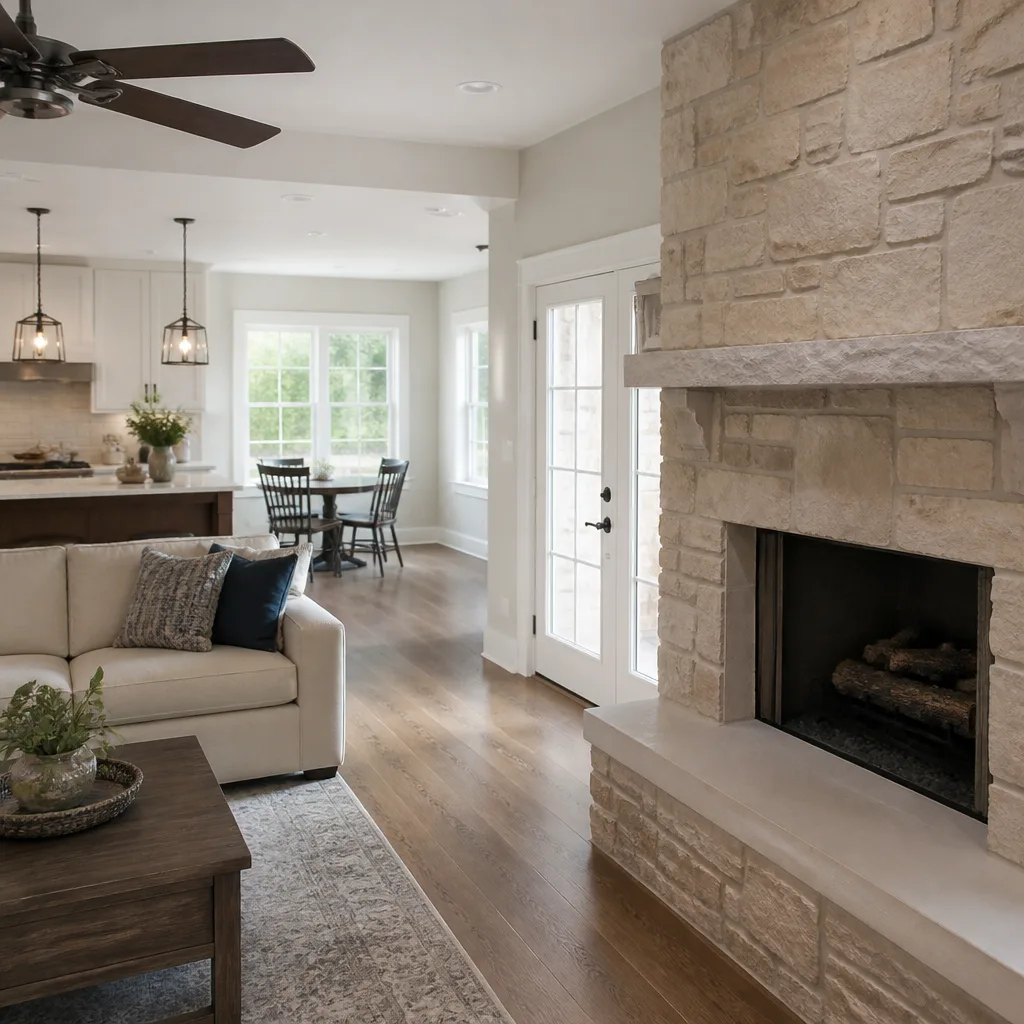
 After
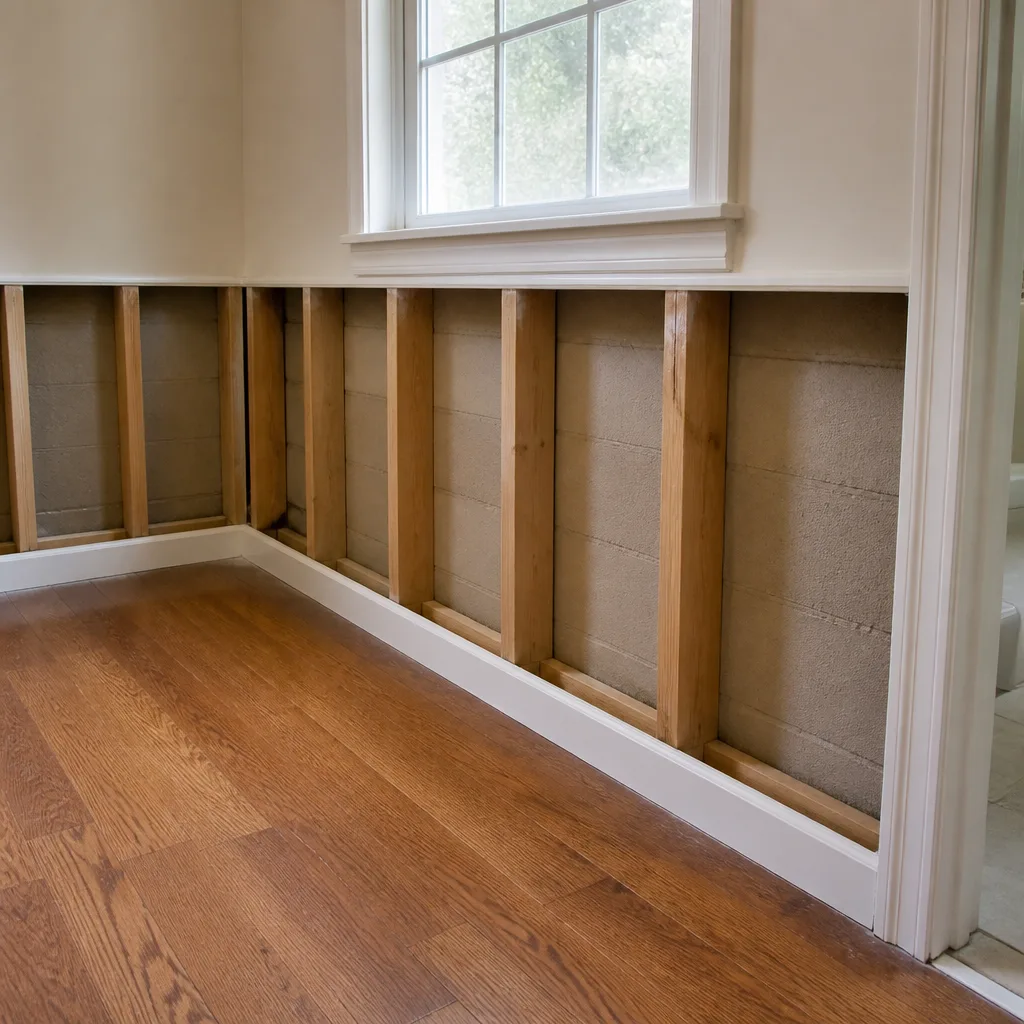
After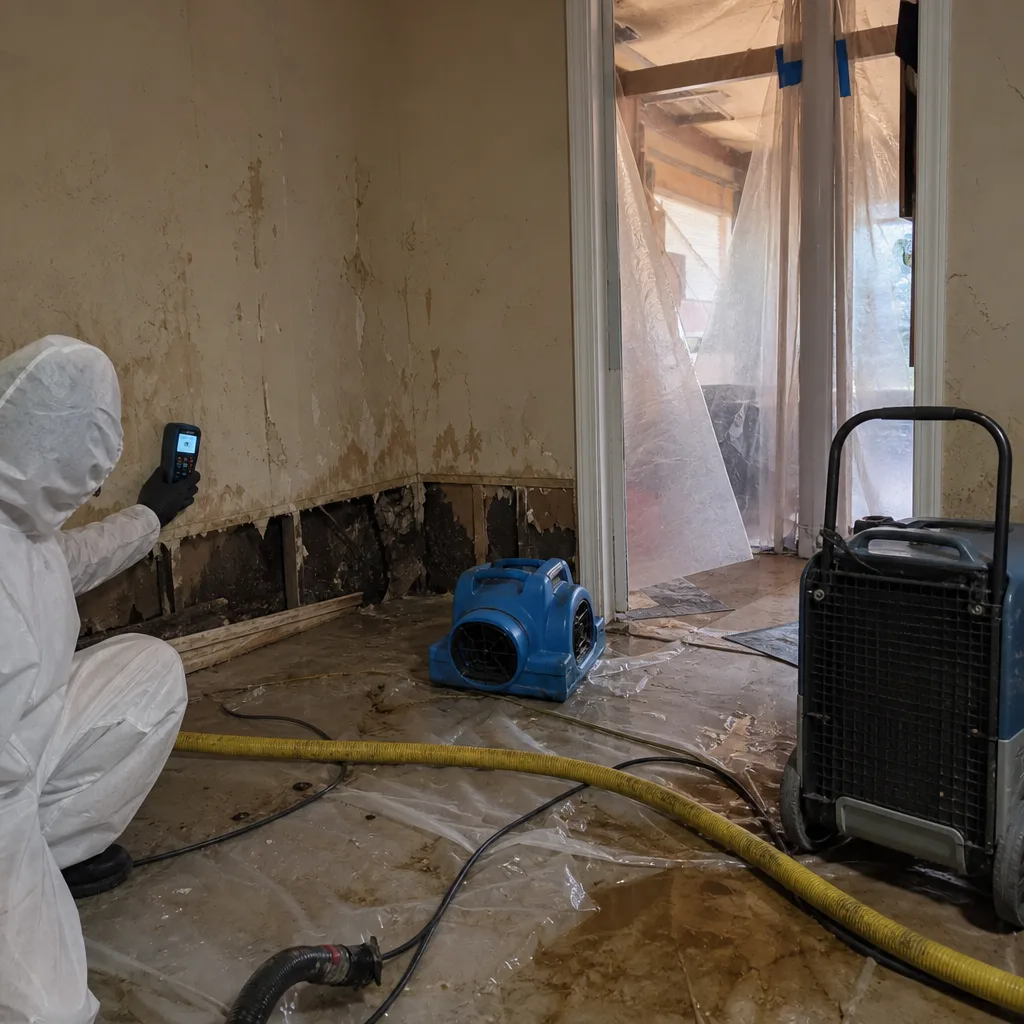 Before
 After
After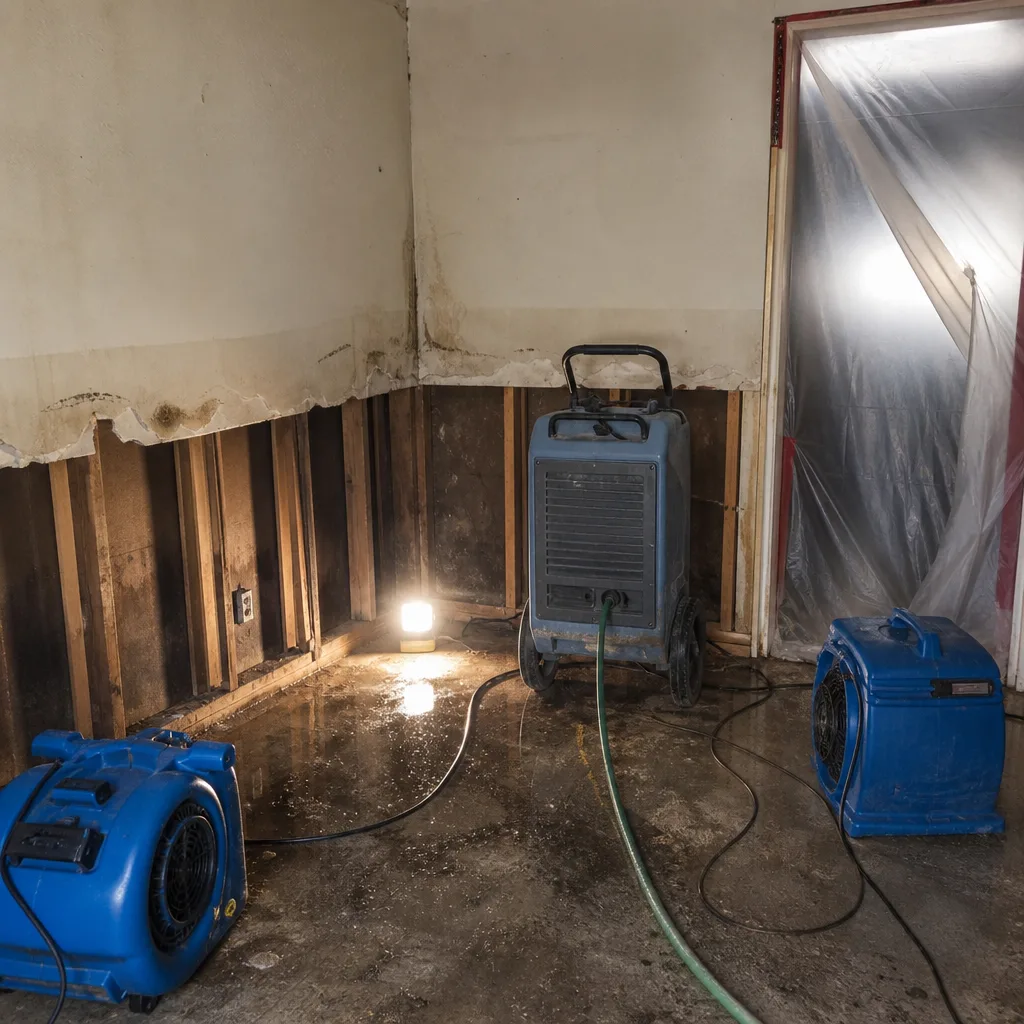 Before
 After
AfterFast, Reliable Mold Remediation Across Huntington Park
Mold remediation in Huntington Park typically runs $1,800-$4,500 for a standard residential job, with full inspection and containment completed before demolition begins. Most calls in Huntington Park are dispatched same-day, and our crews are familiar with the city’s 1920s-1950s housing stock, its galvanized plumbing failures, and the unpermitted additions that complicate nearly every job. If you suspect mold in your Huntington Park home, call (424) 347-8338. A live person answers, and we’ll schedule a written inspection with moisture mapping.
Our Los Angeles office coordinates dispatch and scheduling for Huntington Park properties, with crews already working the corridor between Alameda Street and the Long Beach Freeway. We know the local failure patterns: slow leaks in corroded galvanized steel, stormwater pushing through aging catch basins near the LA River, and the hidden mold that spreads through shared walls in subdivided duplexes before anyone calls.
Why DryMark Restoration Bellflower Is Huntington Park’s Preferred Mold Remediation Company
We’ve restored properties in Huntington Park since 2011, and our reputation here is built on documentation that survives adjuster review. Every job gets a written price before work starts - Haven Standard, Clause 1 - plus a photo record on every visit and daily moisture logs produced with IICRC-standard equipment. Our technicians are background-checked, uniformed, and licensed; their license numbers are documented on every scope.
Huntington Park customers specifically mention our thoroughness in three-star reviews: we find mold behind lath-and-plaster that other contractors missed, and we document pre-loss conditions in unpermitted structures that insurers initially deny. Response time to Huntington Park averages under 90 minutes for emergency calls, with live phone coverage 24 hours a day, 7 days a week - no voicemail trees while water keeps moving.
We understand the local landscape. Crews working Huntington Park repeatedly encounter the same pattern: a water loss in the main house has quietly fed mold into an unpermitted rear dwelling for months before anyone calls. The tenant in the back unit, often paying rent informally, has no lease and no clear path to insurance coverage. We manage both the technical remediation and the human complexity of displaced uninsured occupants before a single wall is opened. That’s not a service every restoration company offers.
Our Mold Remediation Services in Huntington Park
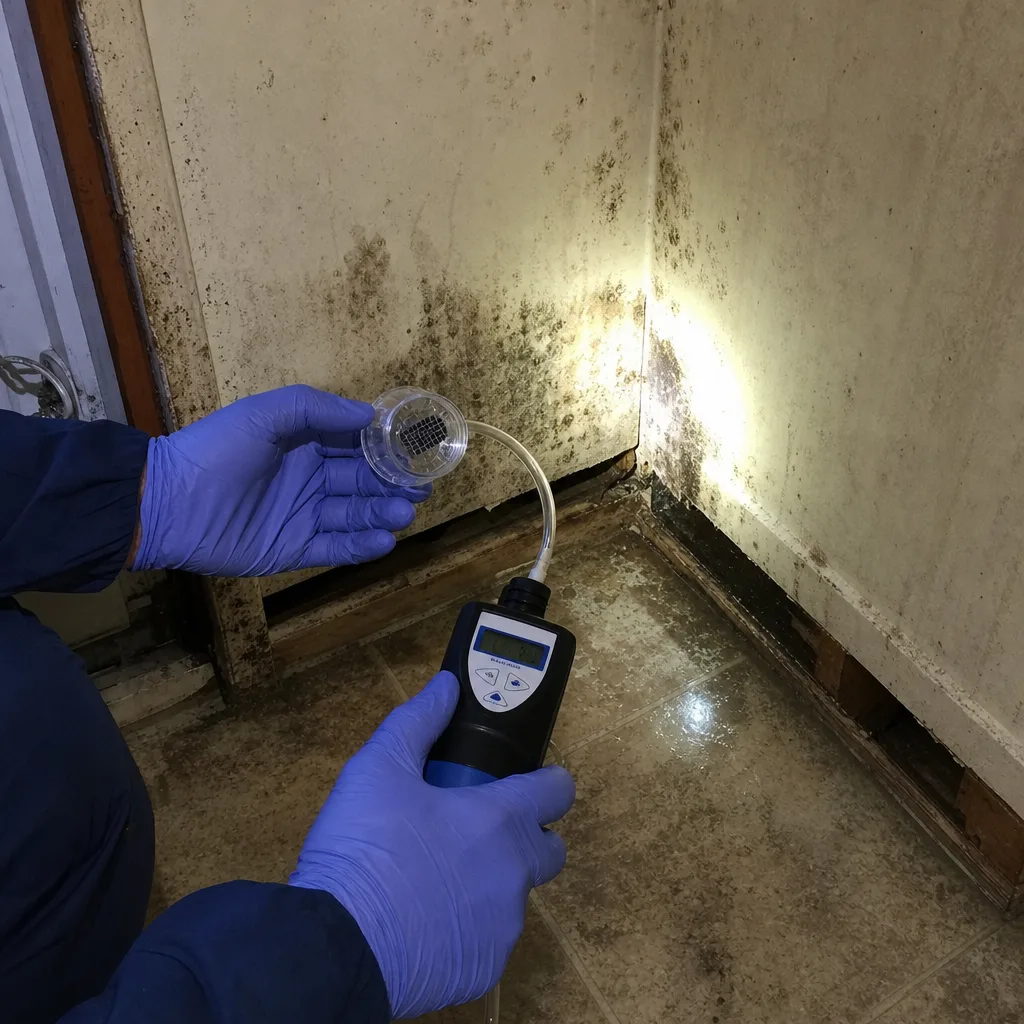
Mold Inspection & Testing
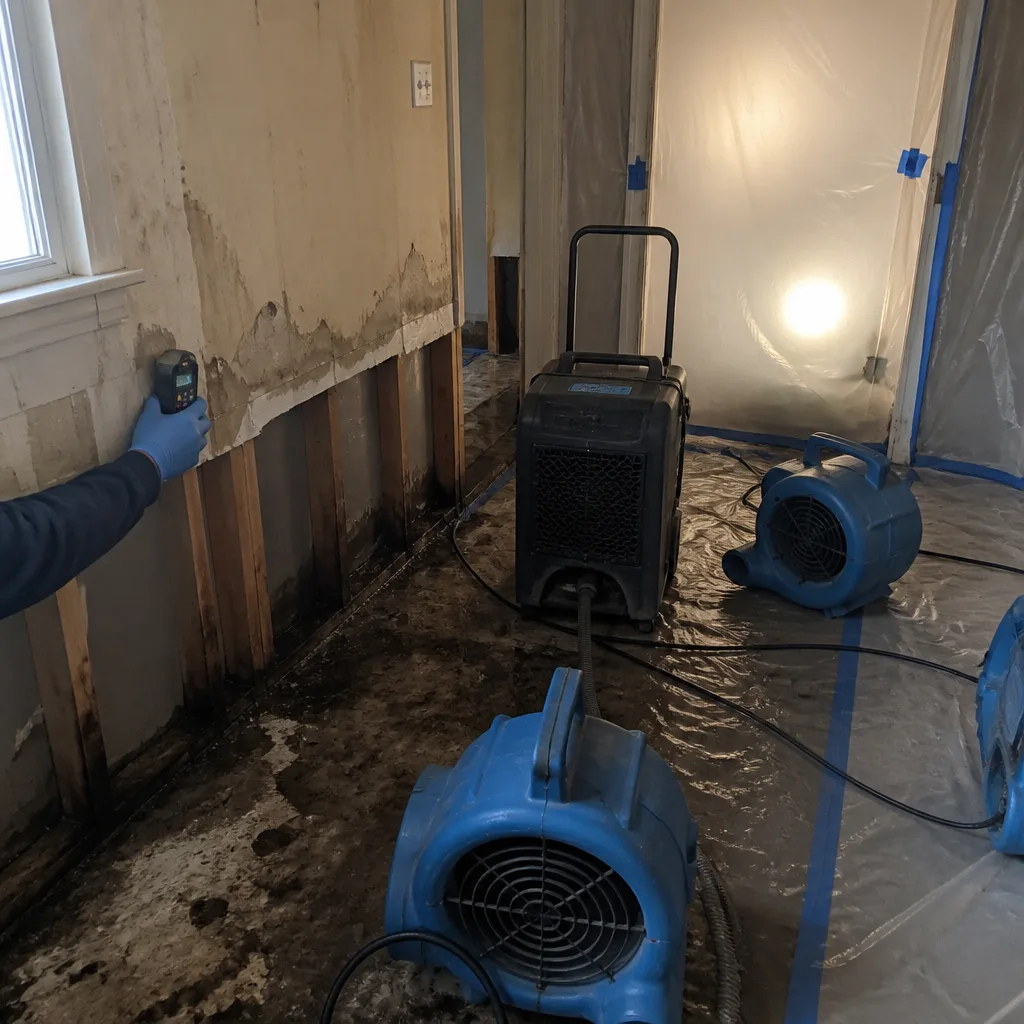
Our Mold Remediation team starts every Huntington Park job with moisture mapping, air sampling, and surface testing - not a visual walkthrough. In Huntington Park’s 1920s-1950s bungalows, we use invasive probes behind lath-and-plaster because galvanized steel failures often sit deep in wall cavities where non-invasive meters read dry at the surface. We document moisture readings by room, photograph pre-loss conditions, and produce a written scope with line-item pricing before any containment goes up. If you’ve received another contractor’s estimate, we offer a Free Second Opinion at no charge.
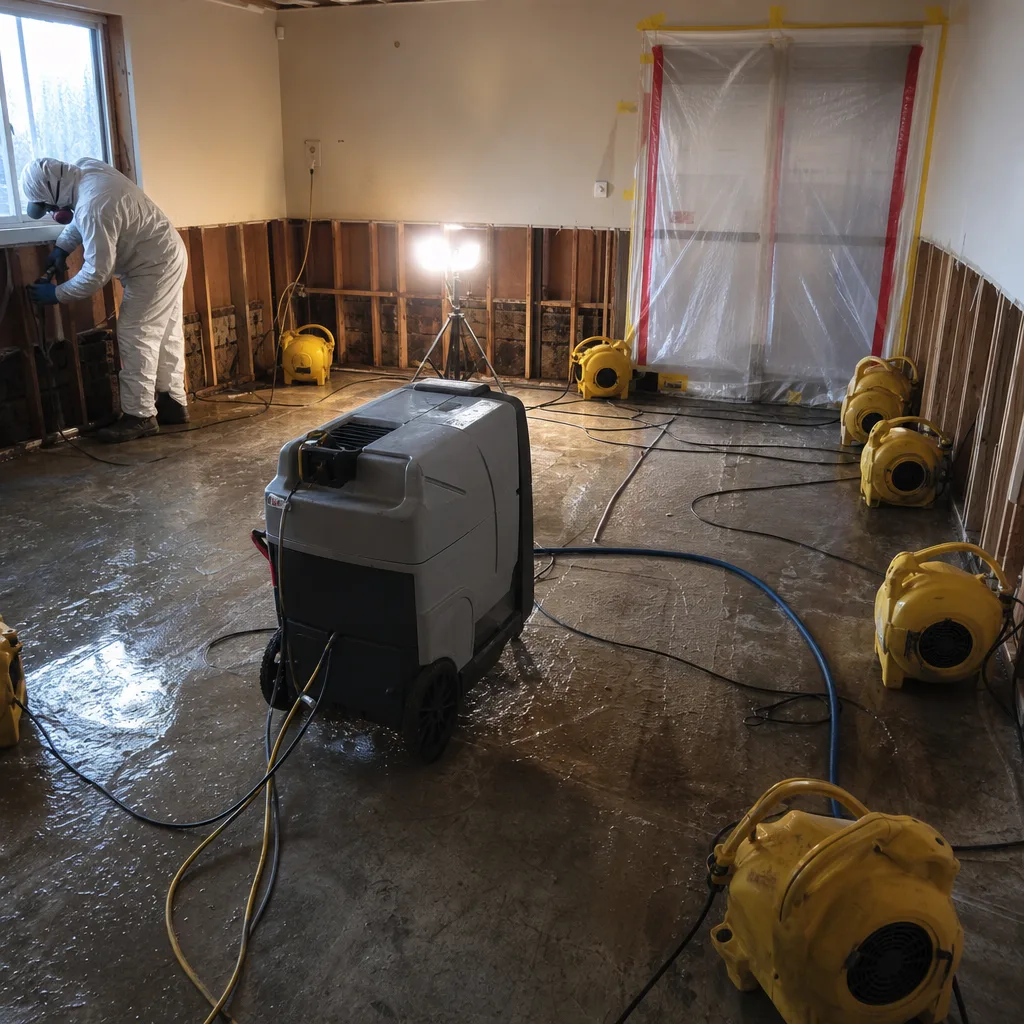
Mold Removal
Removal in Huntington Park follows IICRC S520 standards: containment barriers, negative air pressure, HEPA filtration, and bagged disposal of contaminated materials. We pay special attention to shared framing in duplexes and courtyard apartments where mold has crossed property lines into units with no separate policy. Our crews work with landlords, property managers, and tenants simultaneously - documenting who occupies which space and under what arrangement - so the scope of work is defensible to any insurer reviewing the claim later.
Black Mold Remediation
Stachybotrys and other toxigenic molds require stricter containment and longer drying cycles. In Huntington Park’s densely occupied housing, we often find black mold in crawlspaces beneath duplexes where Category 3 sewage backups from Alameda Street-corridor storm events have saturated shared subfloors. Anything porous comes out. We don’t dry carpet or drywall in place after black water exposure - that’s a standard we won’t compromise, and we document the removal with photos on every visit.
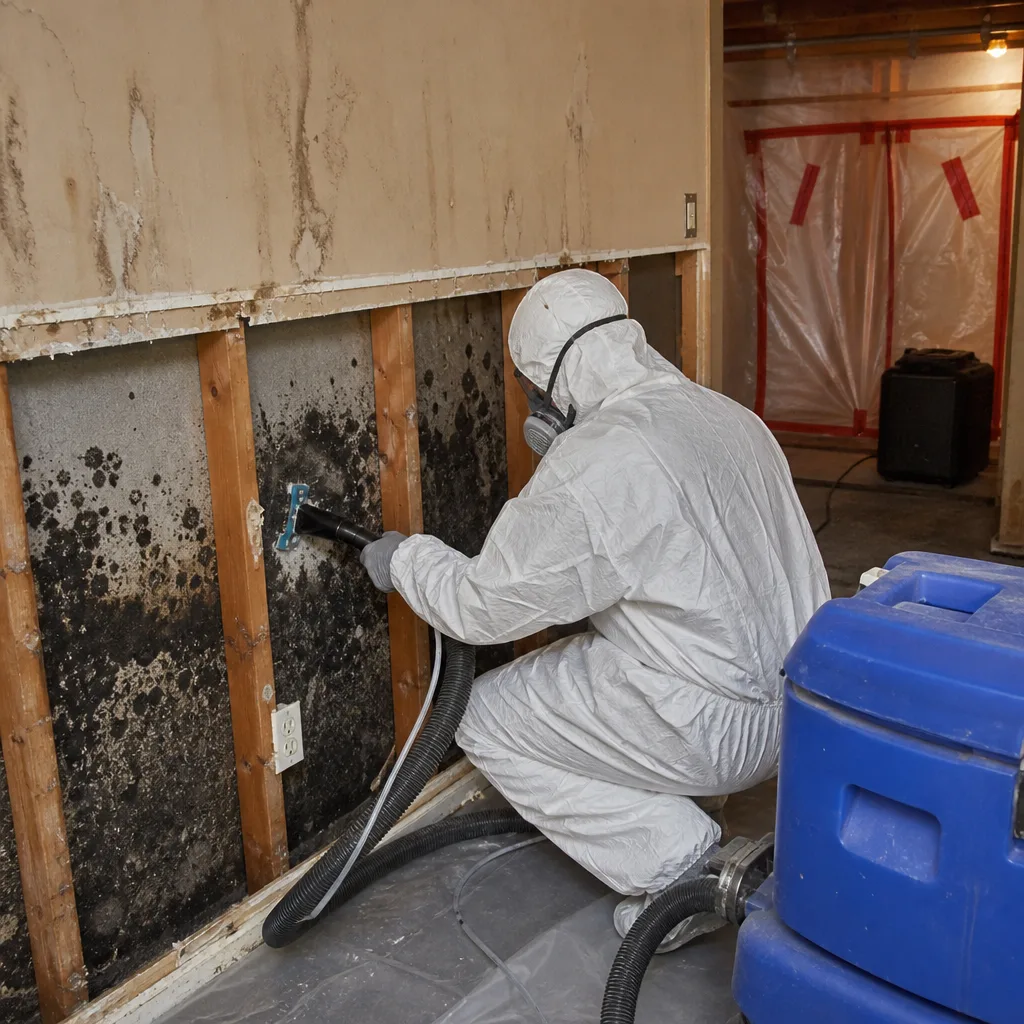
Air Quality Restoration
After remediation, we run clearance testing with third-party lab verification. In Huntington Park’s older homes with minimal ventilation and unpermitted additions that block original airflow patterns, this step is critical. We use XPOWER air movers and Phoenix dehumidification to restore balanced humidity, then verify with psychrometric data - temperature, relative humidity, and vapor pressure differential - until the space meets IICRC drying standards. The logs go to you and your adjuster.
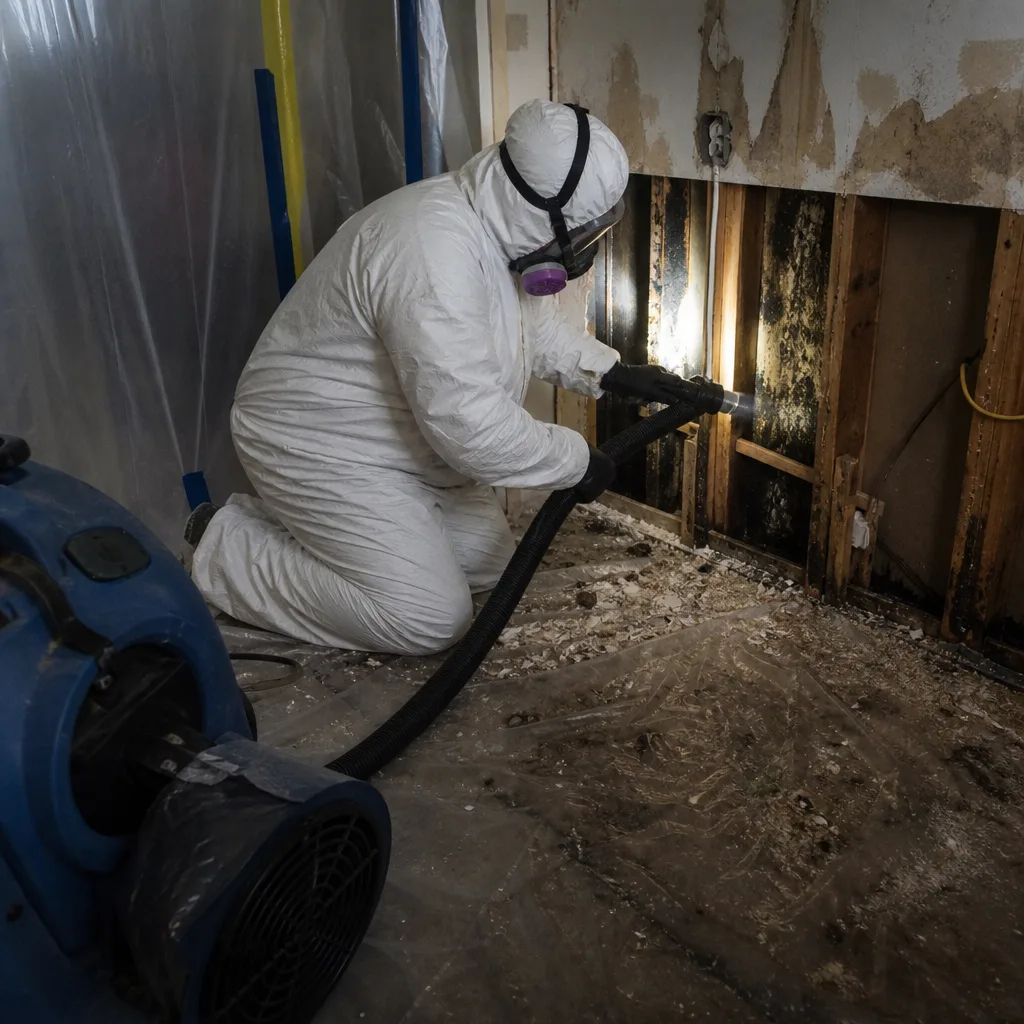
Crawl Space Treatment
Huntington Park duplexes and bungalows often have shallow crawlspaces with dirt floors and no vapor barrier. Slow leaks from corroded galvanized risers saturate these spaces for weeks before detection. We excavate affected soil, treat framing with antimicrobial, install temporary vapor barriers during drying, and run Injectidry panel systems to deliver heated, dehumidified air into cavities that conventional equipment can’t reach. Daily moisture readings are logged until wood moisture content drops below 16%.
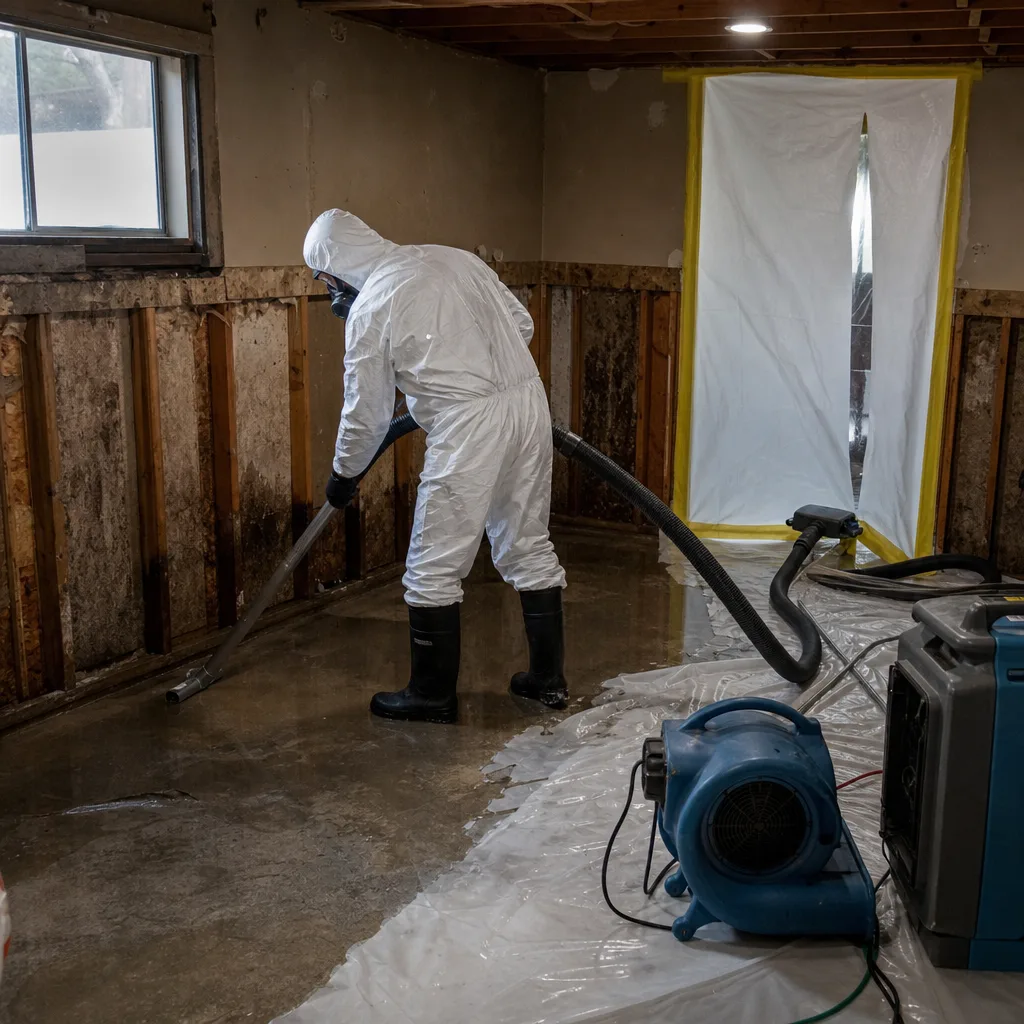
Moisture & Humidity Control
The Santa Ana winds that precede Huntington Park’s winter rains desiccate older wood-frame structures, leaving them especially vulnerable to rapid moisture absorption when the storms arrive. We install temporary and permanent dehumidification solutions sized to your structure’s specific air volume and infiltration rate, not generic square-footage rules. For subdivided properties, we zone the drying plan so one unit’s equipment doesn’t create negative pressure that draws contaminants into another.
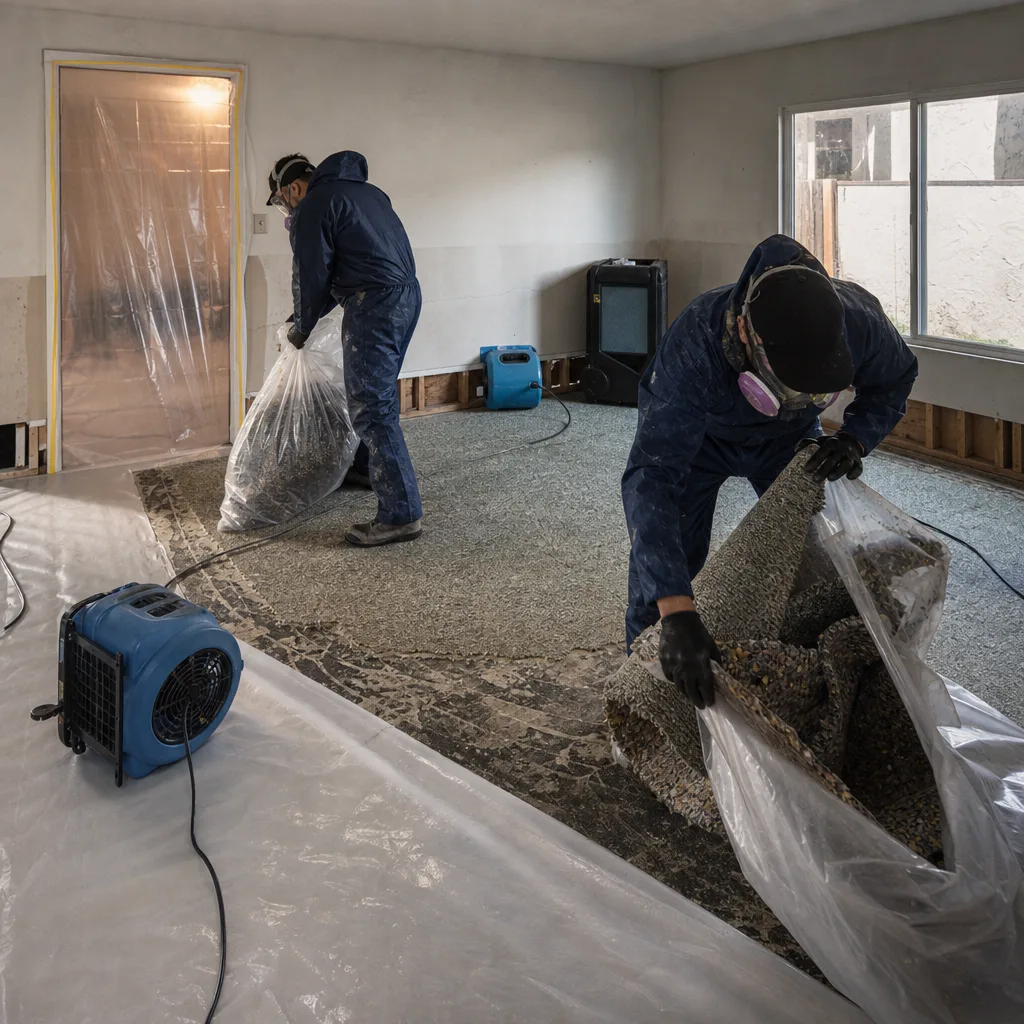
What happens when you call
- 1
A real person answersNo phone trees - you reach a local pro.
- 2
You get an upfront price rangeHonest numbers before anyone is dispatched.
- 3
A background-checked tech heads outLicensed & insured, dispatched right away.
- 4
You approve before work beginsNothing starts until you say go.
 Before
 After
AfterTrusted Brands We Service in Huntington Park
Our equipment inventory includes professional-grade drying systems from Phoenix, XPOWER, B-Air, and Injectidry - brands we deploy on Huntington Park jobs where access is tight and airflow is constrained by unpermitted additions. We stock HEPA filtration media, antimicrobial treatments, and containment supplies locally, so we’re not waiting on delivery while mold continues to colonize. All work is documented to IICRC, RIA, and IFA standards, producing the daily drying logs that turn restoration invoices into payable insurance claims.
Common Mold Remediation Problems We See in Huntington Park Homes
- Assuming the loss stops at the main house. The same crawlspace and shared framing that fed the front unit has already wicked moisture into an unpermitted rear dwelling or casita. A “contained” mold job re-blooms in 30 days because nobody scoped the informal structure. We map the entire property line, every time.
- Skipping moisture mapping behind original lath-and-plaster walls. A non-invasive meter reads dry at the surface, but galvanized steel failures in these 1920s-1950s bungalows often sit deep in the wall cavity. Mold has already colonized before the first visible sign. We probe, we photograph, we document.
- Treating Category 3 sewage backup like Category 1 supply-line leakage. In heavily subdivided courtyard apartments near the Alameda Street corridor, black water crosses shared floors and ceilings. Anything porous has to come out, not be dried in place. We classify correctly and scope accordingly.
- Ignoring the human complexity of informal occupancy. When a rear-casita tenant has no lease and no renters insurance, displacement becomes a legal and logistical problem, not just a technical one. We document occupancy status and pre-loss conditions so landlords have a path to recovery even when standard coverage doesn’t apply.
Pricing for Mold Remediation in Huntington Park, CA
Here’s what mold remediation costs in Huntington Park’s current market:
| Service | Typical Range |
|---|---|
| Mold inspection & moisture mapping | $350-$650 |
| Contained mold removal (single room, permitted structure) | $1,800-$3,200 |
| Black mold remediation with full containment | $3,500-$6,500 |
| Crawl space treatment with soil excavation | $2,800-$5,500 |
| Air quality restoration & clearance testing | $450-$850 |
| Moisture control system installation | $1,200-$3,800 |
Costs rise in Huntington Park when jobs involve unpermitted structures that require broader containment, when galvanized plumbing failures have caused extensive hidden damage, or when Category 3 sewage contamination requires full removal of porous materials. We deliver a written price before work begins on every job - Haven Standard, Clause 1 - with no scope-creep additions once the crew is inside. Estimates are free. Call (424) 347-8338 for an exact quote on your property.
We Also Serve Cities Near Huntington Park
Our crews work the full corridor from Huntington Park through Maywood, Lynwood, Downey, and Paramount - the same housing stock, the same galvanized plumbing era, the same stormwater and mold patterns. If your property sits just outside city limits, the same documentation standards and response times apply.
Serving Huntington Park, CA - Our Local Coverage Area
We’re based in the Huntington Park area and know this community well. Use the map below to see our service coverage - if you’re nearby, we can almost certainly help.
FAQs - Mold Remediation in Huntington Park
Yes. In Huntington Park’s 1920s-1950s wood-frame homes, galvanized steel failures often sit deep in wall cavities where moisture doesn’t reach the surface for weeks. We’ve opened lath-and-plaster walls that read “dry” on non-invasive meters and found mold colonization behind them. We use invasive probes and borescope inspection to check cavities directly. Call (424) 347-8338 and we’ll run moisture mapping before any demolition - estimates are free.
Probably not for the casita itself - most policies exclude unpermitted structures, and any claim may trigger code-compliance requirements for the entire affected area. However, if the mold originated from a covered loss in the permitted main house and migrated through shared framing, the primary policy may cover remediation of the connection point and the main structure. We document pre-loss conditions and the path of moisture migration so your adjuster can evaluate coverage accurately. Call (424) 347-8338 for a written scope and Free Second Opinion on any prior estimate.
We document occupancy status, pre-loss conditions, and the scope of work before opening any wall. The landlord receives the same photo record, drying logs, and written warranty as any other client. For displaced informal occupants, we coordinate with the property owner on temporary relocation and include those costs in the documented scope where recoverable. We don’t perform remediation without a clear chain of authorization - that’s Haven Standard protocol on every job. Call (424) 347-8338 to discuss your specific situation.
The Santa Ana winds desiccate wood framing to extremely low moisture content, which opens the grain and creates capillary pathways. When winter rains arrive, that same framing absorbs moisture rapidly - often through failed waterproofing at slab edges, corroded galvanized joints, or unpermitted additions with no weep screed. Mold colonizes within 24-72 hours of moisture intrusion. We recommend pre-season inspection of vulnerable areas, especially in homes with prior leaks. Call (424) 347-8338 to schedule moisture mapping before the next rain cycle.
Sometimes, if the water is Category 1 or 2 and we catch it within 48 hours. We use Injectidry panel drying to deliver dehumidified air into the cavity, paired with Phoenix dehumidification and XPOWER air movers above. But in Huntington Park’s older duplexes, Category 3 sewage backups from storm events are common, and any porous subfloor or insulation in contact with black water must be removed per IICRC standards. We test, classify, and document - then give you a written scope with actual options, not a default demolition. Call (424) 347-8338 for an inspection.
We got a call from a duplex on Clarendon Avenue where a pinhole leak in the original galvanized steel riser had been weeping into the crawlspace for weeks - our techs ran moisture mapping and found the moisture readings spiking 9 points across a shared property line into an unpermitted rear casita. We set containment, pulled the saturated baseboards, applied antimicrobial treatment, and dried the cavity with Injectidry panel drying plus Phoenix dehumidification and XPOWER air movers while logging daily moisture readings for the drying logs. The front tenants’ insurance covered the main structure, but the back unit’s informal occupants had no policy - we documented the entire scope of work and pre-loss condition so the landlord could at least pursue a claim.
This is the reality of Mold Remediation in Huntington Park: most of the city’s housing is unpermitted, galvanized-plumbed, and subdivided across families. That changes inspection, scoping, insurance, and drying before a single wall is opened. We build every scope around that reality.
Call (424) 347-8338 now. A live person answers 24 hours a day, 7 days a week. We’ll schedule a free inspection with written pricing, moisture mapping, and a documented photo record - or bring us a competitor’s written estimate for a Free Second Opinion.
Written by Alicia Brennan, Owner at Back to Dry Restoration, serving Huntington Park since 2011.