
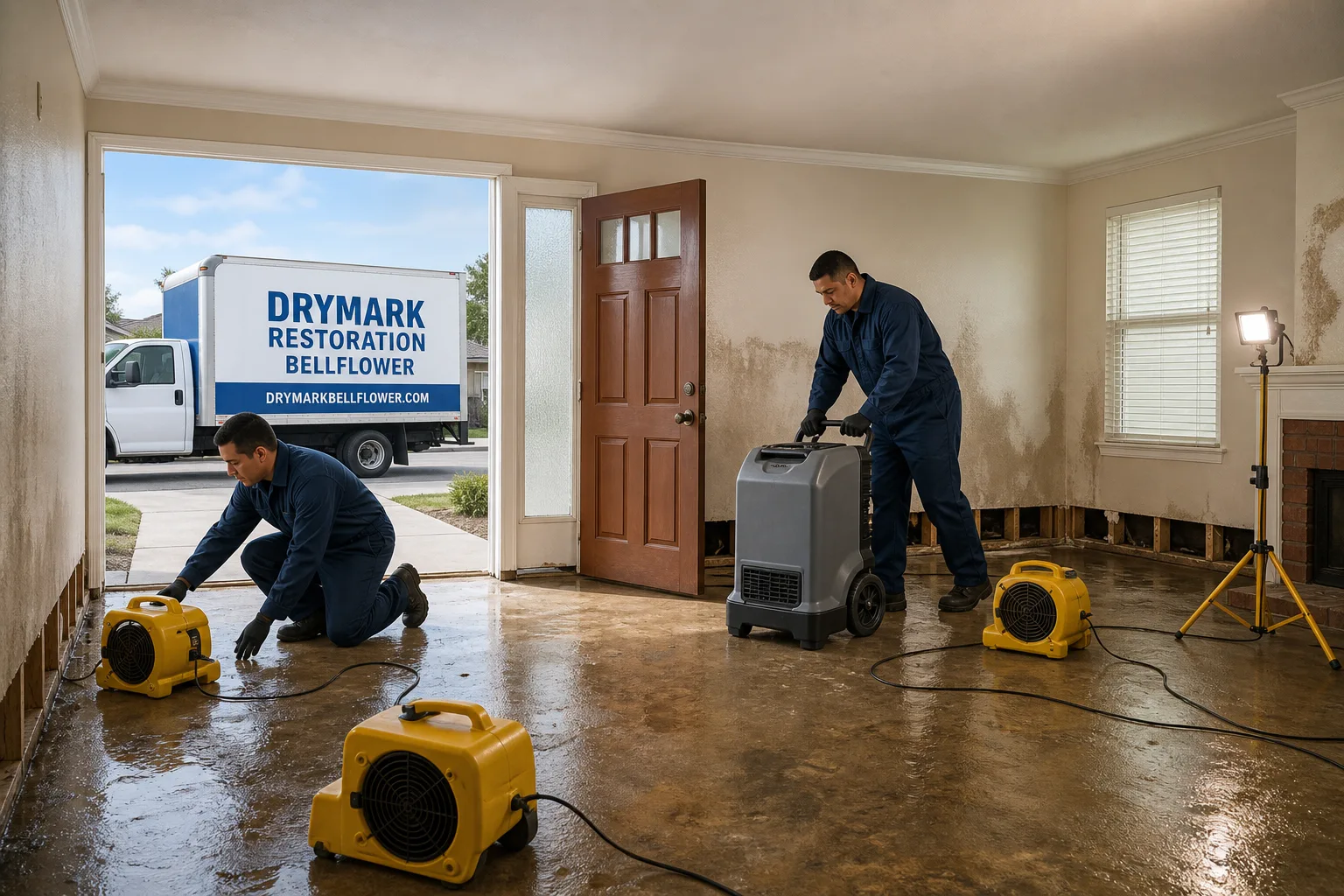
Free visual inspection and a written scope of work before any mitigation begins - photos, moisture readings, and drying logs go in your claim file
The scope we write is the scope we bill. Anything new gets shown to you, in writing, before we touch it.
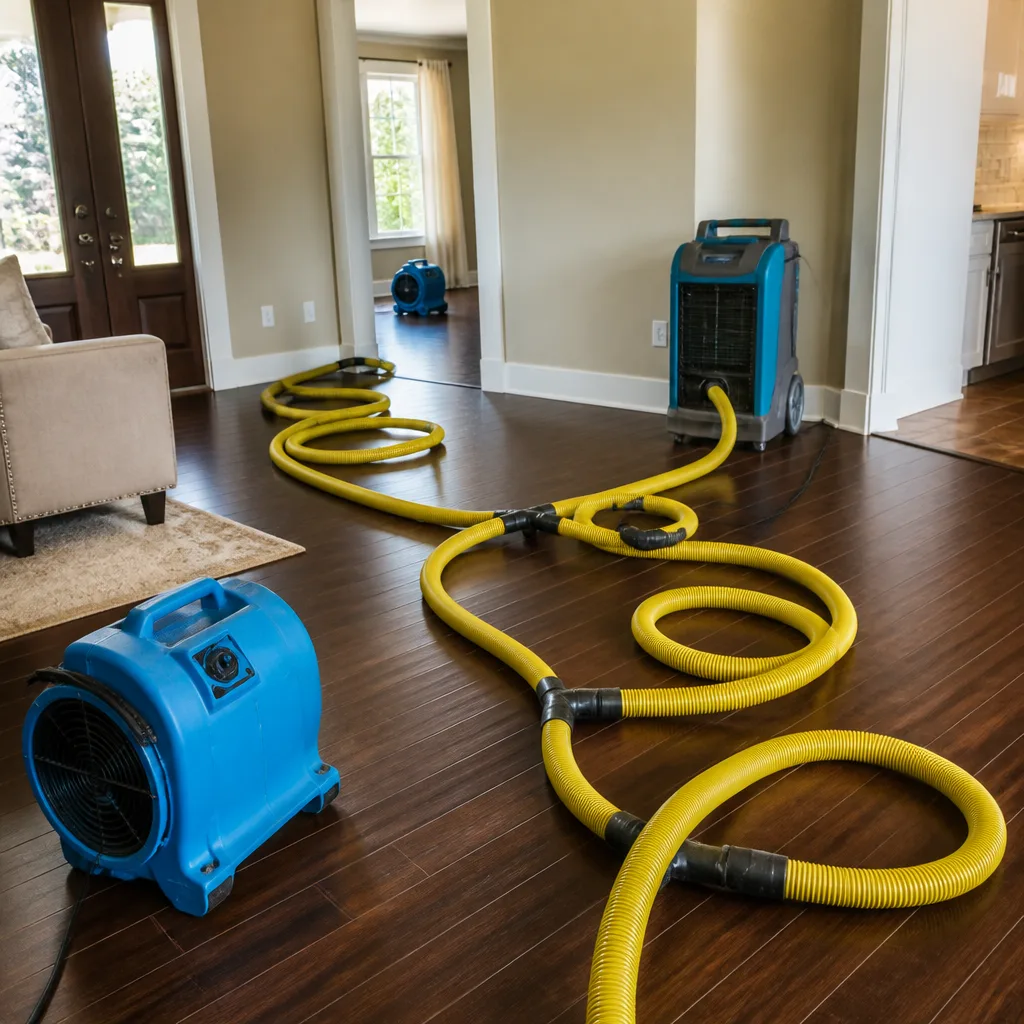
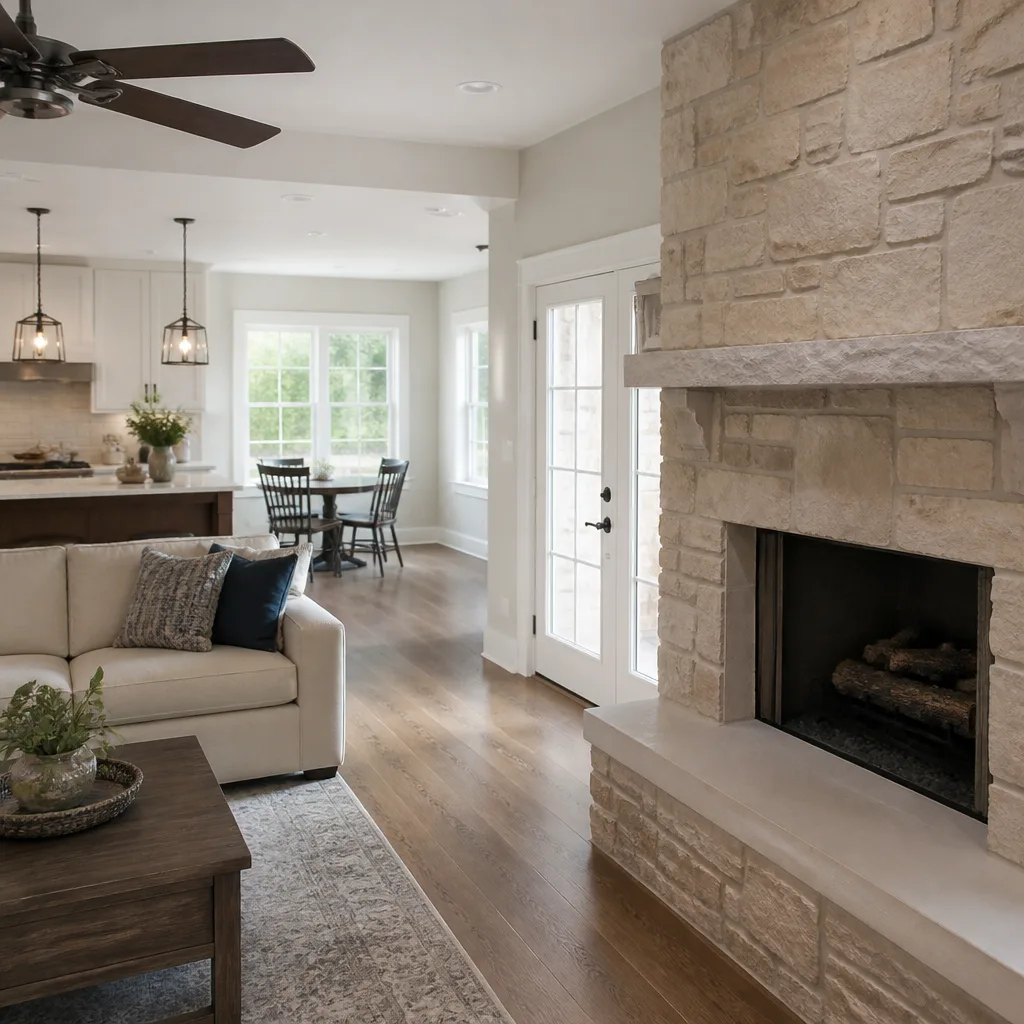
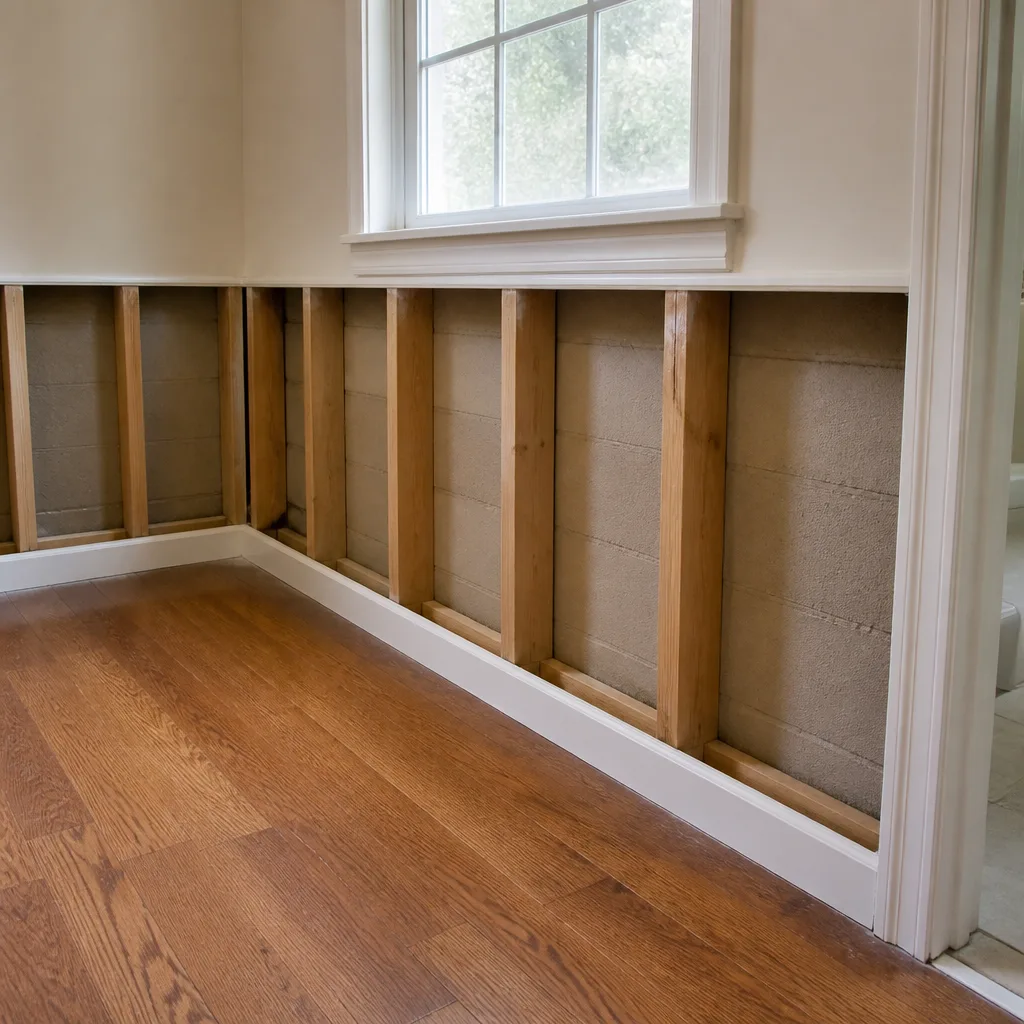
 Before
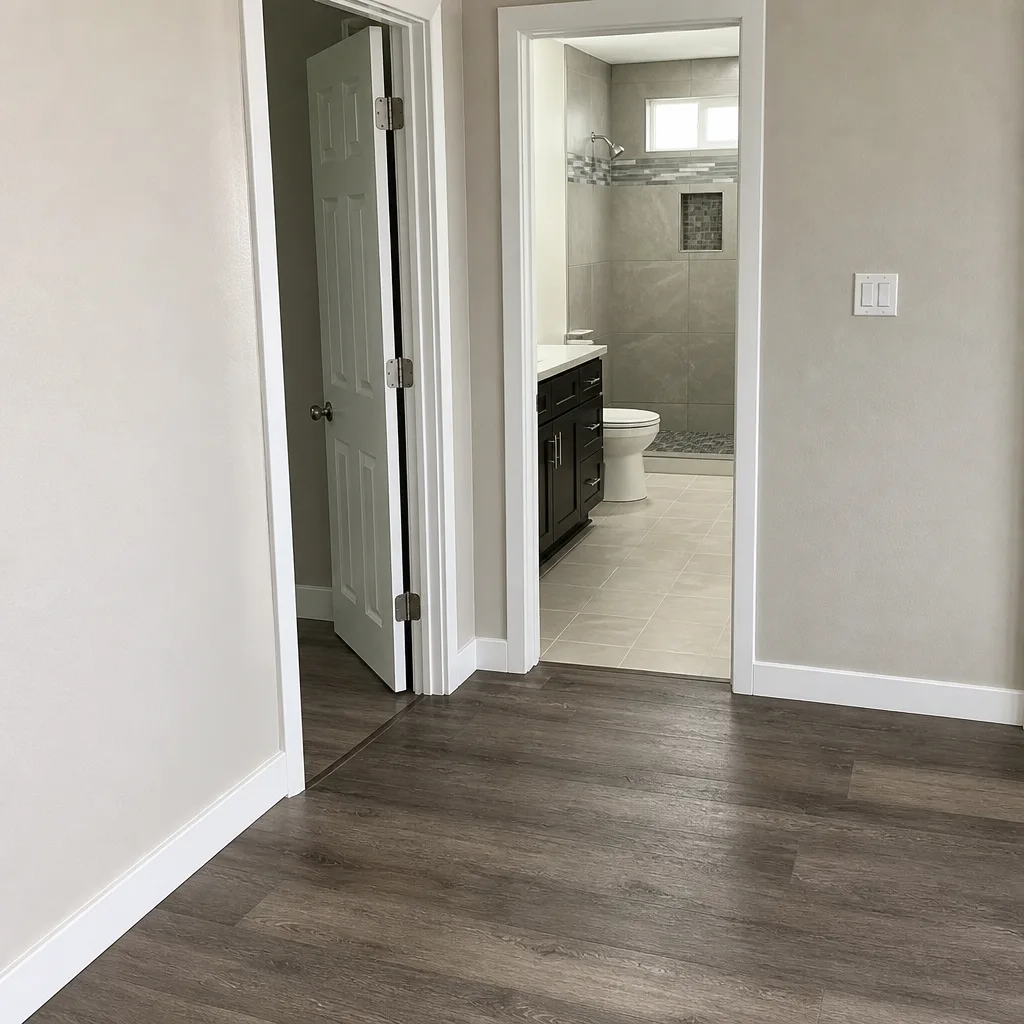 After
After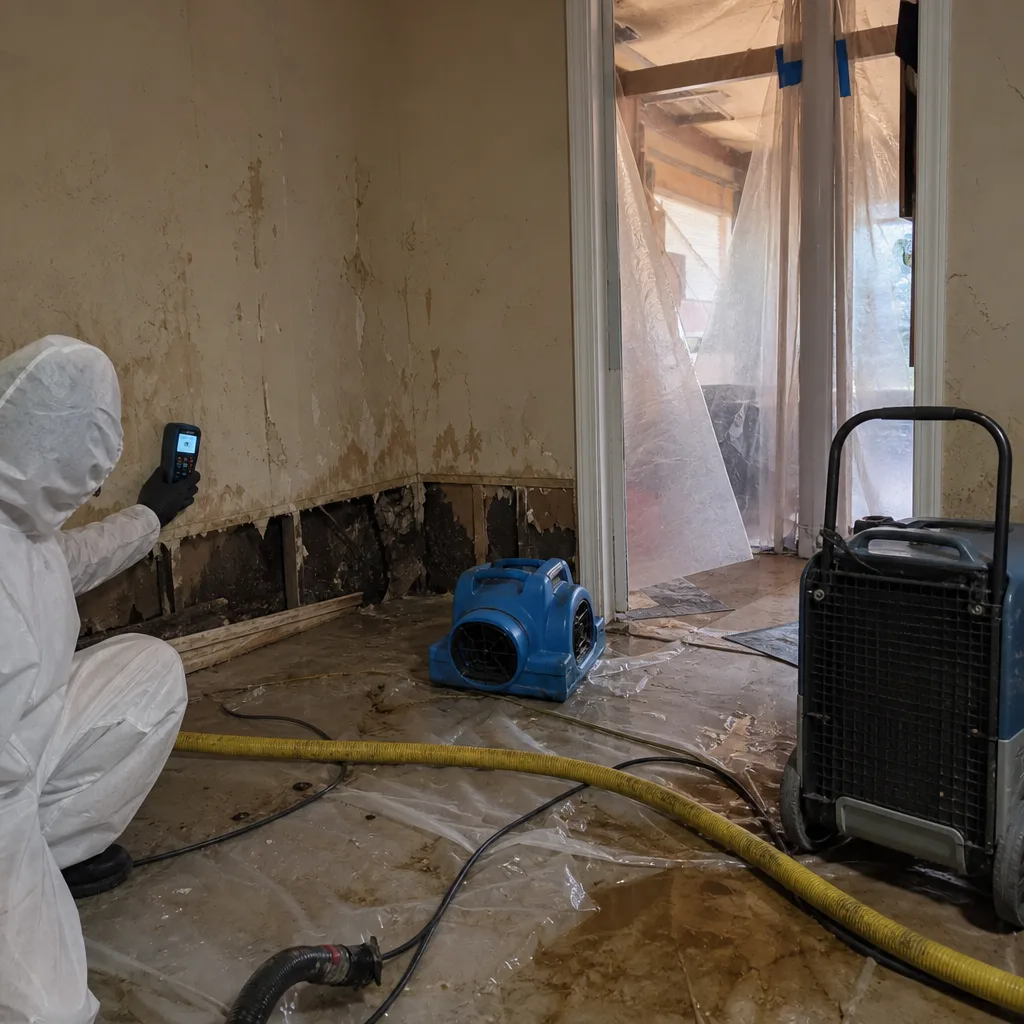 Before
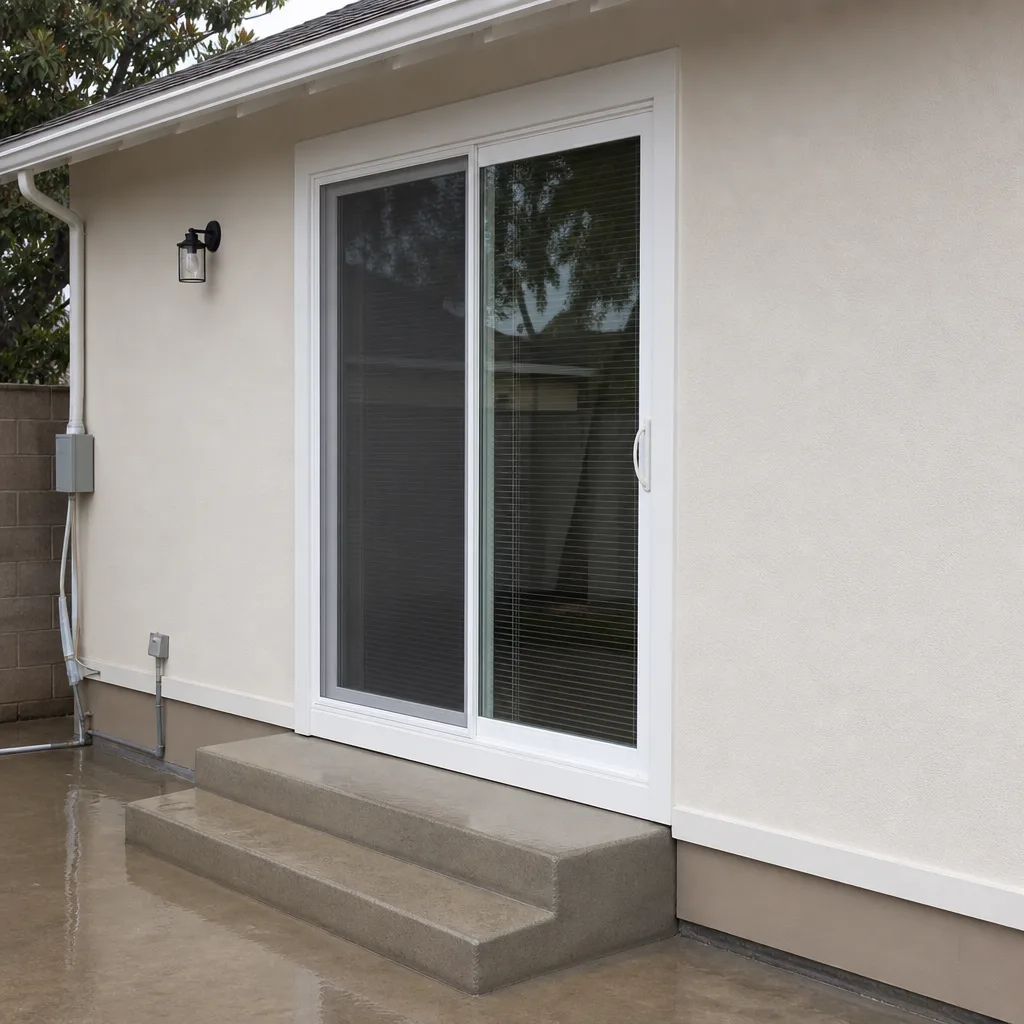 After
After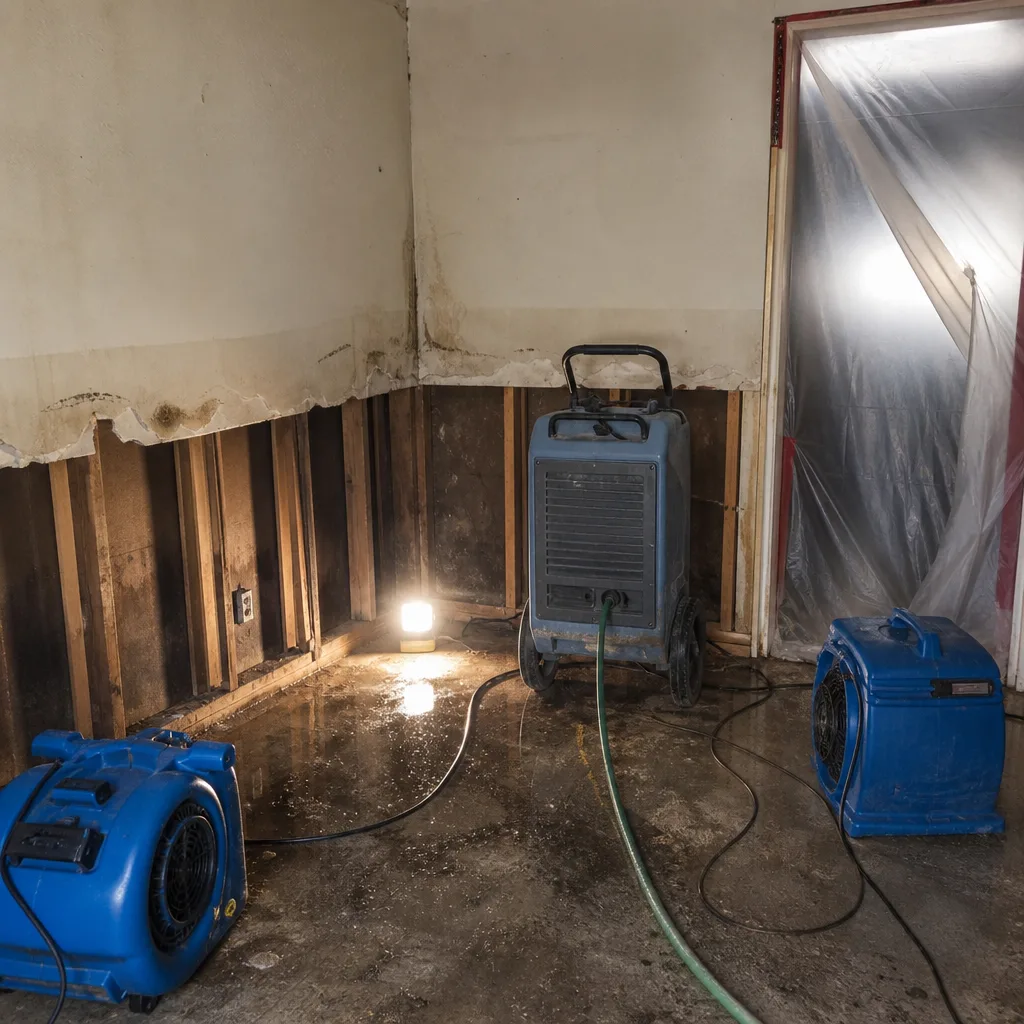 Before
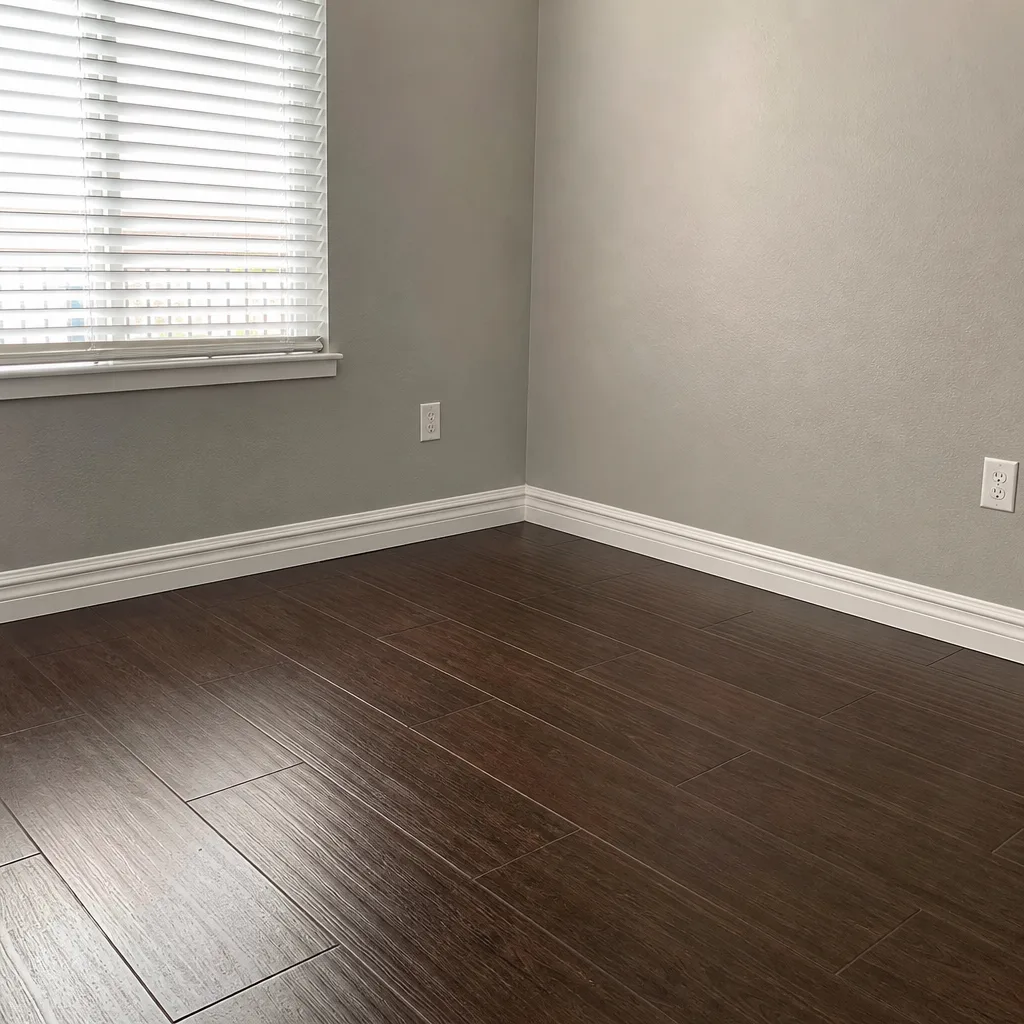 After
AfterFast, Reliable Water Damage Restoration Across Maywood
Water damage restoration in Maywood typically runs $2,800-$6,500 for a standard residential extraction and drying job, with emergency response available 24 hours a day, 7 days a week. Our crews are dispatched from our Los Angeles office and can be on-site anywhere in Maywood’s 1.2 square miles within 45 to 60 minutes of your call. We know this city block by block - from the pre-war bungalows near Slauson Avenue to the duplex courts off Atlantic Boulevard - and we understand that a water loss here rarely stays inside one property line.
Call (424) 347-8338 now. A live person answers every emergency line, and we’ll have a written price in your hands before any equipment gets plugged in. Haven Standard, Clause 1.
Why DryMark Restoration Bellflower Is Maywood’s Preferred Water Damage Restoration Company
We’ve restored water-damaged homes in Maywood since we opened our Los Angeles-area operations, and the pattern is consistent: what starts as a tenant’s “small leak” almost always reveals months of hidden moisture behind original lath-and-plaster walls. Our Water Damage Restoration team documents every job with photo records, room-by-room moisture readings, and daily drying logs that turn restoration invoices into payable insurance claims. That’s not a marketing promise - it’s how Alicia Brennan built this company after years watching sloppy documentation cost homeowners their settlements.
Our response time to Maywood averages under an hour because we know the city’s grid: Atlantic Boulevard, Slauson Avenue, and Maywood Avenue are our regular routes. We don’t waste time finding addresses in this dense, 27,000-resident city.
Our reviews from Maywood customers consistently cite two things: the written price that showed up before work started, and the photo documentation that made their insurance adjuster’s job straightforward. No scope creep. No surprise line items. Haven Standard, Clause 1.
Every technician who enters your Maywood property is background-checked, uniformed, and licensed - with their license number available on request. We don’t subcontract emergency calls to unknown crews.
Our Water Damage Restoration Services in Maywood
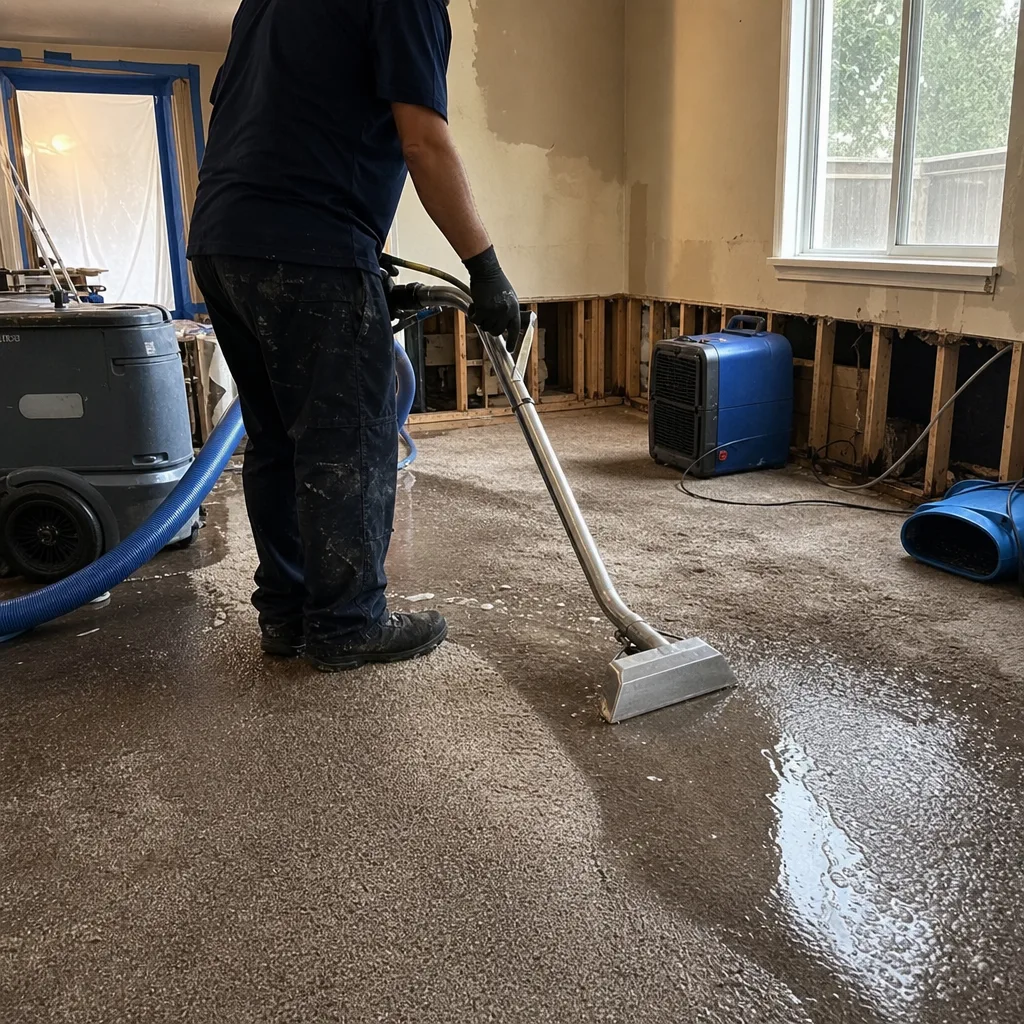
Emergency Water Extraction
When a flat roof on a 1940s Maywood bungalow fails during a winter storm, water doesn’t pool politely - it channels through deteriorated window glazing and into wall cavities with no insulation to slow it down. Our emergency extraction teams arrive with truck-mounted systems and portable flood pumper units, pulling standing water before it migrates across the shared wall into your neighbor’s unit. In Maywood’s near-zero lot clearances, that cross-property migration happens fast. We extract, then immediately deploy moisture mapping to trace how far the water has traveled. Every gallon removed is logged, every affected square foot photographed.
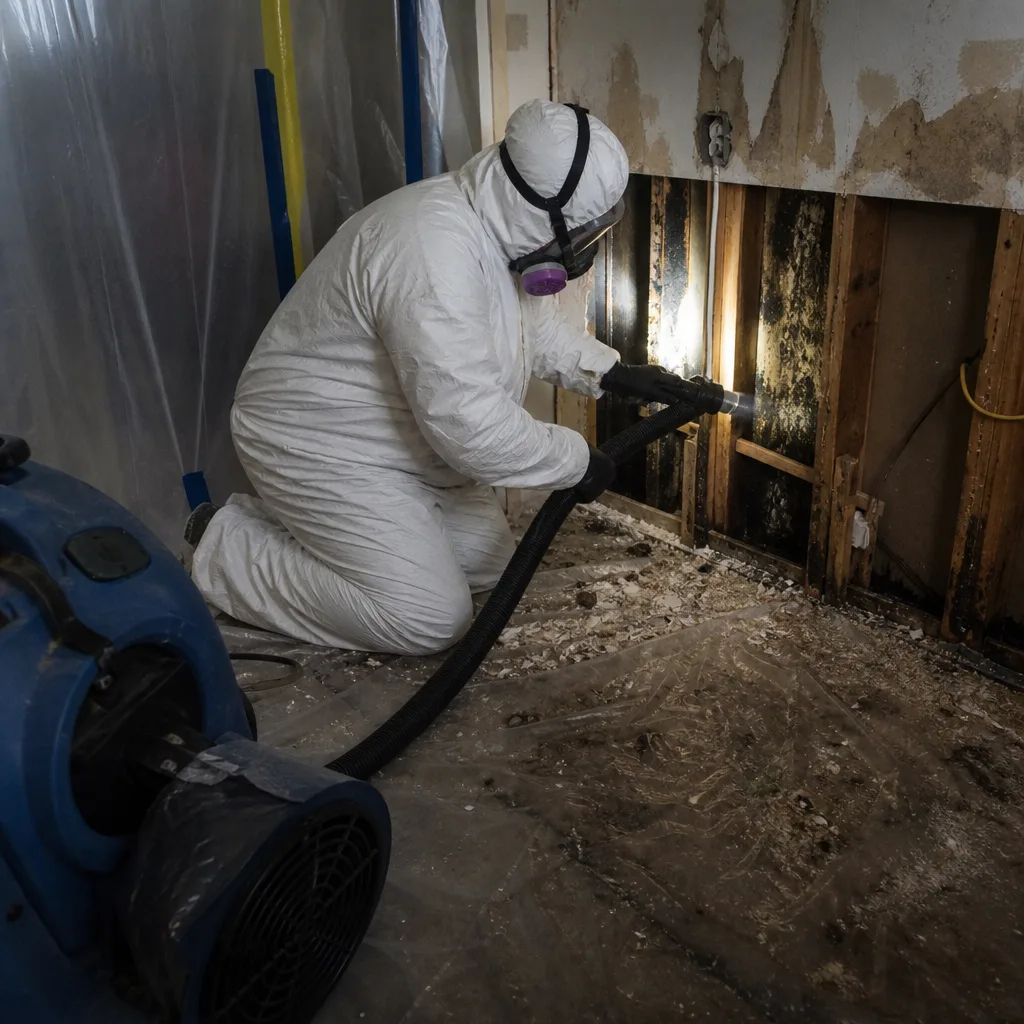
Structural Drying & Dehumidification
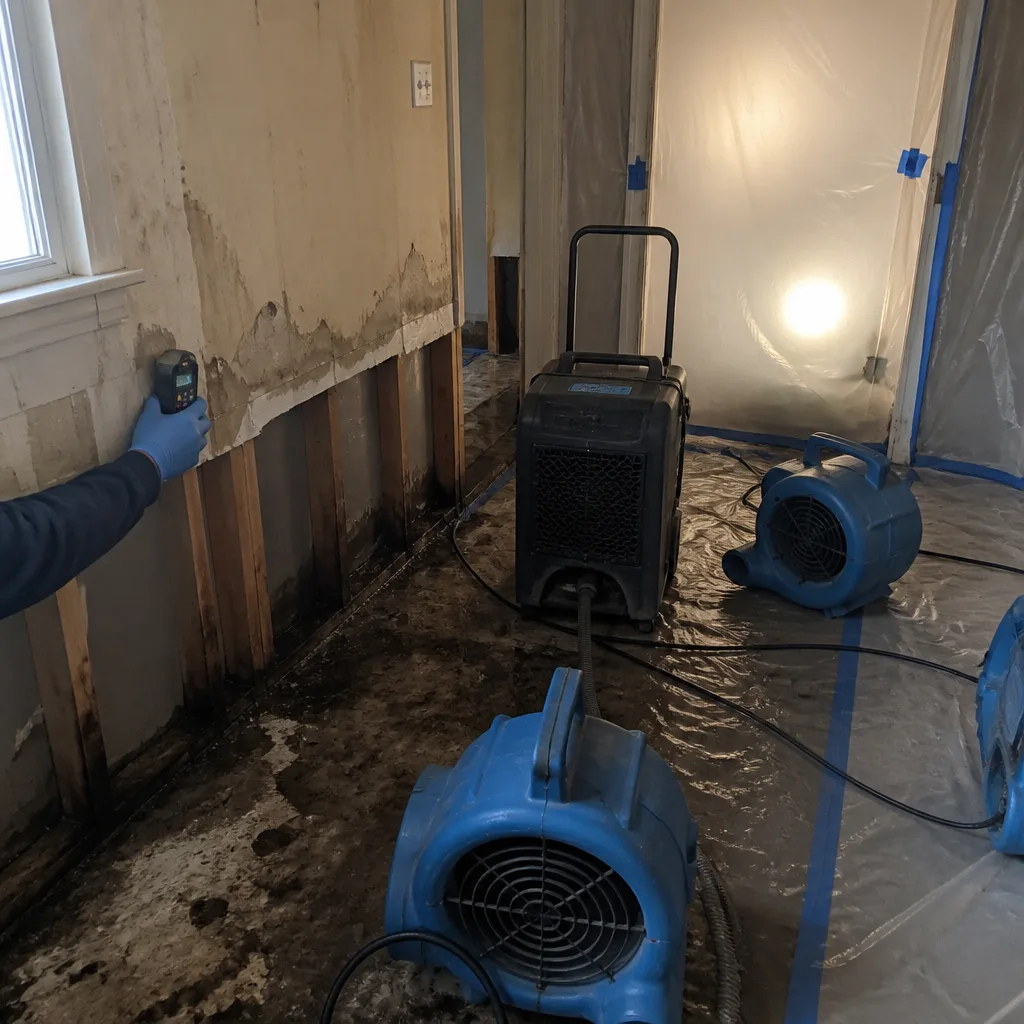
Maywood’s pre-1960 wood-frame construction presents a specific drying challenge: original lath-and-plaster walls hold moisture differently than modern drywall, and the lack of wall insulation means vapor pressure differentials drive moisture into framing members faster than you’d expect. We position XPOWER air movers with Phoenix dehumidification systems calculated to the room’s cubic footage and the material’s permeance class. Psychrometric data - temperature, relative humidity, and vapor pressure - gets recorded twice daily. Tertiary drying, the final phase where bound moisture is coaxed from deep in structural materials, often takes longer in Maywood’s older homes, and we don’t sign off until the moisture readings hit our documented targets.
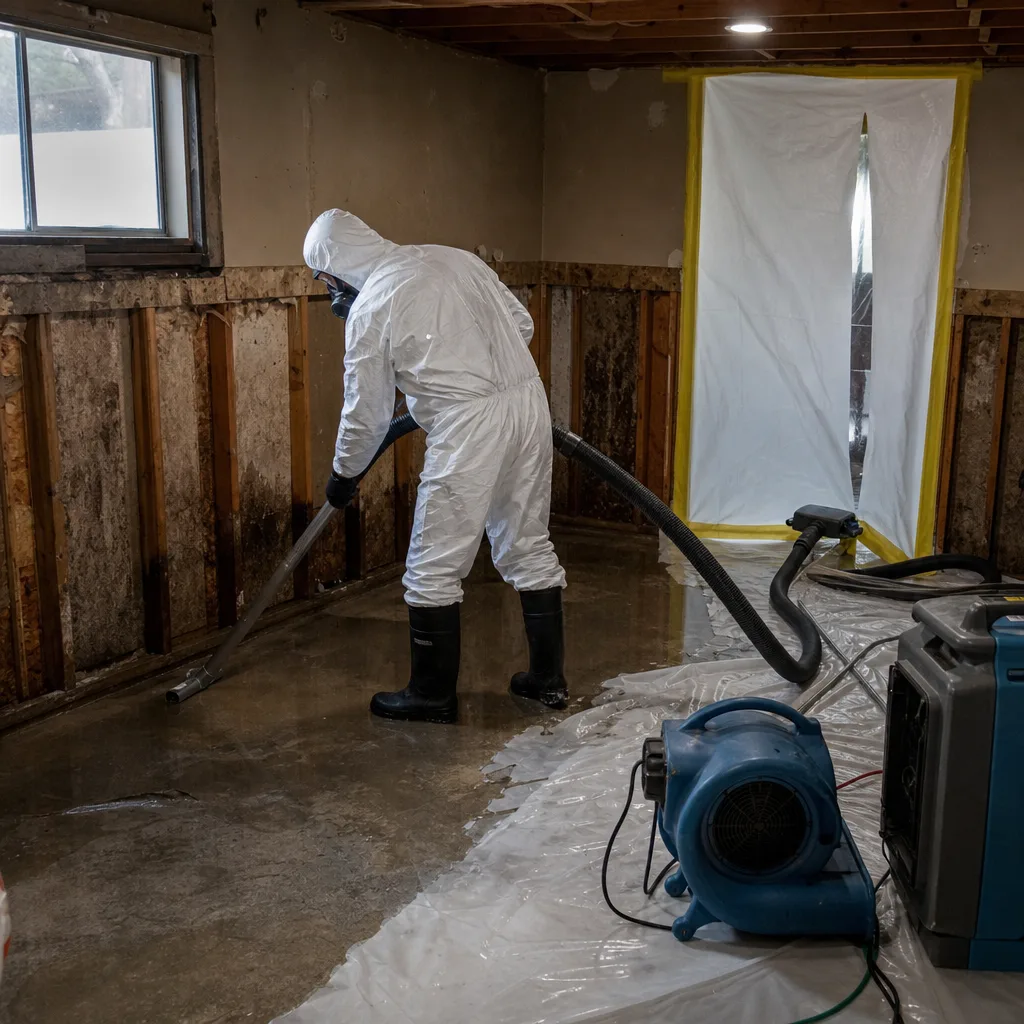
Flood Cleanup
Low-lying parcels near the Los Angeles River corridor face elevated stormwater backup risk, and the concrete-lined channel offers no natural flood attenuation. When street flooding pushes water into ground-floor units, we’re dealing with Category 2 or Category 3 water - not clean rainwater. That classification changes everything: affected materials must come out, antimicrobial treatment is mandatory, and California’s health and safety protocols govern disposal. We handle the documentation, the photo record, and the direct adjuster coordination. Your landlord, your neighbor’s landlord, and both insurance carriers get the same transparent file.
Burst Pipe Restoration
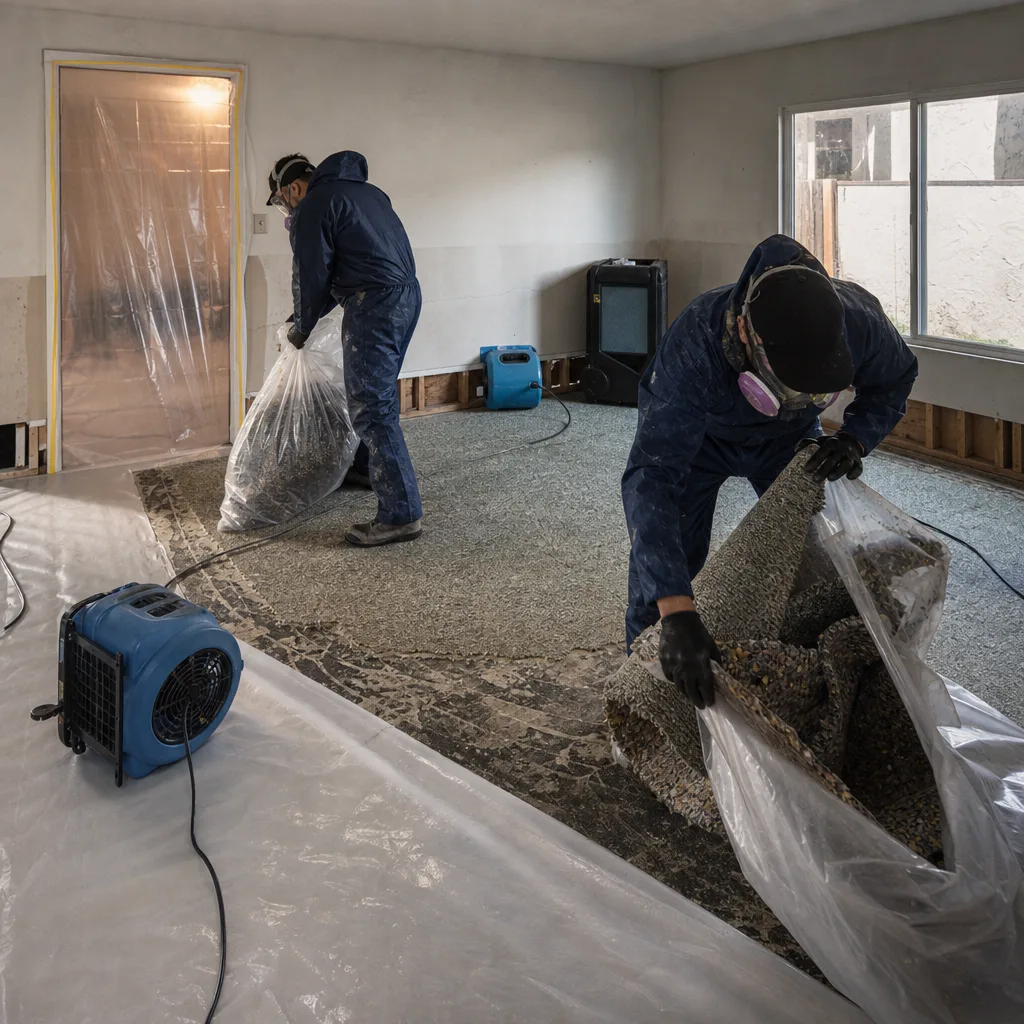
Maywood’s original galvanized supply lines and clay sewer laterals - common in virtually every structure here - are past their functional lifespan. Root intrusion cracks clay laterals. Galvanized pipes corrode from the inside until pressure finds the weak point. When a pipe bursts at 2 a.m., our live dispatch takes your call, crews extract the standing water, and we document the line failure for your insurance claim. The burst pipe is often just the visible symptom; we trace the moisture pattern to find every secondary damage point.
Ceiling & Roof Leak Water Damage
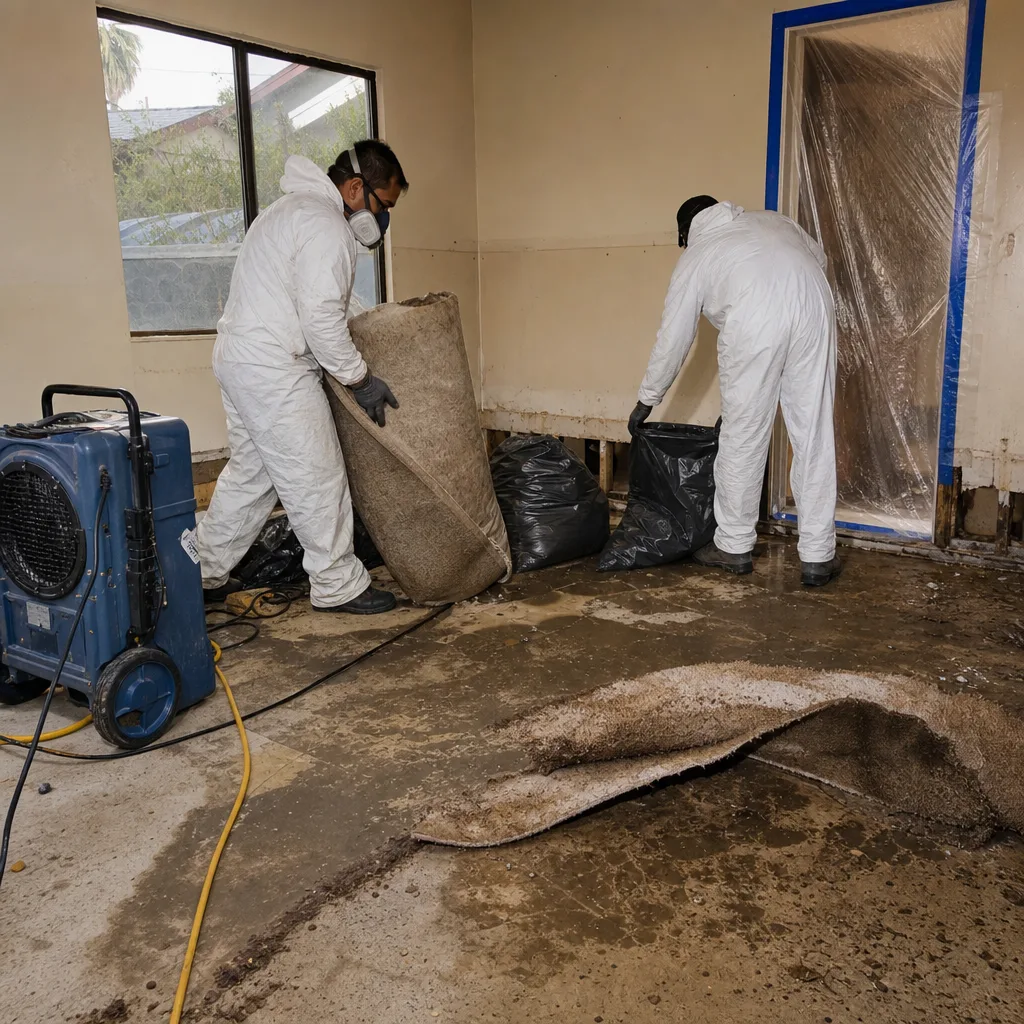
On a 1940s lath-and-plaster bungalow near Slauson Avenue and Maywood Avenue, a tenant’s “small ceiling stain” turned out to be water wicking through original plaster from a failed flat-roof seam - our tech pulled moisture readings and moisture mapping and found wet bays across three walls. We set up containment, ran antimicrobial treatment at the affected plates, then positioned XPOWER air movers with a Phoenix dehumidification setup and logged drying logs until the wall cavities hit our target moisture readings. The landlord had no idea the leak had been feeding Aspergillus and Penicillium colonies for months, and because the structure predated 1978, the gut demo had to be handled under the state’s asbestos and lead protocols before the structural drying could finish.
What happens when you call
- 1
A real person answersNo phone trees - you reach a local pro.
- 2
You get an upfront price rangeHonest numbers before anyone is dispatched.
- 3
A background-checked tech heads outLicensed & insured, dispatched right away.
- 4
You approve before work beginsNothing starts until you say go.
 Before
 After
AfterTrusted Brands We Service in Maywood
Our drying fleet runs on Dri-Eaz, Phoenix, and XPOWER systems - equipment specified to IICRC, RIA, and IFA documentation standards. We don’t rent machines by the day or piece together consumer-grade dehumidifiers. Every unit on your Maywood job is ours, maintained on schedule, and calibrated to produce the psychrometric logs your insurance carrier expects. For ceiling and cavity drying, we deploy Injectidry negative-air and directed-heat systems that can dry behind original plaster without full demolition - when the moisture category and the asbestos/lead assessment allow it. We stock HEPA-filtered air scrubbers and containment materials locally, so Maywood jobs aren’t waiting on supply runs while mold colonies expand.
Common Water Damage Restoration Problems We See in Maywood Homes
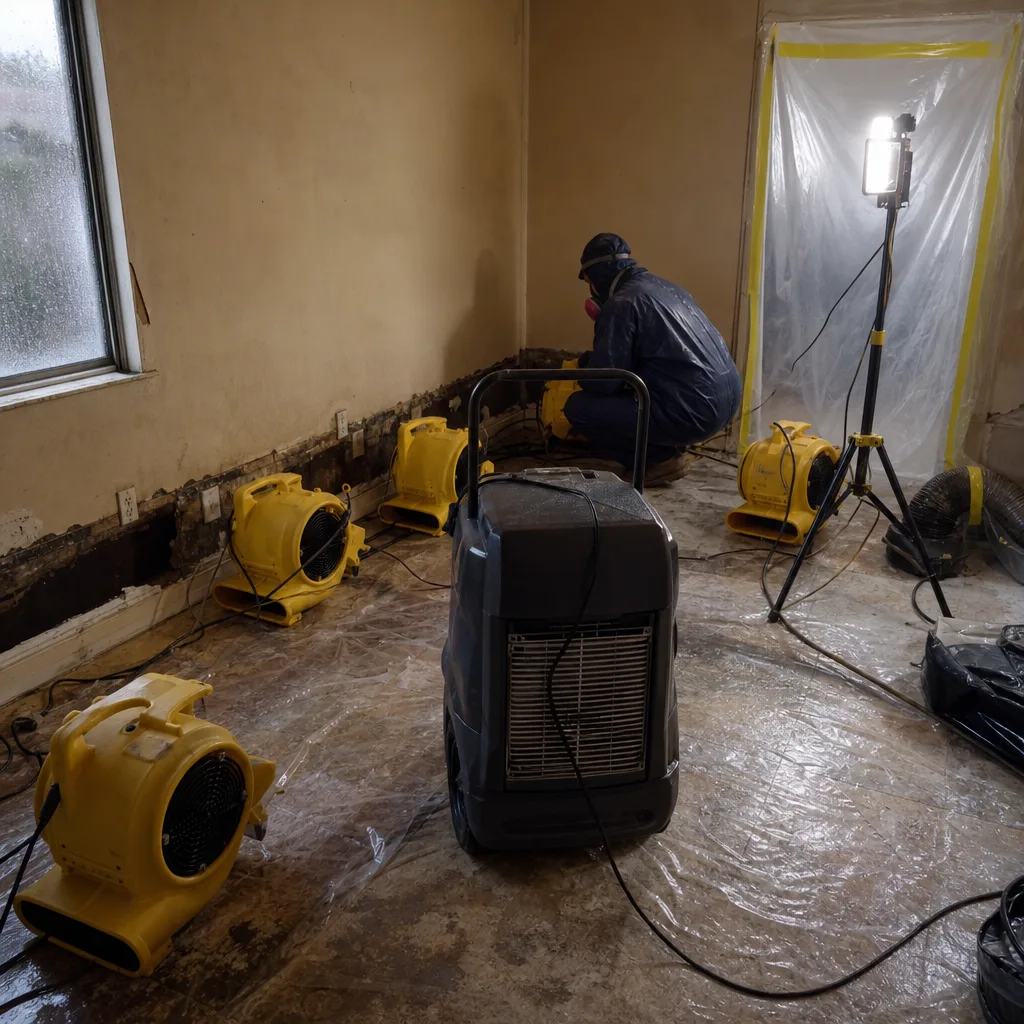
- Flat-roof and window-glazing leaks misclassified as Category 1. By the time a Maywood tenant reports a stain, the water has been sitting in a 1940s wall cavity for weeks. The category has changed. More material must come out. We test and document the actual contamination level before any demolition begins.
- Pack-out and containment skipped on pre-1960 lath-and-plaster in tight duplex lots. Without proper containment, demolition dust and spores cross the shared wall into the adjacent unit - pulling a second owner and a second carrier into the claim. We establish containment per California protocol before the first panel comes down.
- Assuming Maywood’s dry Mediterranean climate means a “small” leak isn’t urgent. Mold growth starts on wet drywall in 24 to 48 hours regardless of season. These walls have no insulation to buffer moisture. We respond the same day, every day, because the climate outside doesn’t change the biology inside.
- Missing the cross-property line migration in near-zero lot clearances. Water follows the path of least resistance, and in Maywood’s density, that path often leads to your neighbor’s wall. Our moisture mapping traces the full extent before extraction starts, so every affected property is documented from day one.
Pricing for Water Damage Restoration in Maywood, CA
| Service | Typical Range in Maywood |
|---|---|
| Emergency water extraction (up to 1,000 sq ft) | $1,200 - $2,400 |
| Structural drying & dehumidification (3-5 day cycle) | $1,800 - $3,600 |
| Flood cleanup with Category 2/3 classification | $3,500 - $7,200 |
| Ceiling/roof leak damage with containment setup | $2,200 - $4,800 |
| Asbestos/lead-safe demolition (pre-1978 structure) | $1,500 - $3,000 additional |
What moves a Maywood job toward the higher end: Category 2 or 3 water classification, cross-property damage requiring multiple carrier coordination, mandatory asbestos or lead abatement protocols on pre-1960 structures, and extended tertiary drying in dense, uninsulated wall cavities. What keeps costs controlled: fast extraction call, accurate moisture mapping that prevents over-demo, and a written scope agreed before work starts - Haven Standard, Clause 1. Every estimate is free. Bring a competitor’s written quote and we’ll review it at no charge.
Call (424) 347-8338 for your written price.
We Also Serve Cities Near Maywood
Our crews regularly handle water damage calls in Maywood and the surrounding communities: Huntington Park to the west, Lynwood to the south, Downey to the southeast, and Pico Rivera to the east. The same documentation standards, the same written-price guarantee, and the same 365-Day Done Right Promise apply across every city we serve.
Serving Maywood, CA - Our Local Coverage Area
We’re based in the Maywood area and know this community well. Use the map below to see our service coverage - if you’re nearby, we can almost certainly help.
FAQs - Water Damage Restoration in Maywood
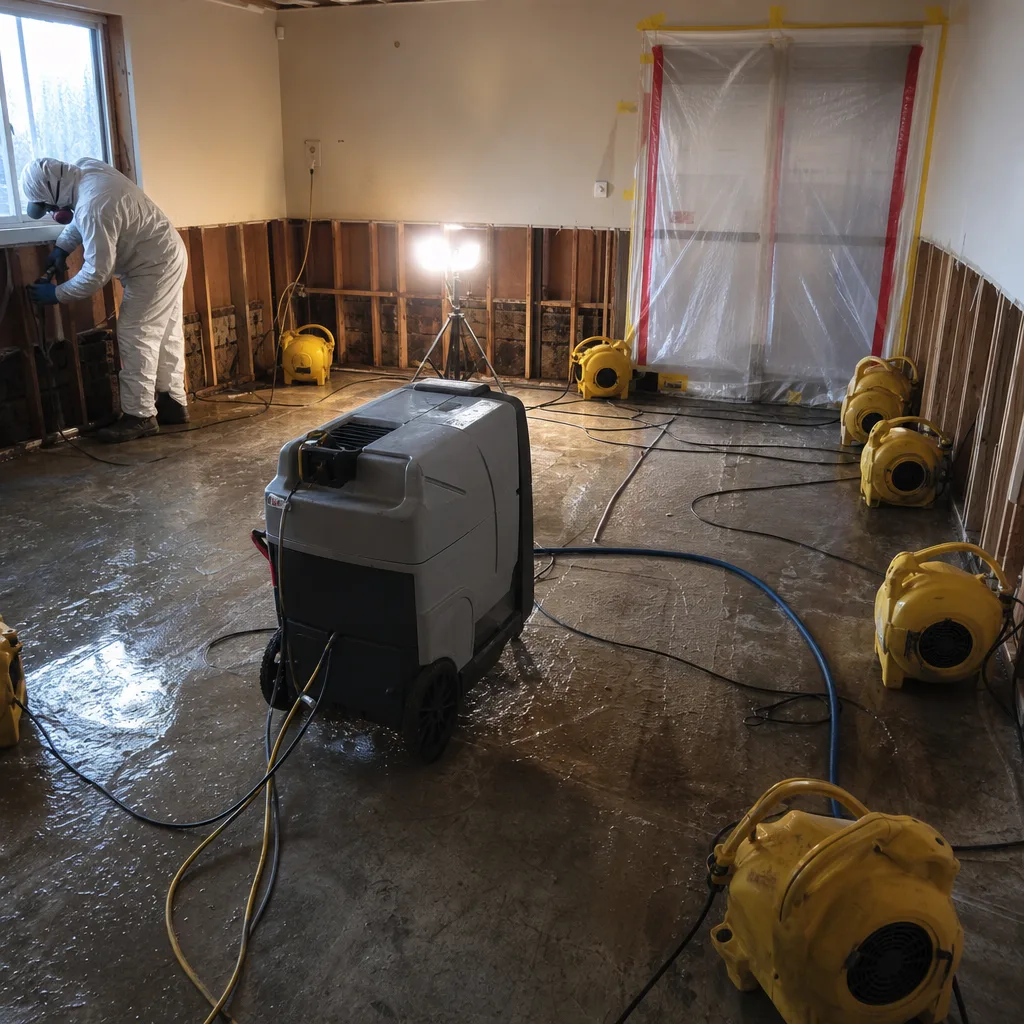
Because the leak has usually been active for months before anyone calls. Maywood’s high renter-to-owner ratio and many absentee landlords mean tenants live with gradual damage until it’s unavoidable - by which time Aspergillus and Penicillium colonies are established in multiple wall bays, and California CDPH notification requirements kick in. The “small” stain was never small. Call (424) 347-8338 and we’ll assess the actual moisture extent with documented readings.
Yes - virtually every structure in Maywood predates 1978, so asbestos floor tiles, pipe insulation, textured ceilings, and lead paint are near-certain findings. State law mandates specific abatement protocols before demolition can proceed. We test, document, and coordinate certified abatement contractors as needed; the photo record and chain-of-custody documentation become part of your insurance file. Call (424) 347-8338 for a written scope that includes these requirements.
Because water migrates horizontally through shared walls in tight lot configurations, often crossing property lines before it’s visible. Extraction handles standing water; moisture mapping with infrared and penetrating meters finds the hidden migration. Without that mapping, we’d leave saturated framing behind the adjacent unit’s plaster. We document the full extent, notify all affected parties, and scope the work to include every wet bay - not just the obvious ones. Call (424) 347-8338 for a complete assessment.
It looks like nothing - until it doesn’t. Aged flat roofs pond water at seams and flashing points; deteriorated window glazing channels it into the wall cavity. Inside, you might notice a slight mustiness, a door that sticks, or paint that looks a little chalky. By the time a stain appears on original lath-and-plaster, the back side of that plaster is already saturated and mold-prone. We recommend inspection after any significant rain event on structures over 60 years old. Call (424) 347-8338 to schedule.
Sometimes - if the water is Category 1, caught within 24 hours, and the asbestos/lead assessment permits in-place drying. We use Injectidry cavity-drying systems and directed heat to push vapor out of wall bays without demolition. But if the water has sat for days, crossed categories, or if the plaster is already delaminating from the lath, selective removal is the only way to dry the framing to target moisture readings. We never guess; we measure, document, and show you the data before any demolition decision. Call (424) 347-8338 for a documented drying plan.
Written by Alicia Brennan, Owner at Back to Dry Restoration, serving Maywood since 2011.