
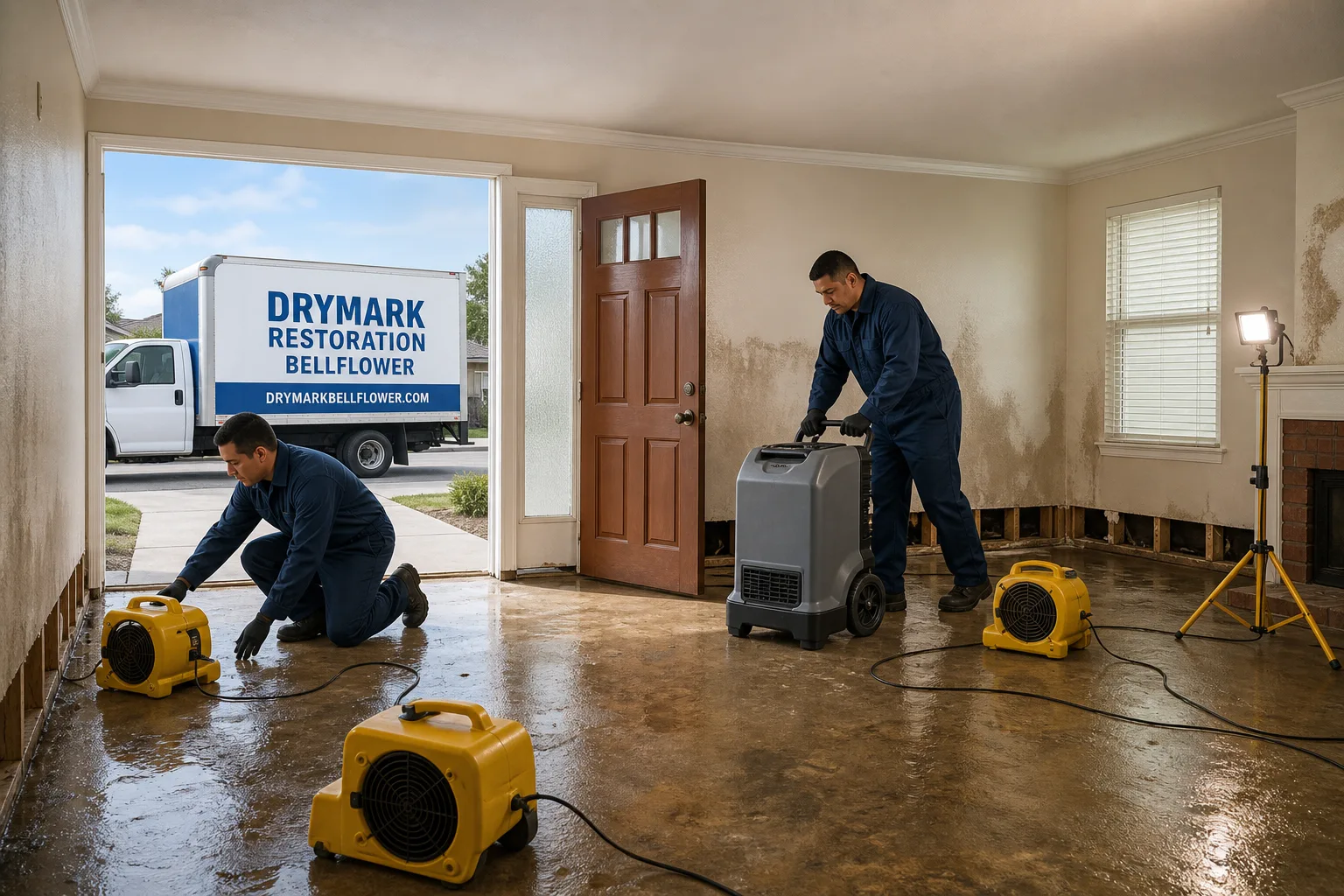
Free visual inspection and a written scope of work before any mitigation begins - photos, moisture readings, and drying logs go in your claim file
The scope we write is the scope we bill. Anything new gets shown to you, in writing, before we touch it.
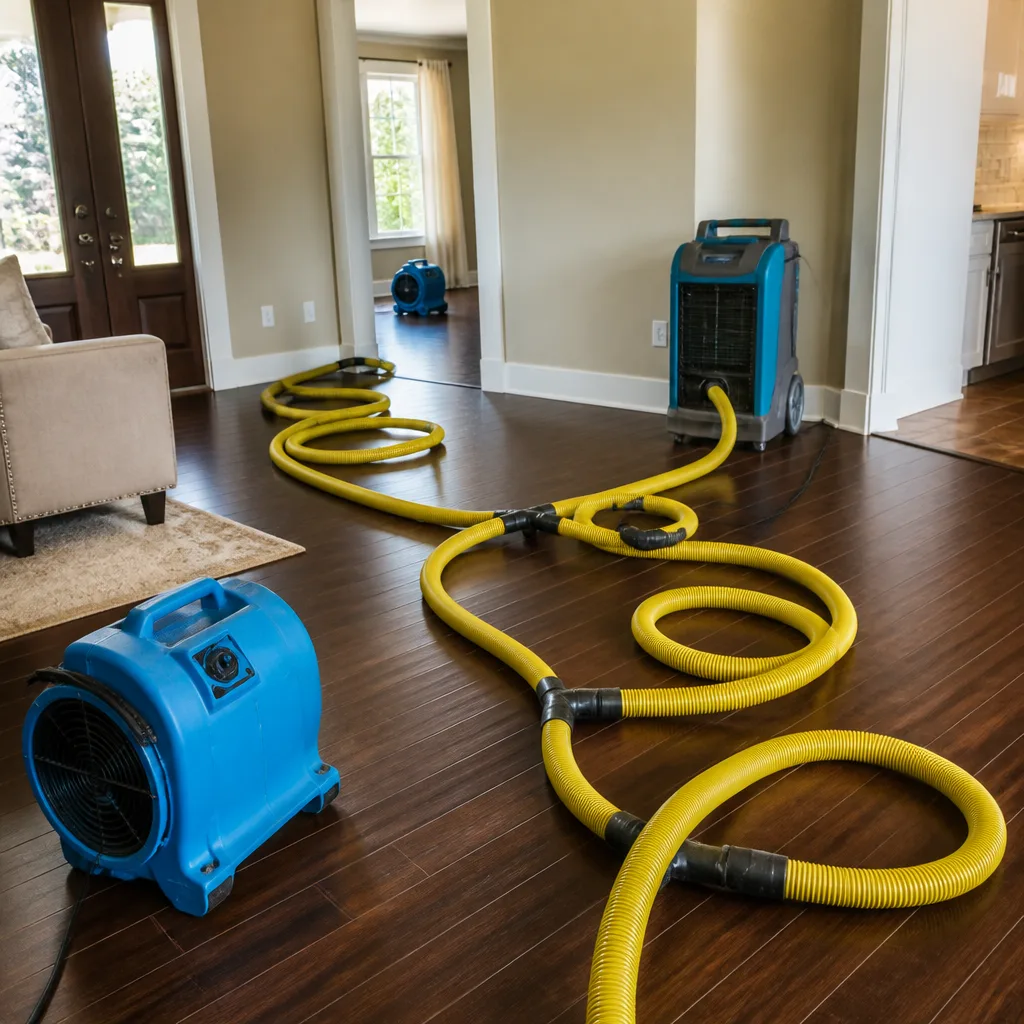
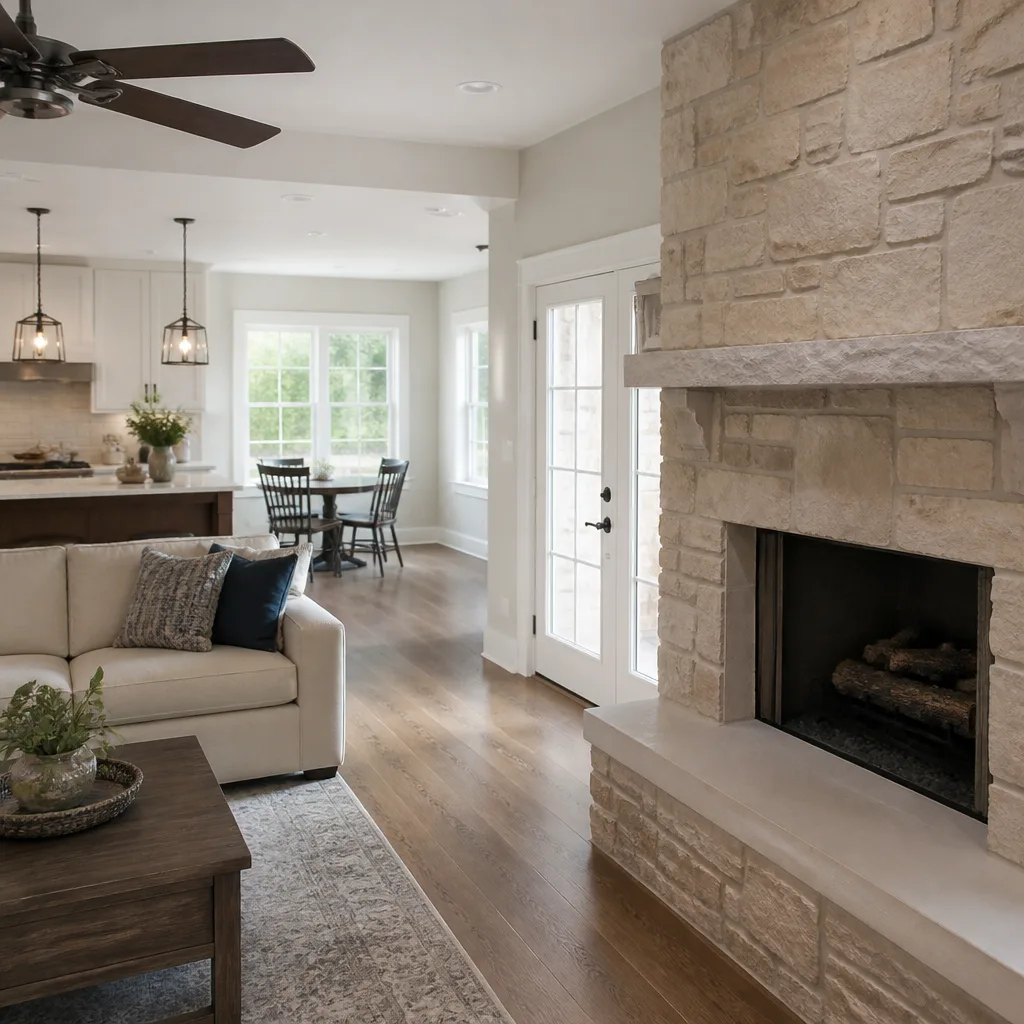
 Before
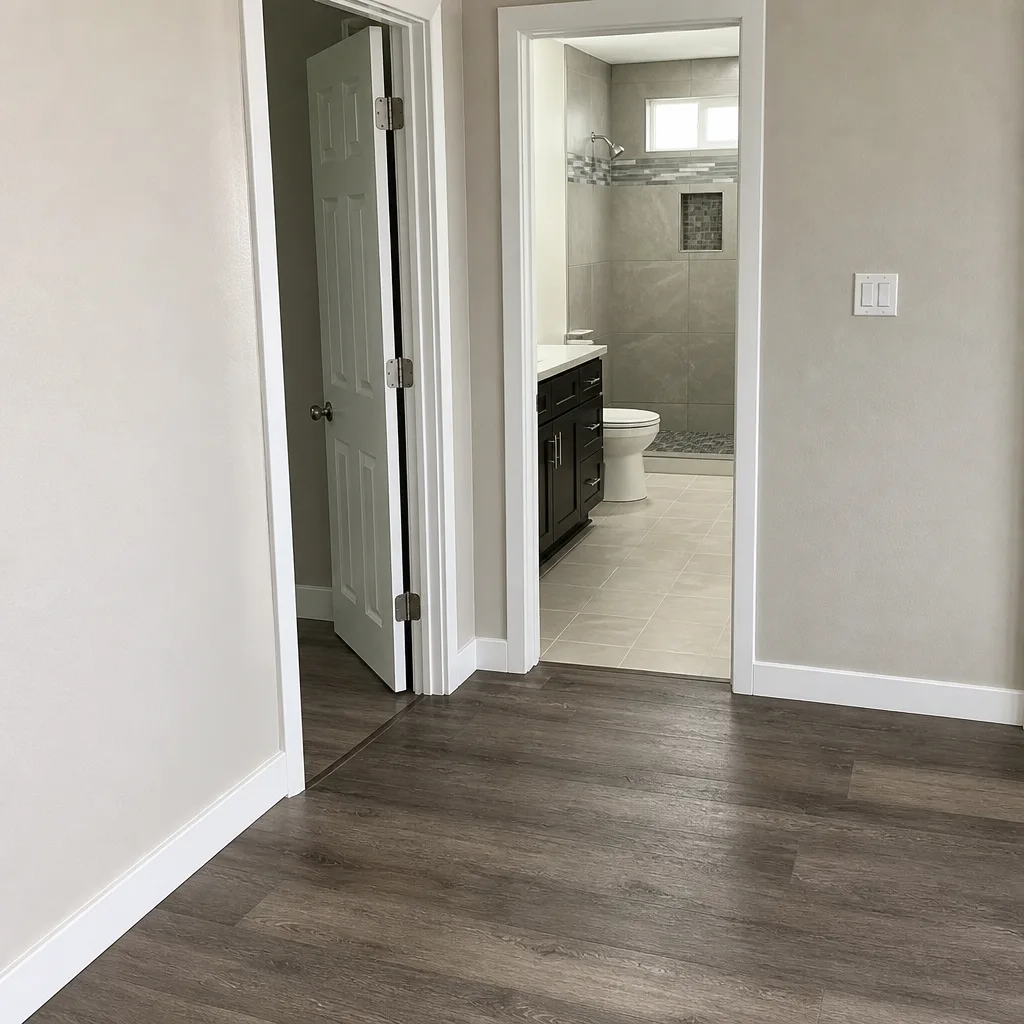 After
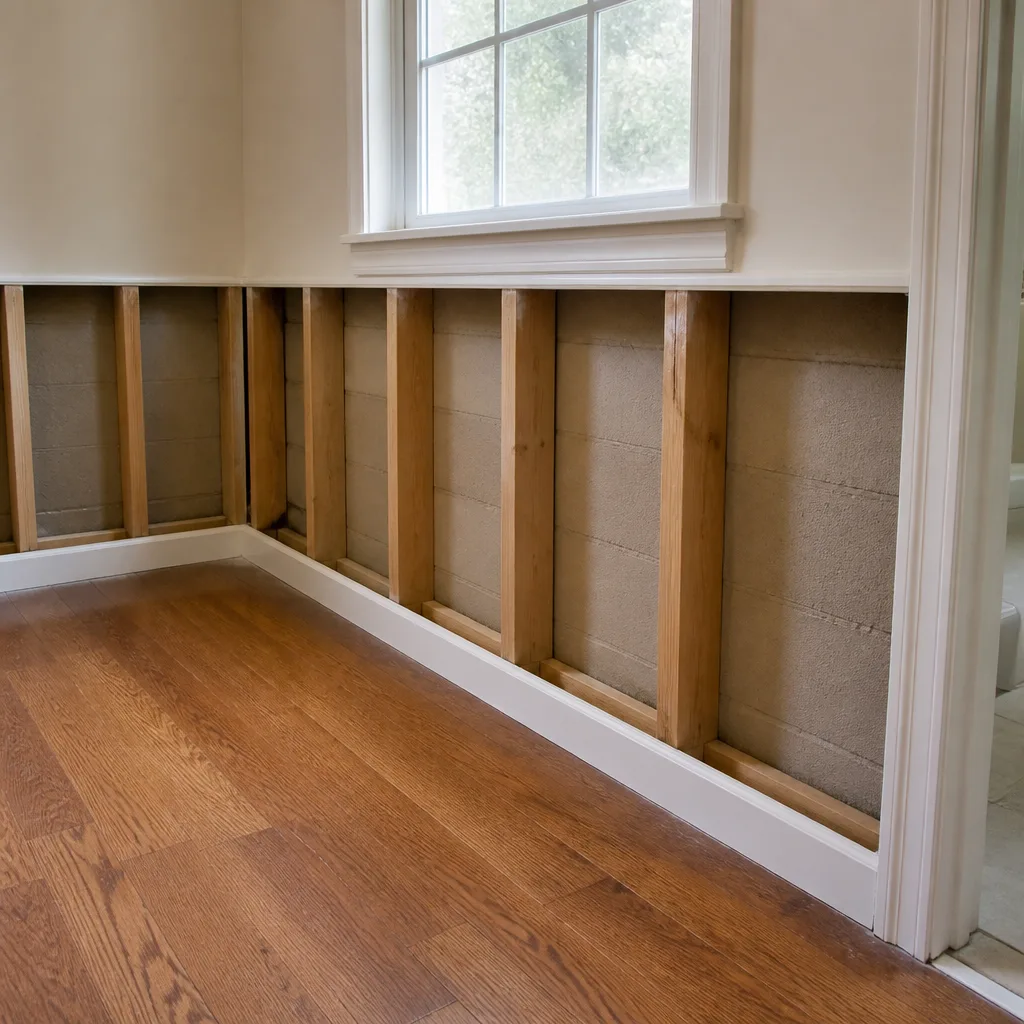
After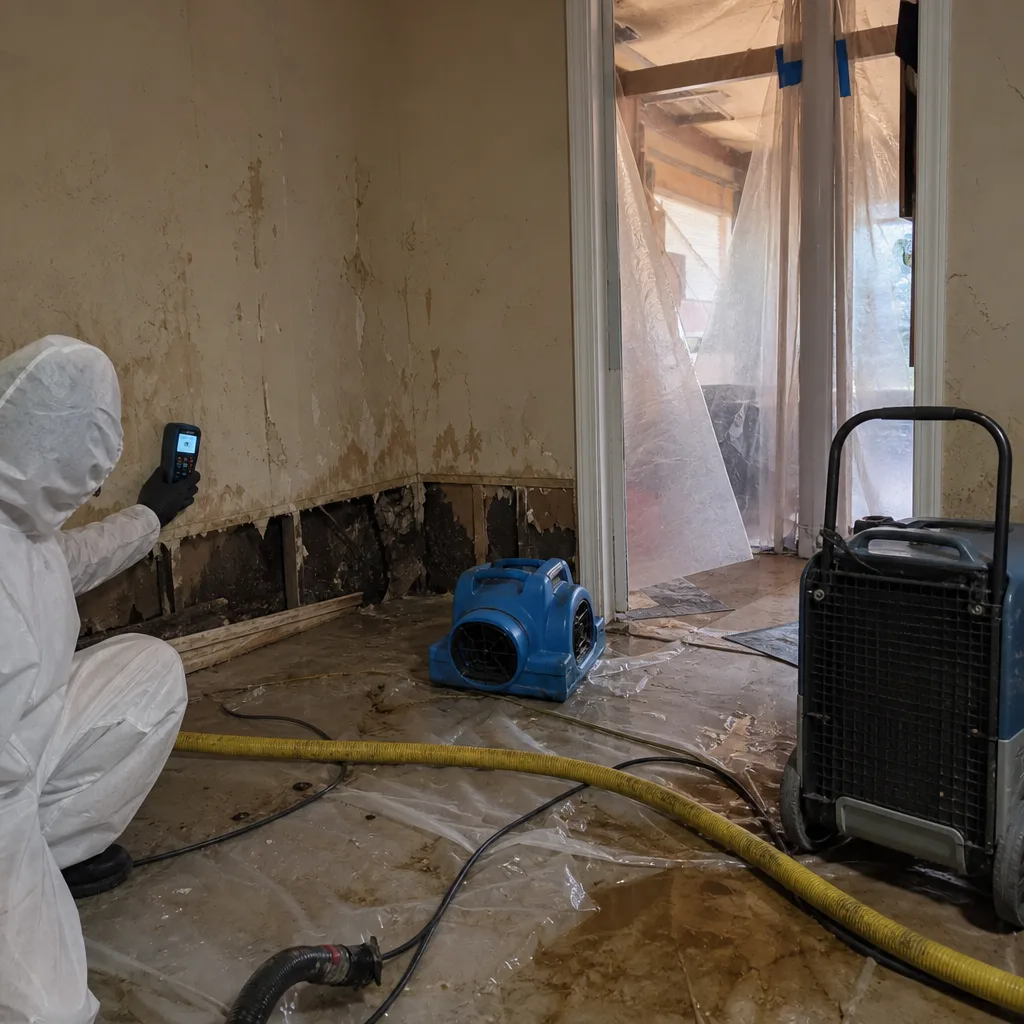 Before
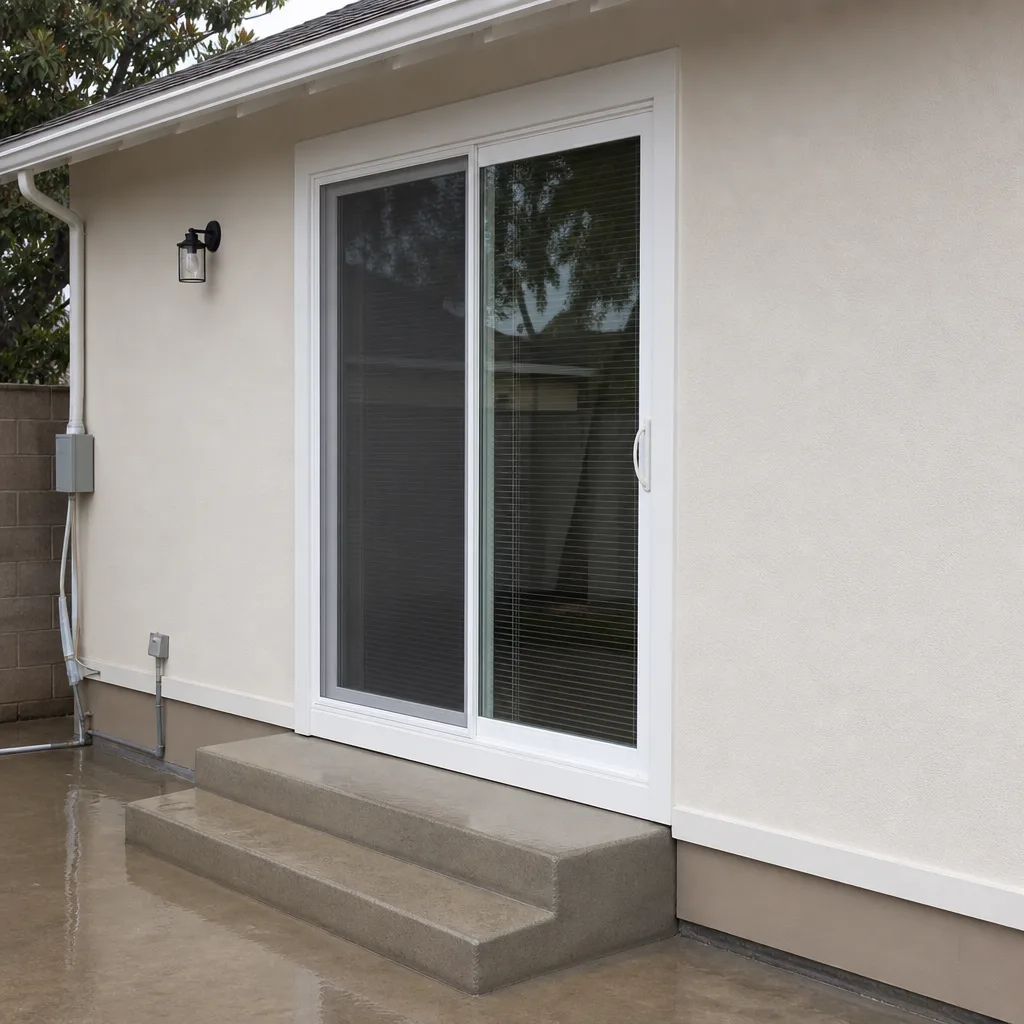 After
After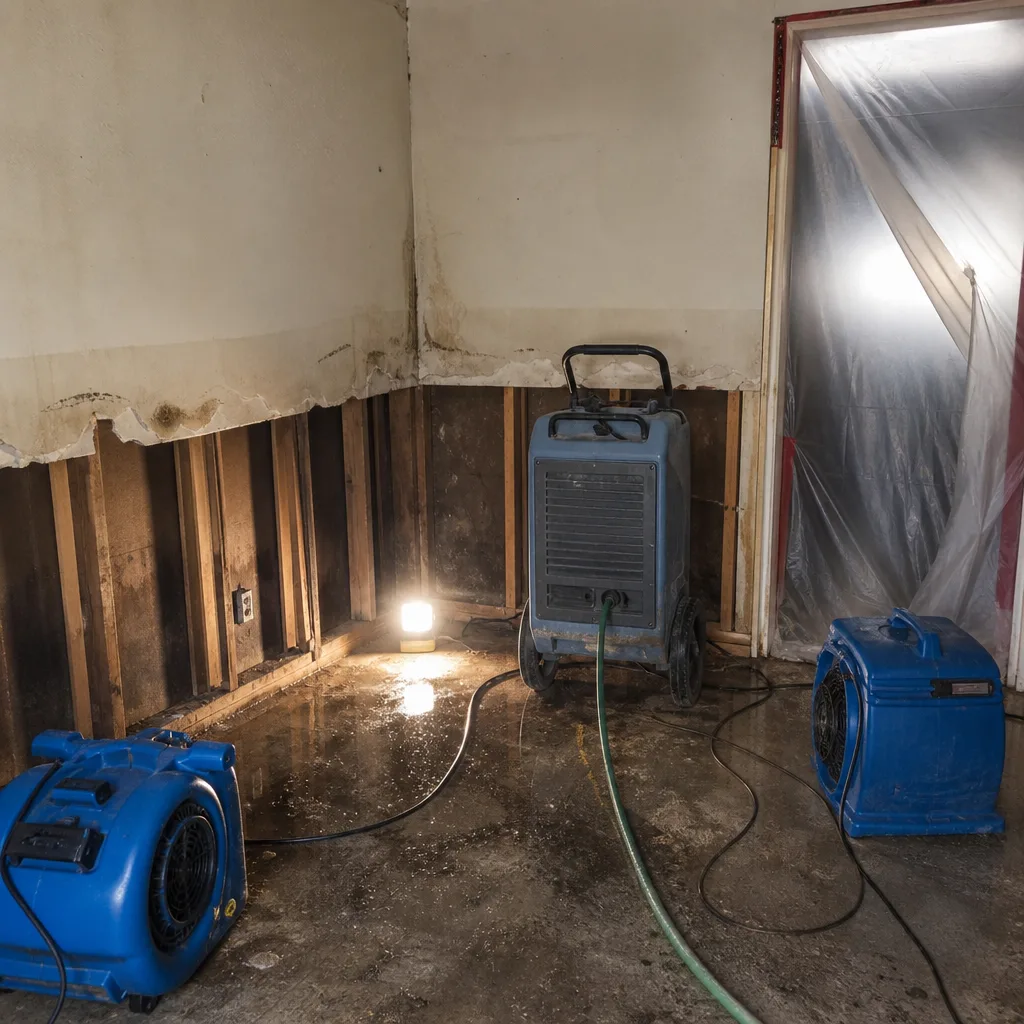 Before
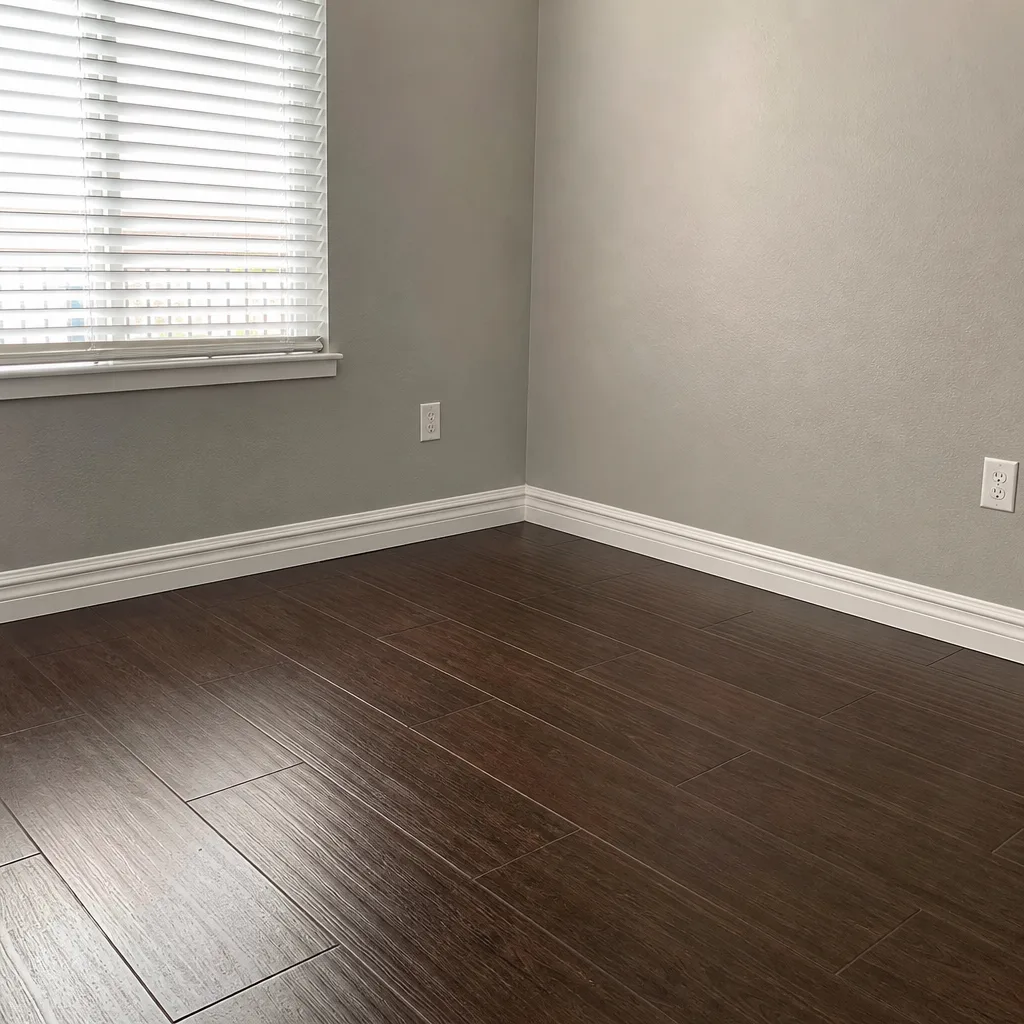 After
AfterFast, Reliable Water Damage Restoration Across Lakewood
Water damage restoration in Lakewood typically costs $2,800-$6,500 for a standard slab-leak mitigation and runs $180-$340 for emergency water extraction alone. Most Lakewood calls reach a live person in under 60 seconds, and our crews are usually on-site within 45 minutes during daylight hours. Call (424) 347-8338 for a written estimate before any work begins.
We know Lakewood’s streets well. Our teams serve the Lakewood Park tract off Del Amo Boulevard, the neighborhoods around Lakewood Boulevard, and the Mayfair Park area regularly. Dispatch and scheduling are coordinated from our Los Angeles office, but the crews rolling to your door are working Lakewood jobs week in and week out. That matters because water damage here doesn’t behave like it does in Long Beach or Carson. Lakewood’s homes were built almost entirely between 1950 and 1954 as one of the nation’s first mass-produced planned suburbs, and nearly every one sits on a concrete slab foundation with copper supply lines cast directly into that slab. A silent, pressurized slab leak - not a storm, not a burst pipe overhead - is statistically the likeliest source of hidden water intrusion on any water call here. Our Water Damage Restoration team treats that as the working assumption until the meters prove otherwise.
Why DryMark Restoration Bellflower Is Lakewood’s Preferred Water Damage Restoration Company
We’ve restored water damage in Lakewood’s tight residential tracts since 2011. Alicia Brennan founded Back to Dry Restoration after working as a claims adjuster and watching homeowners lose legitimate coverage because restoration crews failed to document moisture readings, drying logs, or photo records. That documentation gap is what we built this company to close. Every Lakewood job gets a written price before work starts - Haven Standard, Clause 1 - plus a documented photo record on every visit and daily moisture logs that turn restoration invoices into payable insurance claims.
Our crews know the access constraints here. Alley-load garages, narrow side yards between stucco tract houses, and driveways that barely fit a single sedan are standard conditions. We plan equipment loads accordingly. Background-checked, uniformed technicians arrive with named credentials and license numbers visible, not anonymous subcontractors.
Live phone coverage runs 24 hours a day, 7 days a week with no voicemail trees. When water is still moving through a Lakewood slab home at 2 a.m., you reach a person who can dispatch, not a callback promise for the next business day.
Our Water Damage Restoration Services in Lakewood
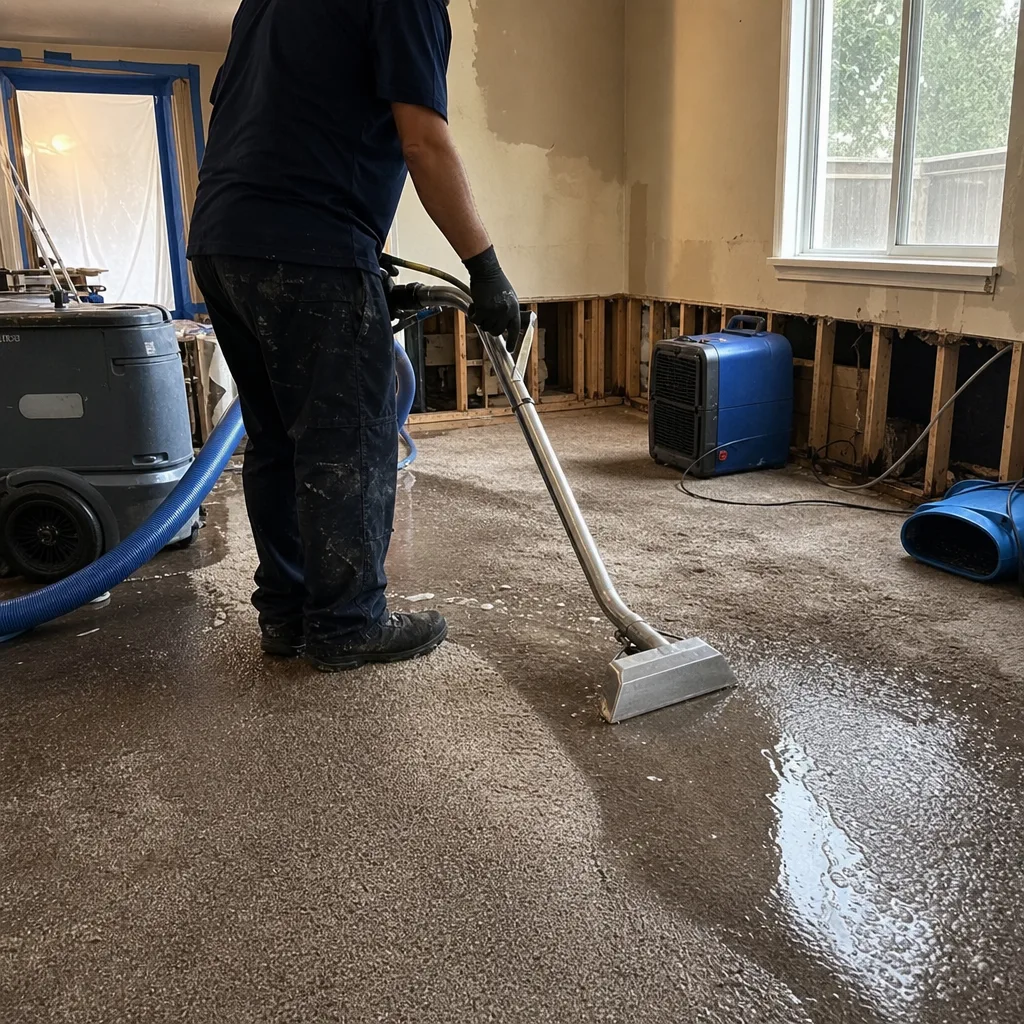
Emergency Water Extraction
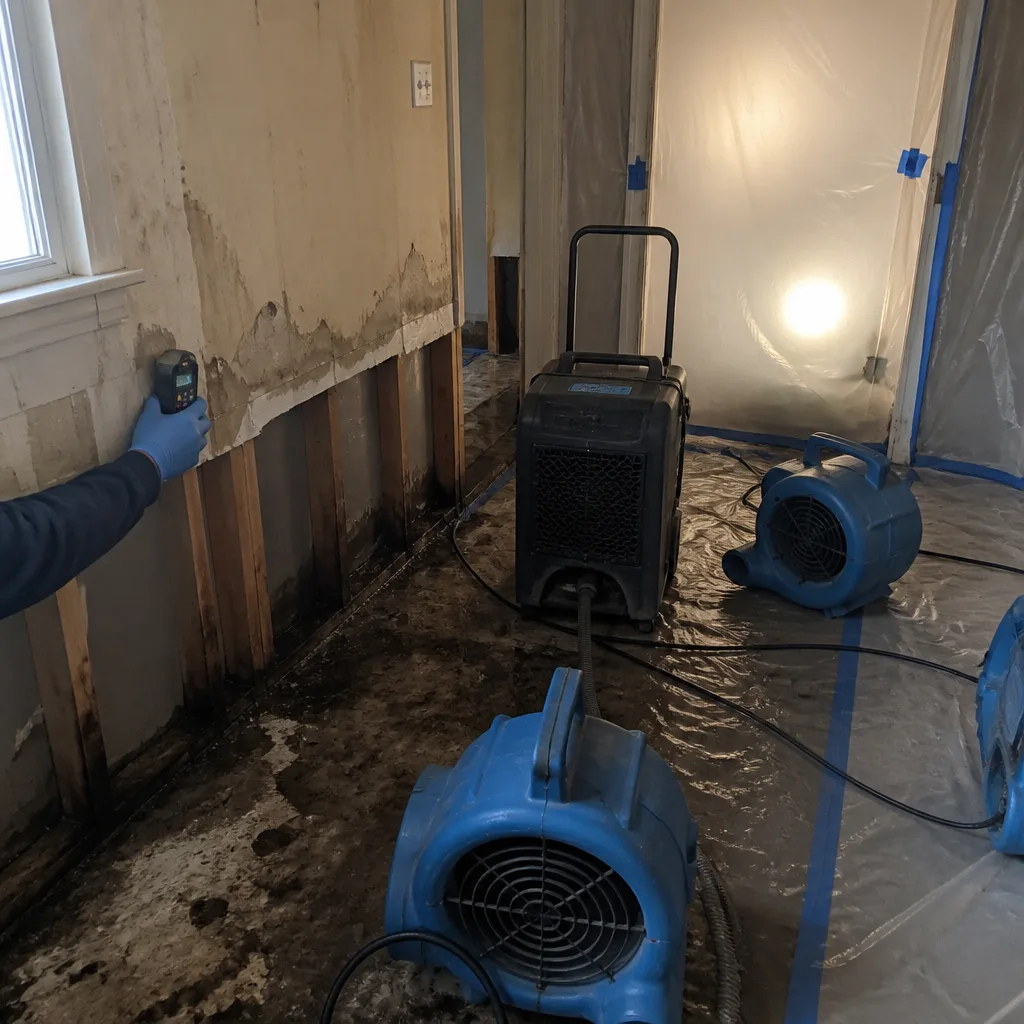
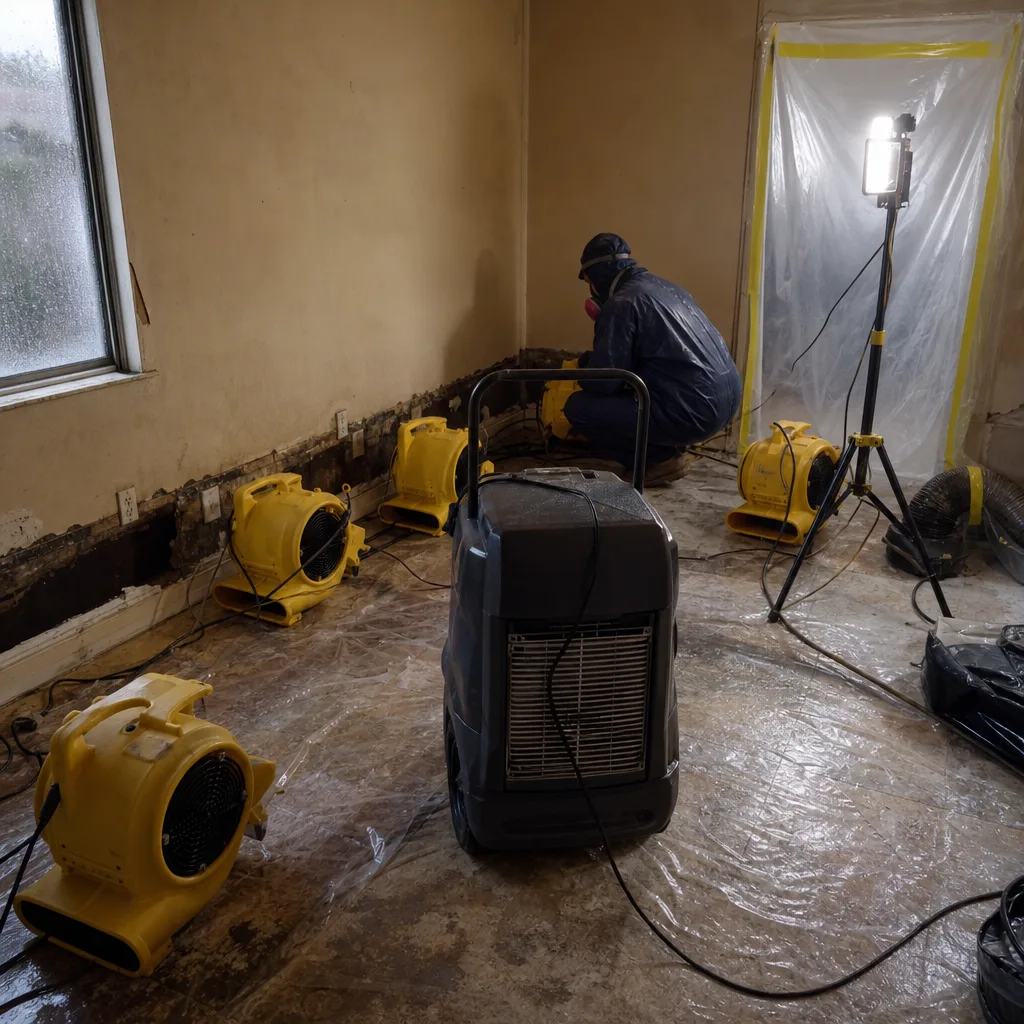
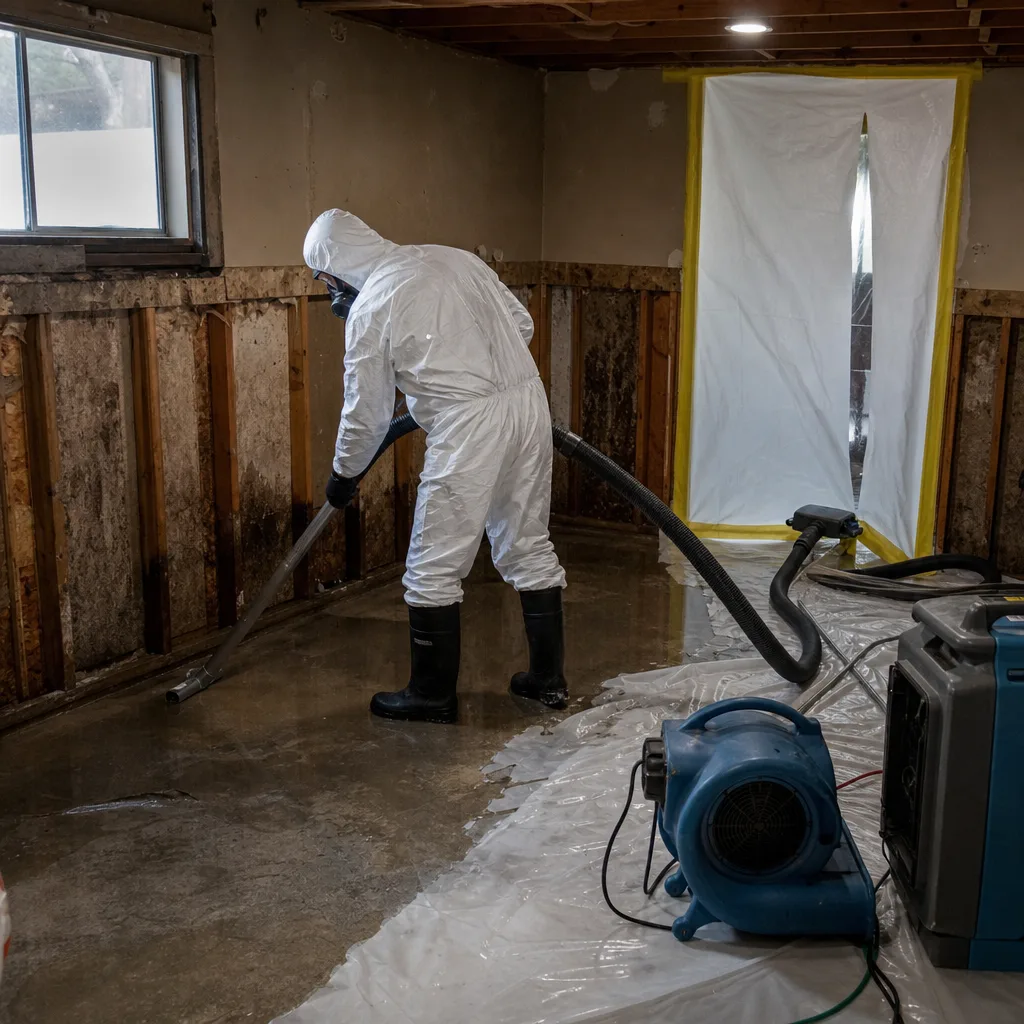
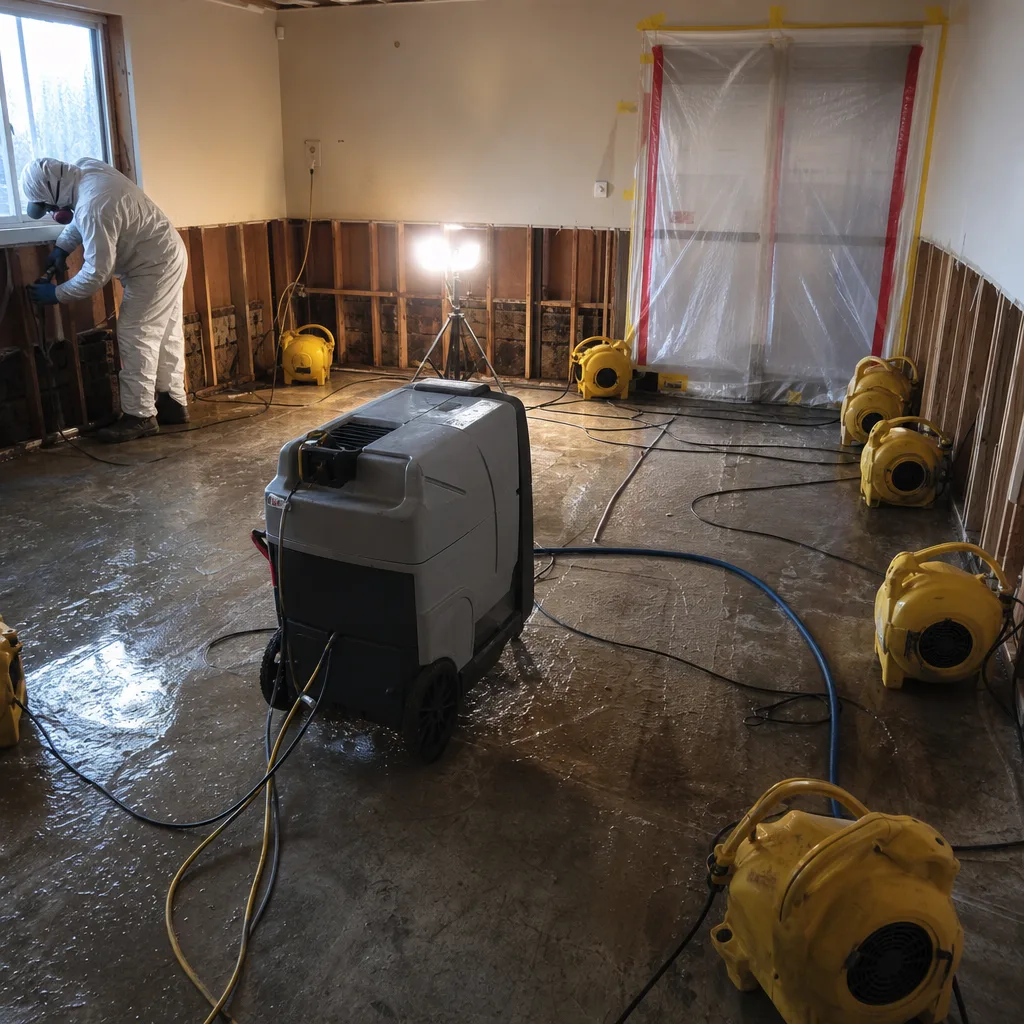
Speed matters when water is migrating through a Lakewood slab. We extract standing water with truck-mounted and portable systems, then immediately run a baseline infrared sweep of baseboards and flooring before placing any drying equipment. On a call in the Lakewood Park tract off Del Amo Boulevard, our techs walked into a 1,050-square-foot 1952 stucco tract house where the homeowner only noticed cupped laminate in the hallway - no visible leak anywhere. Before we touched a single air mover, we ran an infrared sweep of the baseboards and moisture-mapped the slab perimeter, and the meter jumped along the west wall where a slab-embedded copper supply line had been weeping for weeks. We extracted the standing water, set up Injectidry floor-mat drying over the affected slab and Dri-Eaz dehumidifiers with containment to isolate the hallway, and completed antimicrobial treatment once structural drying hit target moisture readings - all while alley-loading equipment through the narrow side yard because the driveway was blocked.
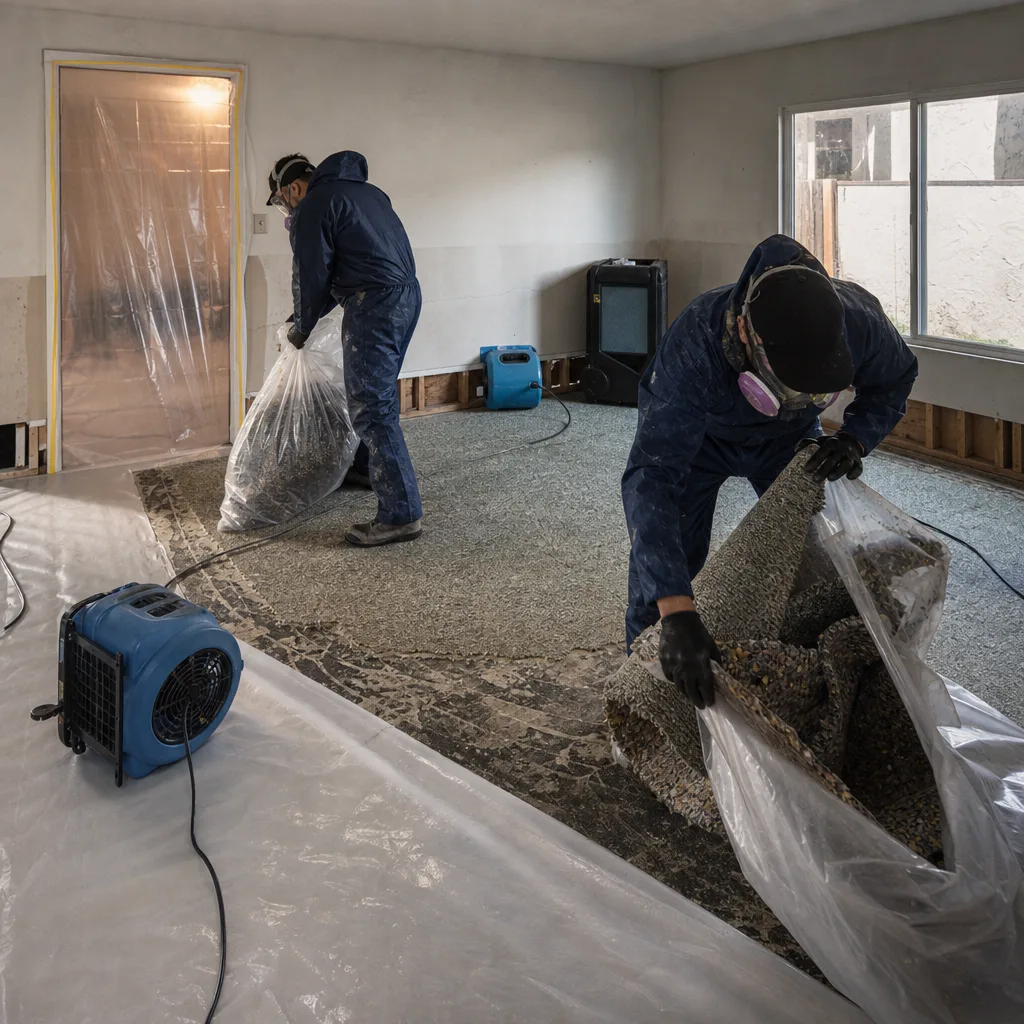
Structural Drying & Dehumidification
Lakewood’s slab-on-grade construction means moisture wicks upward through concrete, not down into a crawl space where someone might spot it early. We use psychrometric data - measurements of temperature, relative humidity, and vapor pressure differential, which is the force that drives moisture from wet materials into drier air - to calculate exactly how much dehumidification capacity each room needs. Our crews deploy Phoenix and Dri-Eaz LGR dehumidifiers sized to the affected cubic footage, not a one-size-fits-all guess. Daily moisture logs track progress at each affected baseboard, wall cavity, and flooring section. Those logs go to your adjuster as standard documentation, never an upsell.
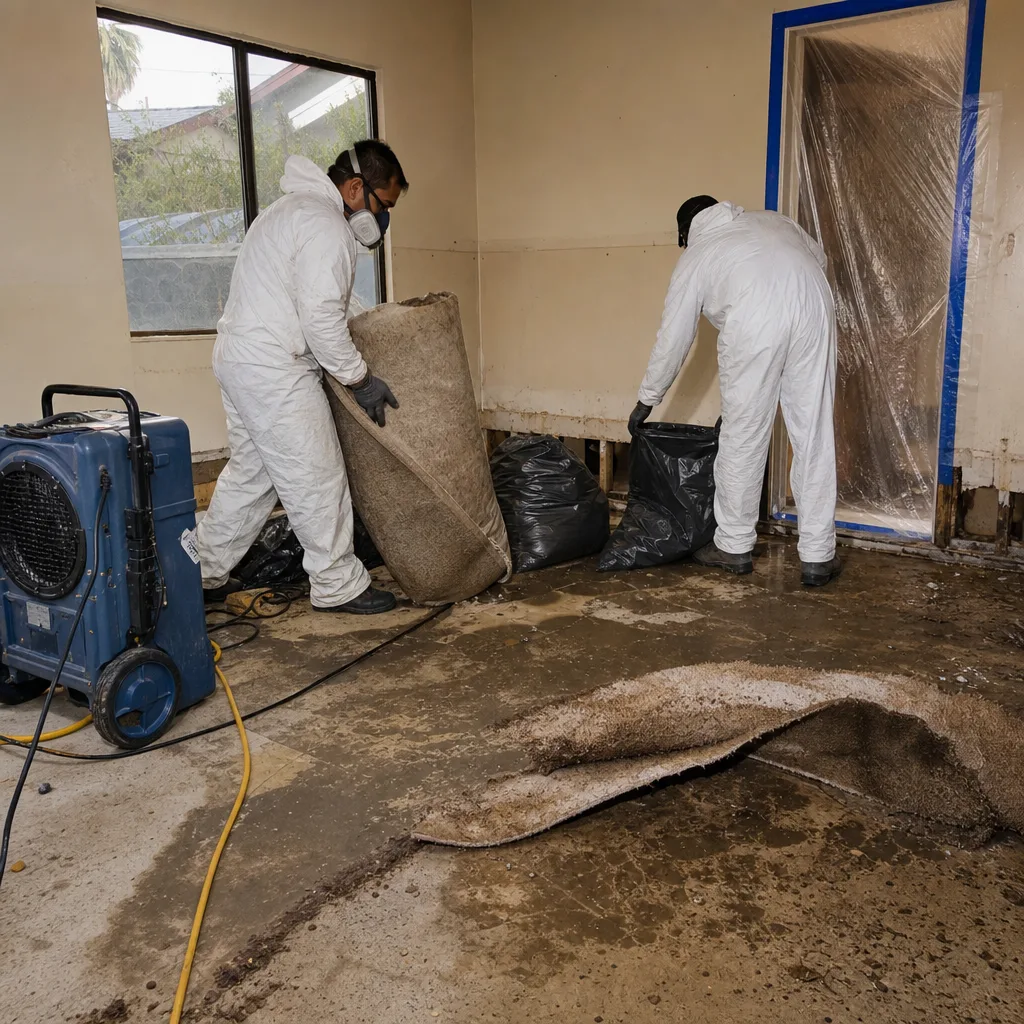
Flood Cleanup
When El Niño rain overwhelms Lakewood’s aging drainage infrastructure around these slab-foundation homes, water pushes in from the perimeter. Category matters here. Category 1 is clean water from a supply line. Category 2 carries significant contamination. Category 3 is grossly contaminated and requires removal, not drying, of affected porous materials. Perimeter groundwater during a storm-drain backup is rarely Category 1 in Lakewood’s flat, low-lying position near the San Gabriel River corridor. Misclassifying it means attempting to dry what should be removed, and mold on wet drywall inside 24 to 48 hours is the predictable result. We document water category with photo evidence and written classification before extraction begins.
Burst Pipe Restoration
In Lakewood, “burst pipe” usually means something different than in cities with basements and exposed plumbing. The copper supply lines embedded in these 1950-1954 slabs corrode from the outside in where concrete alkalinity attacks the metal. The pinhole leak pressurizes the slab-soil interface, and water migrates laterally under the foundation before surfacing as cupped flooring, efflorescence on slab edges, or a sudden spike in the water bill. Our burst pipe restoration includes locating the leak with acoustic and thermal detection, coordinating with licensed plumbers for slab penetration and repair, then drying the assembly with Injectidry floor mats and targeted air movement. We don’t close the job until post-repair moisture mapping confirms the slab perimeter is back to baseline.
What happens when you call
- 1
A real person answersNo phone trees - you reach a local pro.
- 2
You get an upfront price rangeHonest numbers before anyone is dispatched.
- 3
A background-checked tech heads outLicensed & insured, dispatched right away.
- 4
You approve before work beginsNothing starts until you say go.
 Before
 After
AfterTrusted Brands We Service in Lakewood
Our Lakewood crews deploy professional-grade drying systems from Dri-Eaz, Phoenix, and XPOWER - equipment documented to IICRC, RIA, and IFA standards. We stock Injectidry floor-mat drying components and B-Air air movers locally, so replacement or additional capacity reaches a Lakewood job site fast without waiting on a warehouse run to another county. That matters when a slab-leak mitigation needs more dehumidification capacity on day two because moisture readings aren’t dropping as predicted.
Common Water Damage Restoration Problems We See in Lakewood Homes
- Silent slab-embedded copper supply line failures. The copper lines cast into 1950-1954 concrete slabs have reached end of useful life for many Lakewood homes. Water wicks upward through the slab for weeks before any visible symptom appears, by which time flooring adhesives have failed and mold colonization has begun in wall cavities.
- El Niño perimeter flooding with misclassified water category. Lakewood’s flat terrain and aging storm drains mean rainwater pools against slab edges and enters through the foundation perimeter. Crews who treat this as Category 1 clean water and attempt to dry drywall in place create mold liabilities that show up within a month.
- Minimal vapor barriers in original construction. These 900-1,100 square foot tract houses were built with little to no sub-slab vapor protection. Moisture from soil migration alone can drive humidity levels high enough to trigger secondary damage even after the original leak is fixed.
- Undersized electrical panels limiting drying equipment deployment. Original 60-amp or 100-amp panels in Lakewood’s housing stock can’t always support the number of air movers and dehumidifiers a full structural drying protocol requires. We assess electrical capacity during our initial scope and coordinate temporary power solutions when needed.
Pricing for Water Damage Restoration in Lakewood, CA
Water damage restoration pricing in Lakewood reflects the specific conditions our crews encounter in this market. Emergency water extraction runs $180-$340 for a typical residential call. Structural drying and dehumidification for a standard slab-leak-affected area of 400-800 square feet ranges $2,200-$4,800. Full mitigation including extraction, drying, antimicrobial treatment, and documentation for a 1,000-square-foot Lakewood tract house typically falls between $2,800-$6,500. Category 3 contamination or extensive drywall and flooring removal pushes the upper range higher.
What moves the number: square footage affected, water category classification, whether slab leak repair requires plumber coordination, and how many rooms need containment. Every job gets a written price before work begins - Haven Standard, Clause 1 - with no scope-creep additions once the crew is inside. We also offer a Free Second Opinion on any competitor’s written estimate. Call (424) 347-8338 for your specific written price.
We Also Serve Cities Near Lakewood
Our crews handle Water Damage Restoration in Lakewood and the surrounding communities regularly, including Carson, Long Beach, Compton, and Signal Hill. The same documentation standards, written pricing protocol, and 365-Day Done Right Promise apply across our full service area.
Serving Lakewood, CA - Our Local Coverage Area
We’re based in the Lakewood area and know this community well. Use the map below to see our service coverage - if you’re nearby, we can almost certainly help.
FAQs - Water Damage Restoration in Lakewood
Because nearly every Lakewood home has the same 1950-1954 slab-embedded copper plumbing and no crawl space to reveal moisture migration early. A silent pressurized slab leak is statistically the likeliest culprit on any water call here, and failing to find it before closing a job means a callback within weeks when the concrete finishes wicking. The infrared sweep takes minutes and prevents that outcome. Call (424) 347-8338 if you’re seeing cupped flooring or unexplained humidity - estimates are free.
We plan for it. Our crews carry compact portable extractors and stackable air movers that fit through 30-inch side gates, and we alley-load when driveways are occupied. On that Lakewood Park job off Del Amo Boulevard, we ran hoses and power through a narrow side yard without disturbing the neighbor’s fence line. We measure access during the dispatch call so the right equipment configuration arrives the first time.
No. Perimeter groundwater during a storm-drain backup in Lakewood’s flat, low-lying position near the San Gabriel River corridor carries soil contaminants, possible sewage cross-connection from aging infrastructure, and microbial load from street runoff. We classify it as Category 2 or 3 based on visible contamination and odor, document the classification with photos, and remove affected porous materials rather than attempting to dry them in place. Misclassifying this water creates mold liability and potential health exposure. Call (424) 347-8338 for immediate assessment.
Within 24 hours, and preferably within 4 to 6. Mold colonization on wet drywall begins in 24 to 48 hours, and in Lakewood’s slab homes moisture is already migrating upward through concrete before you notice any symptom. The delay cost isn’t just mold remediation - it’s often full flooring replacement and baseboard-to-ceiling drywall removal when early extraction and targeted drying could have saved both. Our live dispatch answers 24/7 with no voicemail delay.
Mitigation stops the damage from spreading: extraction, drying, antimicrobial treatment, and documentation. Full restoration returns the structure to pre-loss condition, which may include drywall replacement, flooring installation, painting, and finish carpentry. In Lakewood’s 1950-1954 housing stock, full restoration often involves matching original materials that are no longer manufactured - we coordinate that scope separately, with its own written price, after mitigation is complete and moisture targets are verified. Haven Standard, Clause 1 applies to both phases separately.
Written by Alicia Brennan, Owner at Back to Dry Restoration, serving Lakewood since 2011.