
Last updated September 23, 2026
Free visual inspection and a written scope of work before any mitigation begins - photos, moisture readings, and drying logs go in your claim file
The scope we write is the scope we bill. Anything new gets shown to you, in writing, before we touch it.


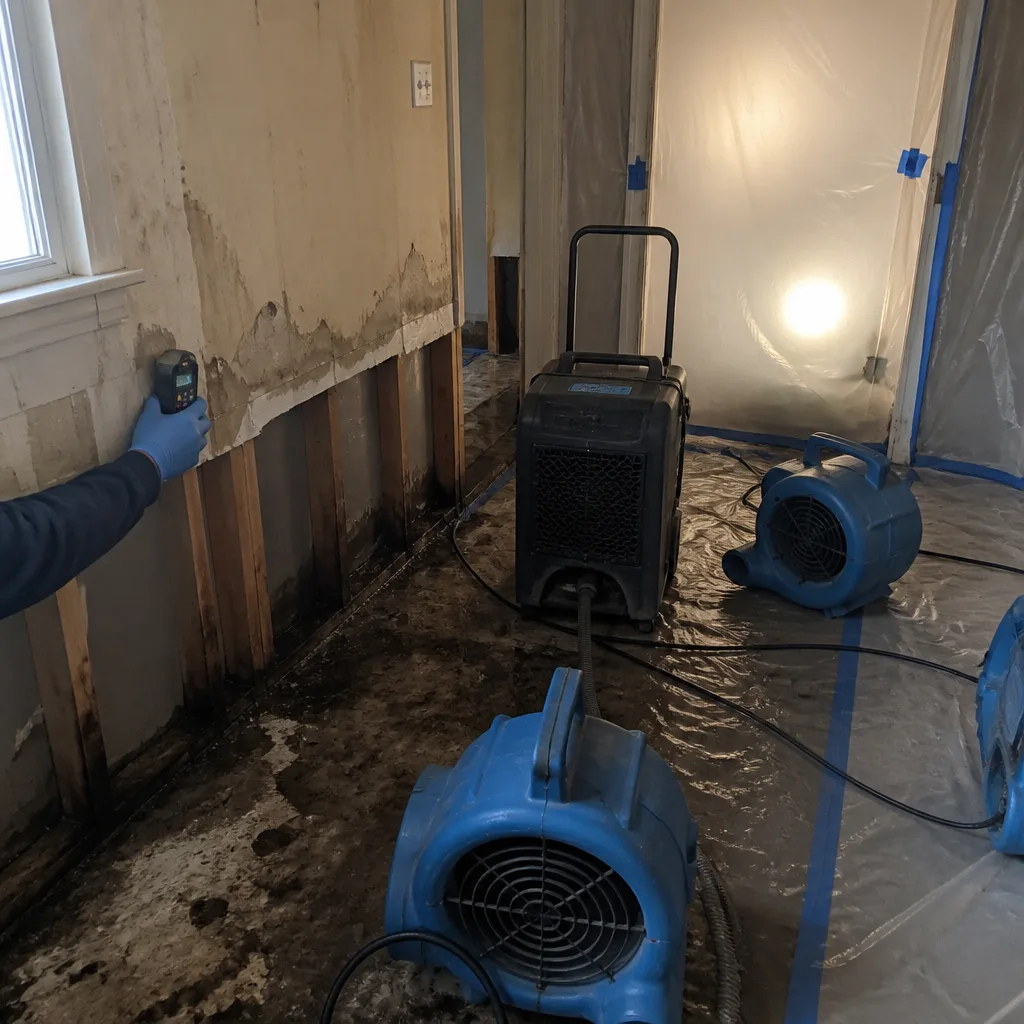 Before
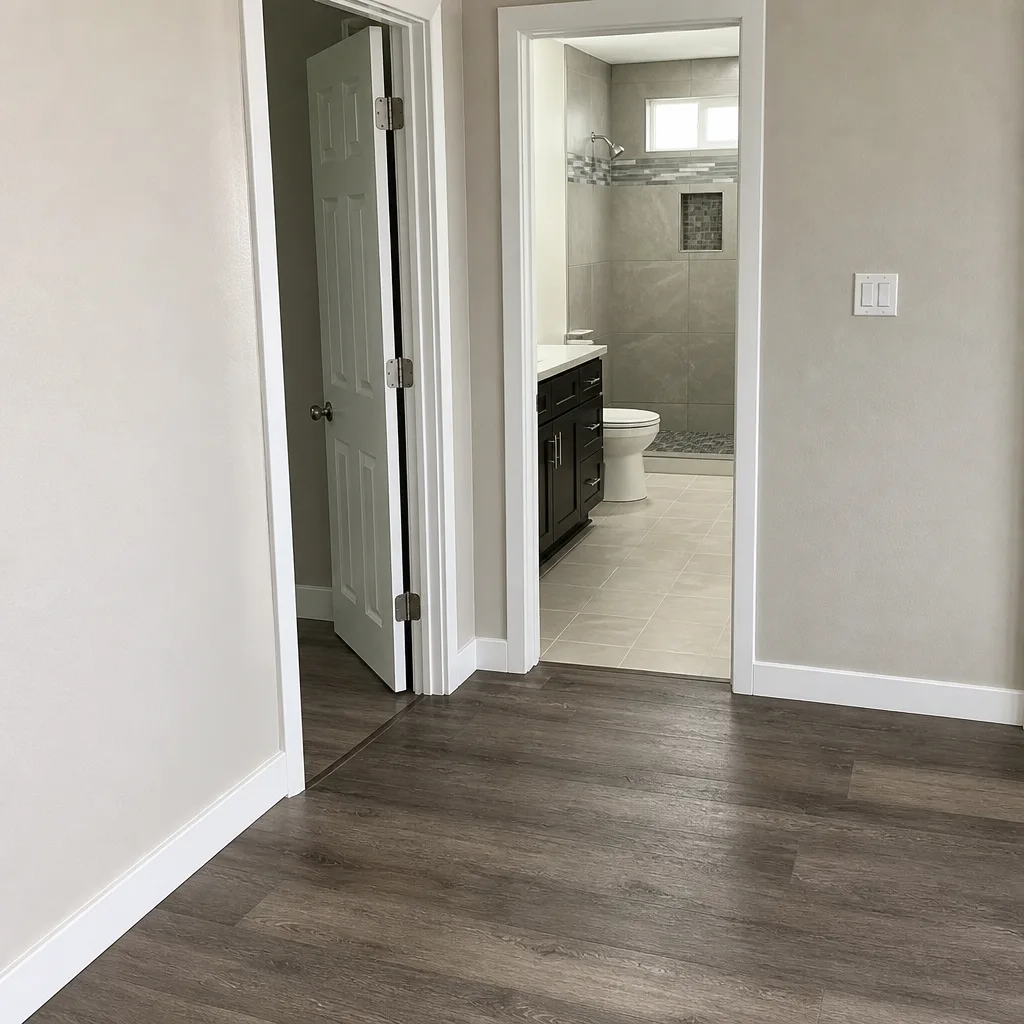 After
After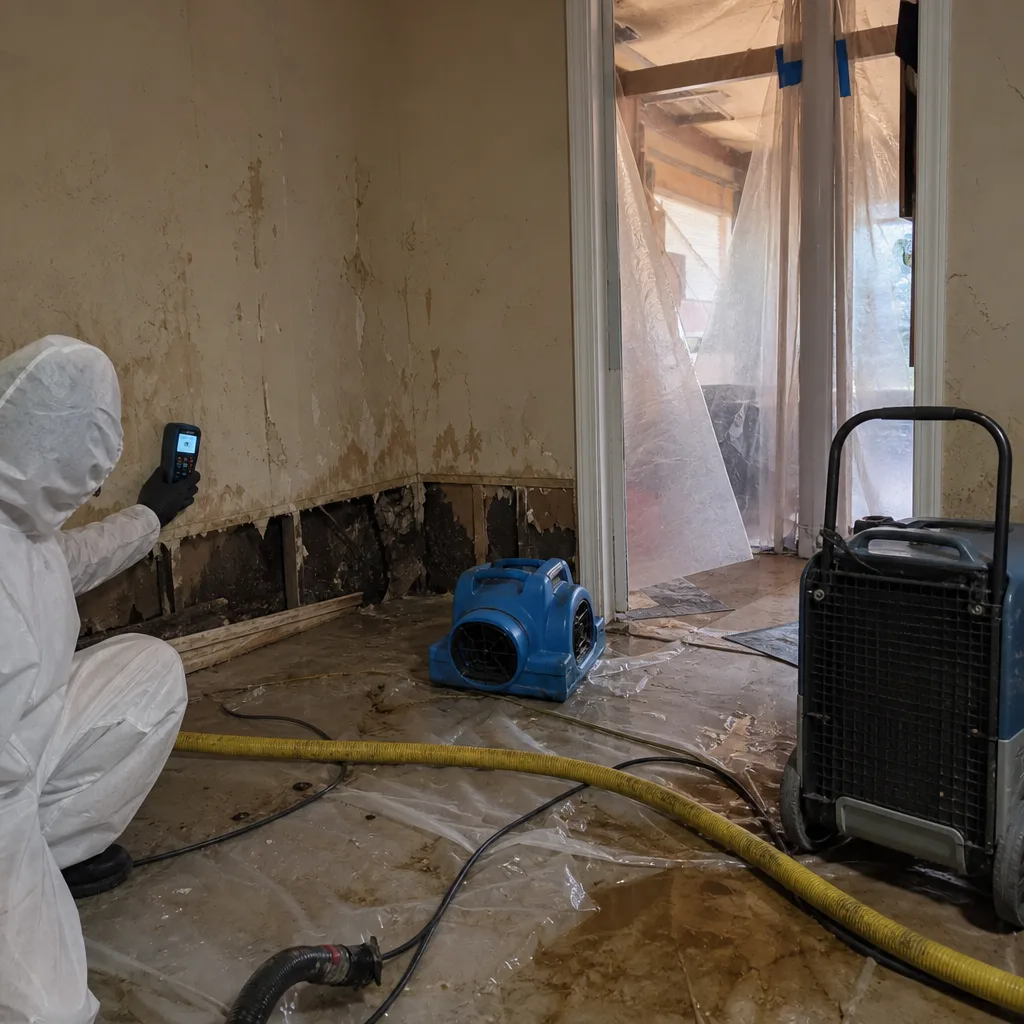 Before
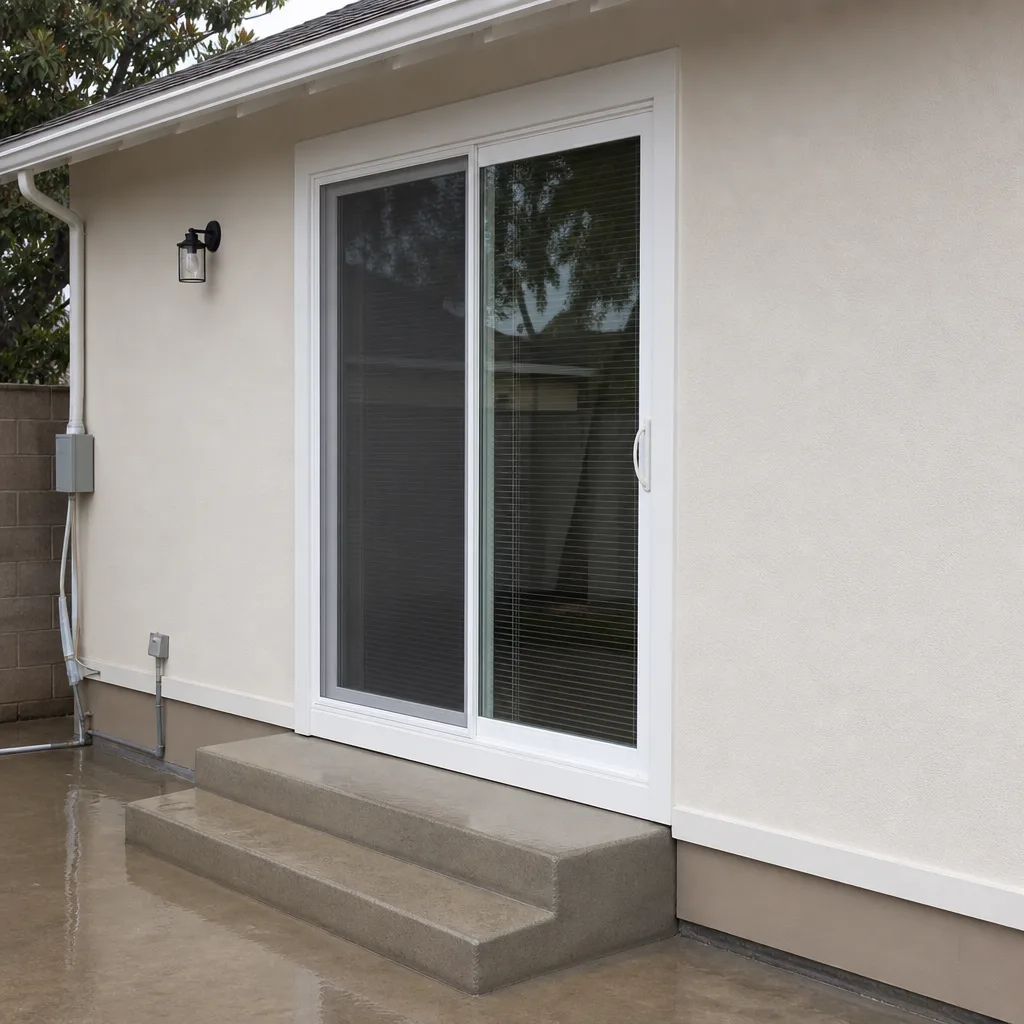 After
After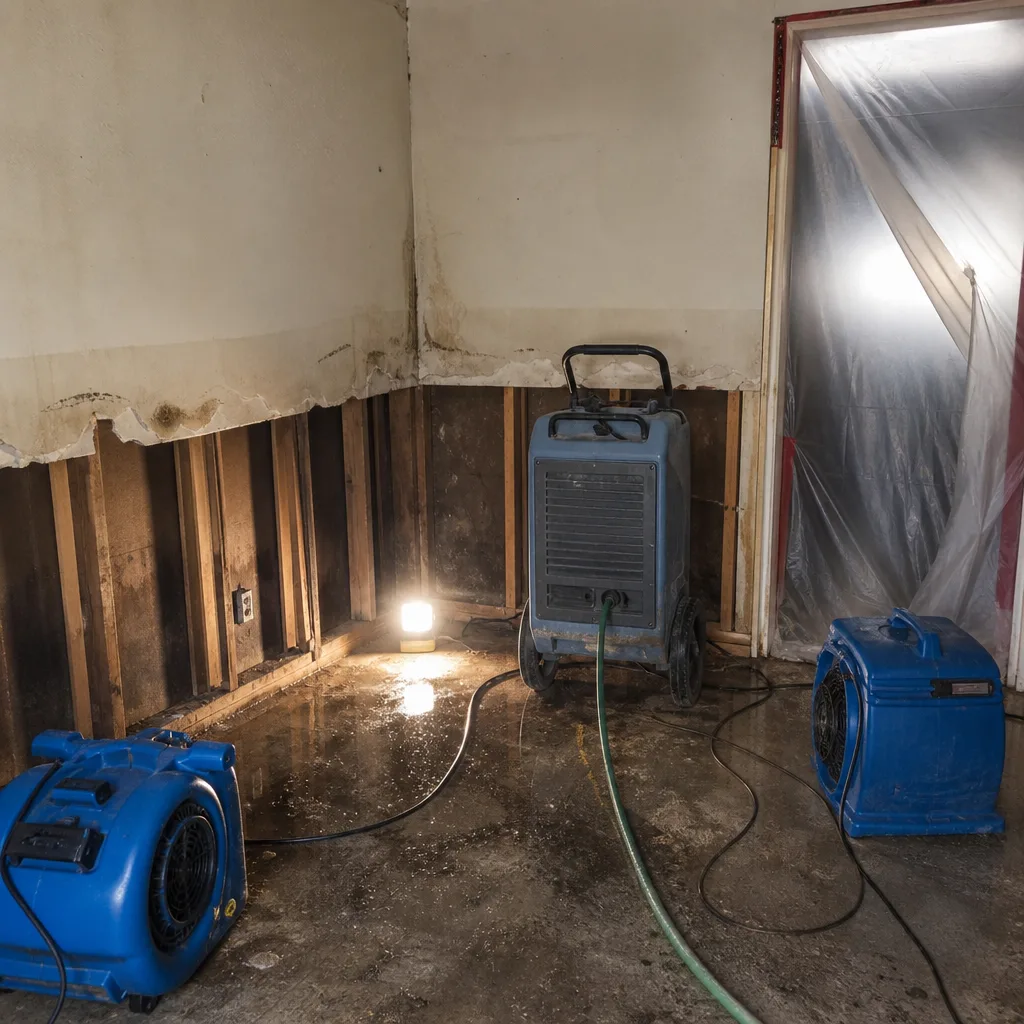 Before
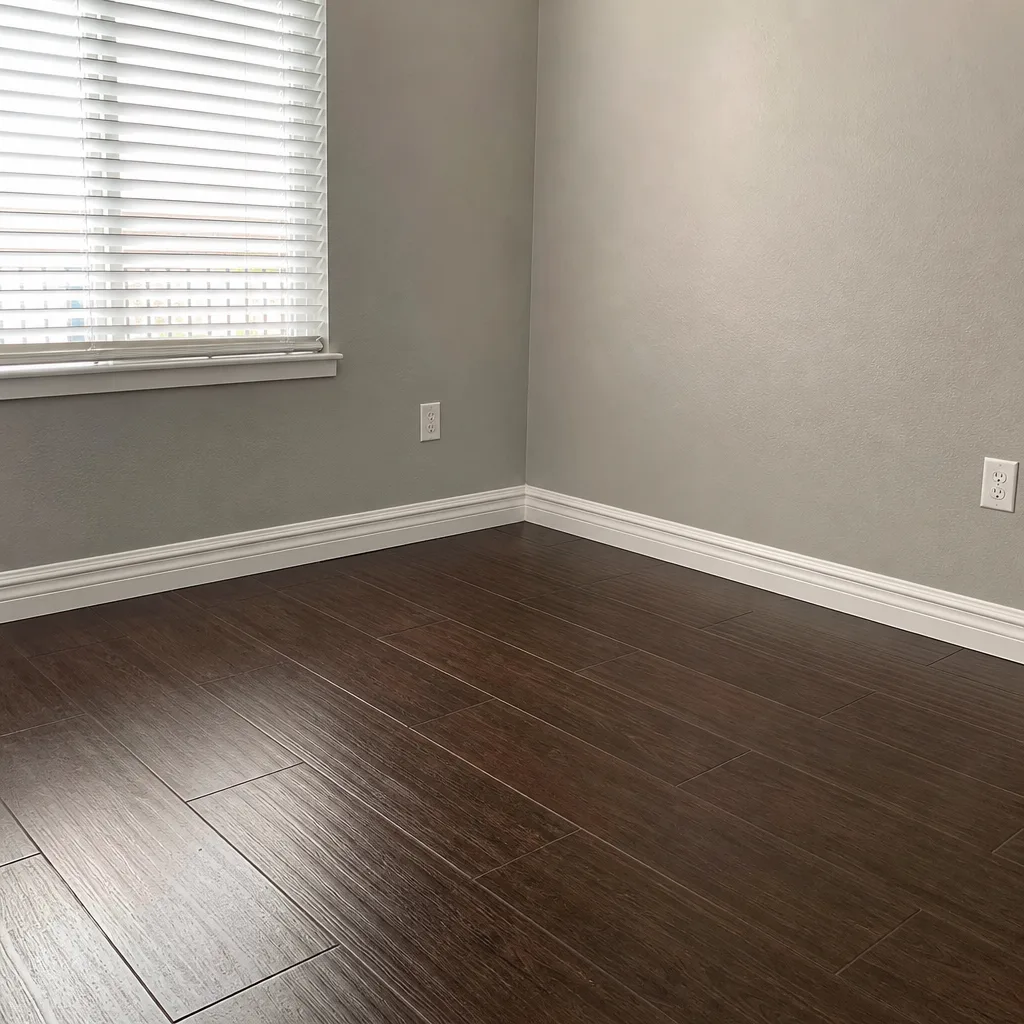 After
AfterSewage Cleanup Maintenance Checklist for Bellflower Homeowners
Category 3 water contamination can test negative for coliform bacteria at 48 hours and positive again at 10 days. That single fact explains why “we cleaned it up” and “it’s actually clean” are two different claims, and why Bellflower homeowners who’ve experienced a sewage backup need Sewage Cleanup services with a verification checklist, not just a mop and some bleach. In this guide, we’ll walk through the exact documentation steps, material removal rules, and post-cleanup testing protocols that separate a liability waiting to happen from a properly closed restoration file. Whether you’re dealing with an active backup in the Somerset Ranch area or maintaining a 1960s ranch home near Woodruff Avenue, these are the standards your contractor should meet before you sign off on the work.
Quick Answer
A proper sewage cleanup maintenance checklist for Bellflower homeowners includes: immediate containment and Category 3 classification under IICRC S500; removal of all porous materials within the contamination zone; HEPA-extracted drying with documented psychrometric readings; antimicrobial treatment with product-specified dwell times; independent clearance testing for coliform and E. coli with written pass/fail criteria; and scheduled follow-up inspections at 30 and 90 days. The checklist is only complete when every step exists in writing, with photos, and with a signed warranty.
Table of Contents
- Understanding Contamination Categories: What Bellflower Homeowners Can Save
- Immediate Response Checklist: First 4 Hours
- Material Removal Rules by Surface Type
- Drying, Documentation, and the Psychrometric Record
- Post-Cleanup Clearance Testing: What to Request in Writing
- Bellflower Sewer Infrastructure: Age, Laterals, and Recurrence Risk
- HVAC Cross-Contamination and Re-Energization Protocols
- Maintenance Intervals That Reduce Backup Probability
 Before
 After
AfterUnderstanding Contamination Categories: What Bellflower Homeowners Can Save
The IICRC S500 Standard sets three water contamination categories. Most sewage events in Bellflower fall into Category 3, defined as “grossly contaminated” water containing pathogenic, toxigenic, or other harmful agents. This includes all backups from toilets, sewer lines, and septic systems. Category 3 is not a suggestion for aggressive treatment; it’s a mandate for specific material removal.
Here’s what that means for salvage decisions in your home:
| Material | Category 3 Rule | Why |
|---|---|---|
| Solid hardwood (¾-inch, unfinished) | May be salvaged with proper treatment | Non-porous structure allows antimicrobial penetration and drying to below 16% moisture content |
| Engineered wood, laminate | Remove | Adhesive layers and HDF core wick contamination; cannot be verified clean |
| Drywall (any height wetted) | Remove to 24 inches above water line minimum | Gypsum core is porous; paper facing is organic food source for bacteria |
| Insulation (fiberglass, cellulose) | Remove | Void spaces trap contamination; cannot be surface-treated effectively |
| Ceramic tile (with intact grout) | Salvage with grout removal and regrouting | Vitreous surface is non-porous; grout lines are not |
| Carpet, pad, area rugs | Remove | Face fibers, backing, and pad all exceed porosity thresholds for Category 3 |
| Baseboards, trim (MDF or wood) | Remove MDF; may salvage solid wood with treatment | MDF swells and harbors bacteria; solid wood can be dried and treated |
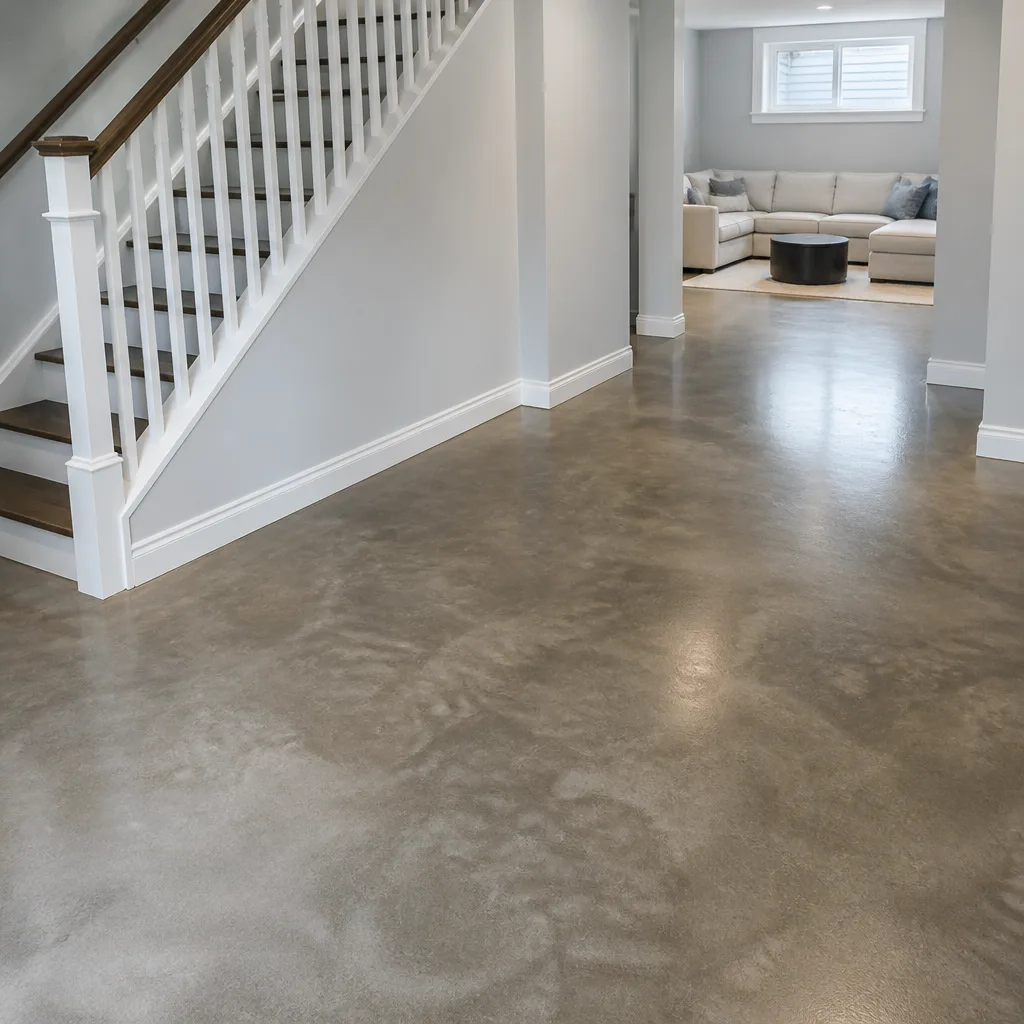
| Concrete slab | Treat and seal | Non-porous when intact; cracks must be addressed |
The mistake we see most often in Bellflower homes, particularly in the older subdivisions near Alondra Boulevard and Lakewood Boulevard, is contractors saving carpet “because it looks fine” or leaving drywall at 12 inches because “the water only came up to the baseboard.” Category 3 contamination wicks upward through capillary action in wall cavities. The visible water line is never the actual contamination line. A proper scope measures moisture content at multiple heights with a penetrating meter, then removes materials to where readings return to baseline.
We document every material classification on our written scope, with photos of the meter readings. Haven Standard, Clause 1 requires that written price before work starts; Clause 3 requires that the scope specify every square foot of removal and every material to be treated. A homeowner should never sign off on a Category 3 job where the scope says “clean affected areas” without defining what “affected” means in measurable terms.
Immediate Response Checklist: First 4 Hours
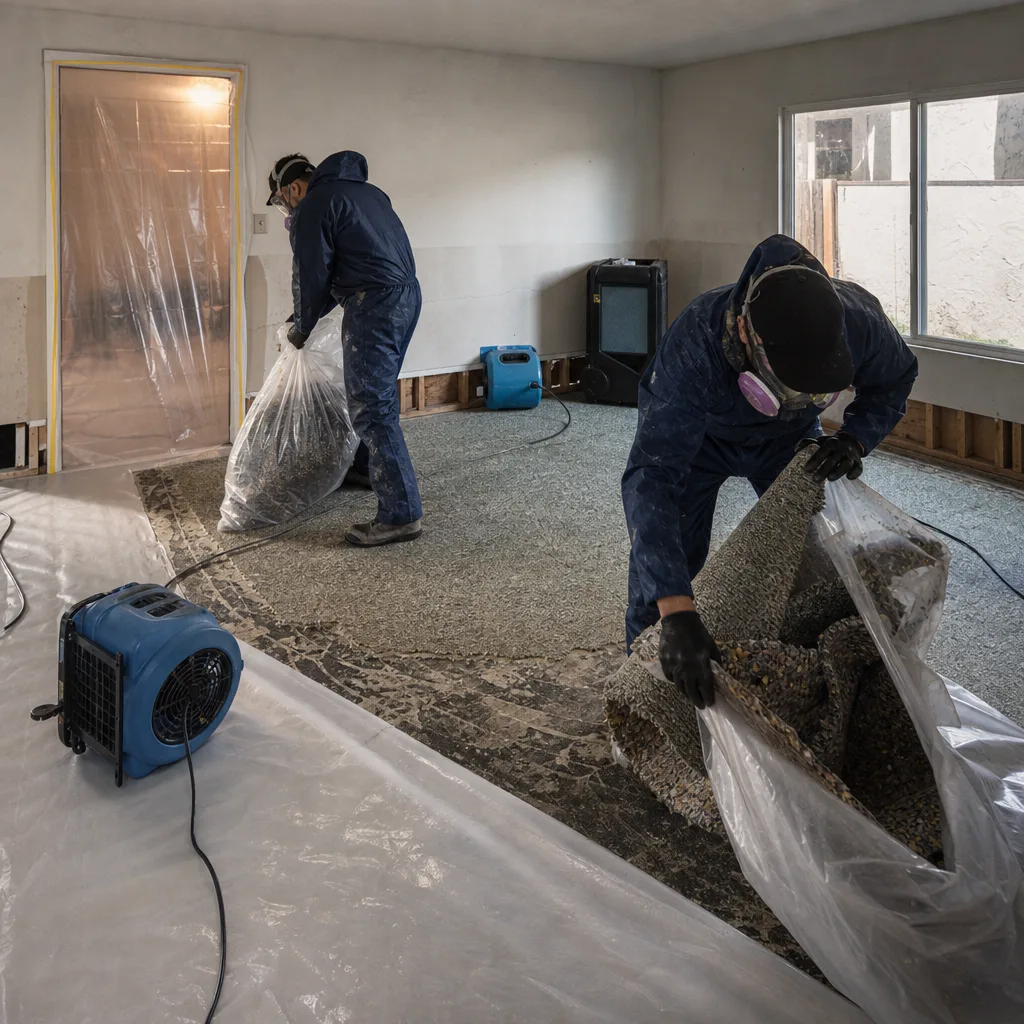
The first four hours after a sewage backup are when contamination spreads most aggressively. Here’s the sequence that limits damage and preserves your insurance position:
- Stop the source if safely possible. For a backed-up floor drain, this may mean shutting off water use in the house and contacting the Bellflower-Somerset Mutual Water Company or the Los Angeles County Sanitation District to report a suspected main line issue. Do not enter standing water if electrical outlets are submerged.
- Document before touching anything. Photograph all affected areas, water lines on walls, and the source point. Insurance adjusters will compare your photos to the contractor’s. Gaps between the two create claim disputes.
- Remove occupants and pets from the affected zone. Category 3 water carries enteric pathogens including E. coli, Salmonella, and rotavirus. The contamination zone extends beyond visible water to include any area where aerosolized droplets may have settled.
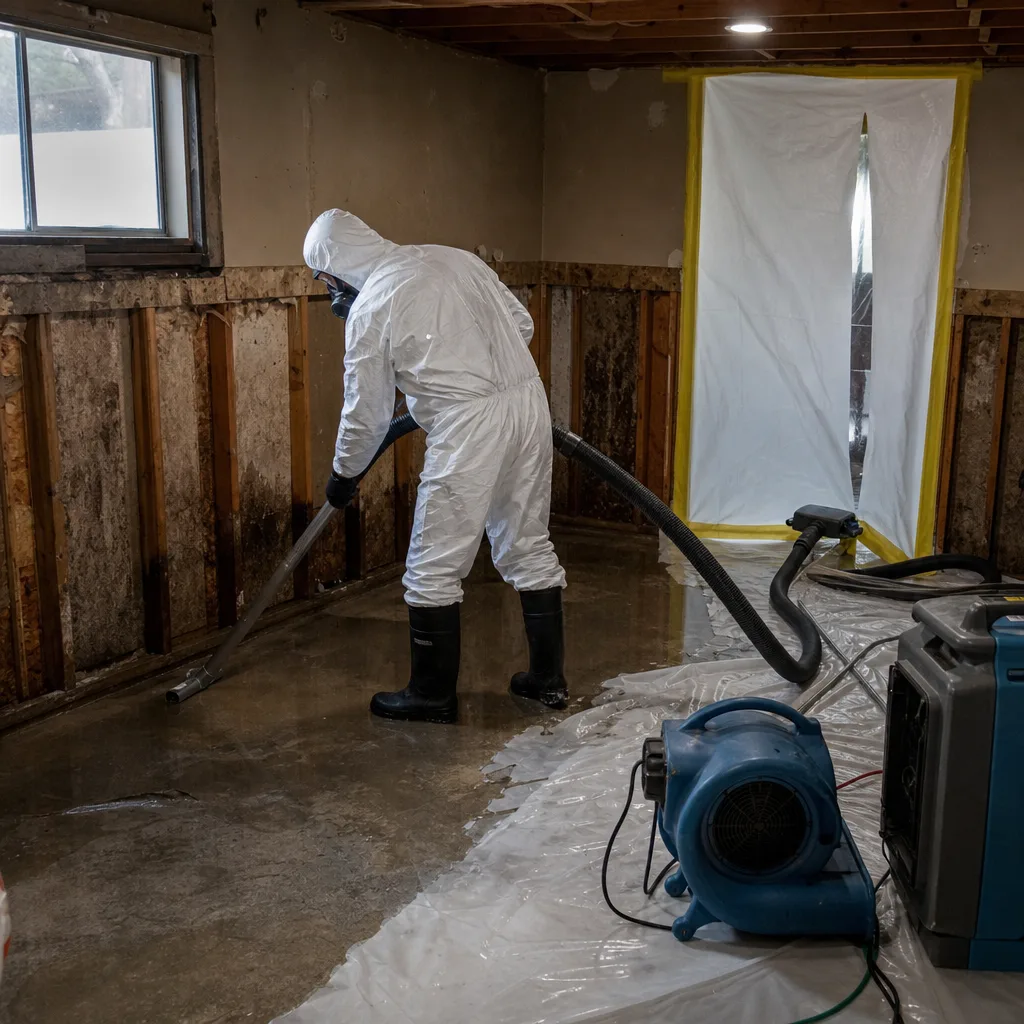
- Call for professional extraction. Standard wet/dry vacuums do not have HEPA exhaust filtration and will aerosolize bacteria. Professional extraction equipment from Dri-Eaz and Phoenix uses sealed collection systems with antimicrobial-treated tanks.
- Do not apply heat. Accelerated drying without proper extraction drives bacteria deeper into porous materials and can trigger premature mold growth. Proper drying follows extraction, dehumidification, then controlled air movement.
- Request a written emergency scope. Even at 2 a.m., you are entitled to know what will be done, what it will cost, and what documentation you’ll receive. Haven Standard, Clause 1 applies to emergency calls: written price before work starts, every time, with no exceptions.
In Bellflower, response time matters for a specific local reason: many homes in the 90706 zip code, particularly those built between 1955 and 1975, have original cast iron sewer laterals. These lines corrode from the inside, creating bellies where solids accumulate. A backup in these homes often recurs within hours if the line isn’t hydro-jetted or camera-inspected. Our crews carry hydro-jetting capability and will document the lateral condition with video when accessible, so you have evidence for your insurance claim and for the municipal sewer authority if line replacement is indicated.
Material Removal Rules by Surface Type
Material removal in a Category 3 event is governed by porosity, not preference. Here’s how we classify common Bellflower home materials and why each decision gets documented:
Structural Materials
Wood framing can often be salvaged in Category 3 events if it’s solid lumber (2×4, 2×6) and drying begins within 24 hours. The key is verifying that the wood reaches below 16% moisture content with a penetrating meter, then applying an antimicrobial with specified dwell time (typically 10 minutes wet-contact minimum for EPA-registered hospital-grade disinfectants). We log the product name, concentration, application time, and meter reading on our daily drying log. This is the documentation that turns a restoration invoice into a payable claim.
Engineered wood products (LVL, I-joists, OSB subfloor) are more problematic. The adhesives and compressed fibers create capillary networks that trap bacteria. We remove OSB subfloor in Category 3 events when the underside is inaccessible for inspection and treatment. In Bellflower’s slab-on-grade homes, common in the neighborhoods south of Artesia Boulevard, this means removing flooring to expose the slab for proper cleaning and sealing.
Floor Coverings
Carpet and pad are always removed in Category 3. No exceptions. The face fibers, primary and secondary backing, and pad create a three-layer contamination reservoir. “Steam cleaning” carpet after a sewage backup is not restoration; it’s liability distribution. The same applies to area rugs with jute or cotton foundations, common in Bellflower homes with hardwood floors.
Luxury vinyl plank (LVP) and laminate are removed because the click-lock edges and HDF core wick water laterally, creating hidden contamination zones. Sheet vinyl with felt backing is also removed. Sheet vinyl with fiberglass backing may be salvaged if fully adhered and the subfloor is accessible for inspection, but this is rare in residential applications.
Wall Systems
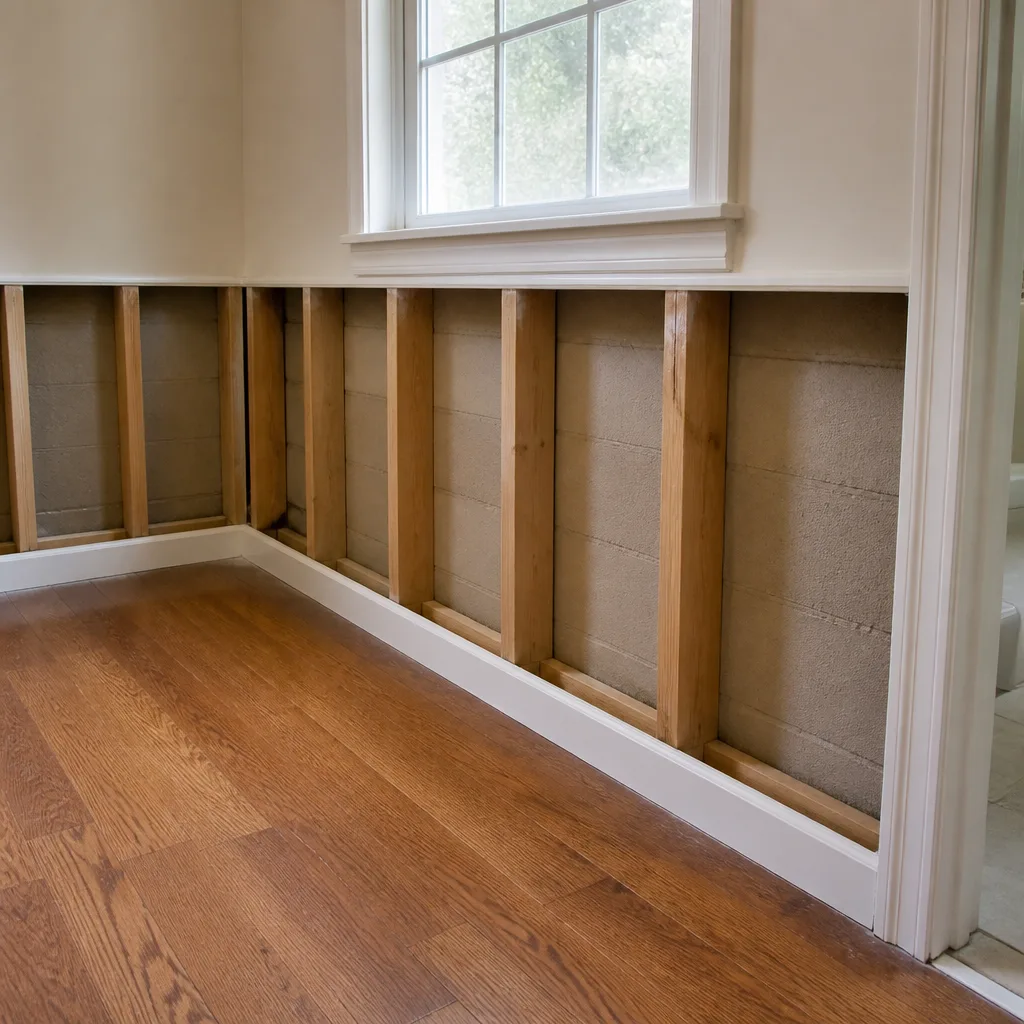
Drywall removal extends to 24 inches above the visible water line minimum, or to the next stud bay, or to where penetrating meter readings return to baseline, whichever is greatest. In Bellflower’s climate, with summer humidity regularly exceeding 70%, we often see wicking extend to 36 inches or higher in walls with insulation voids. We mark the cut line with a level, photograph the marked wall, then photograph the exposed cavity before treatment.
Plaster walls in pre-1950s Bellflower homes present a special case. Traditional lime plaster on wood lath is more moisture-resistant than drywall but still porous. We remove plaster to expose lath when the water line exceeds 12 inches, treat the lath and studs, then install new plaster or drywall per the homeowner’s preference, documented on the written scope.
Drying, Documentation, and the Psychrometric Record
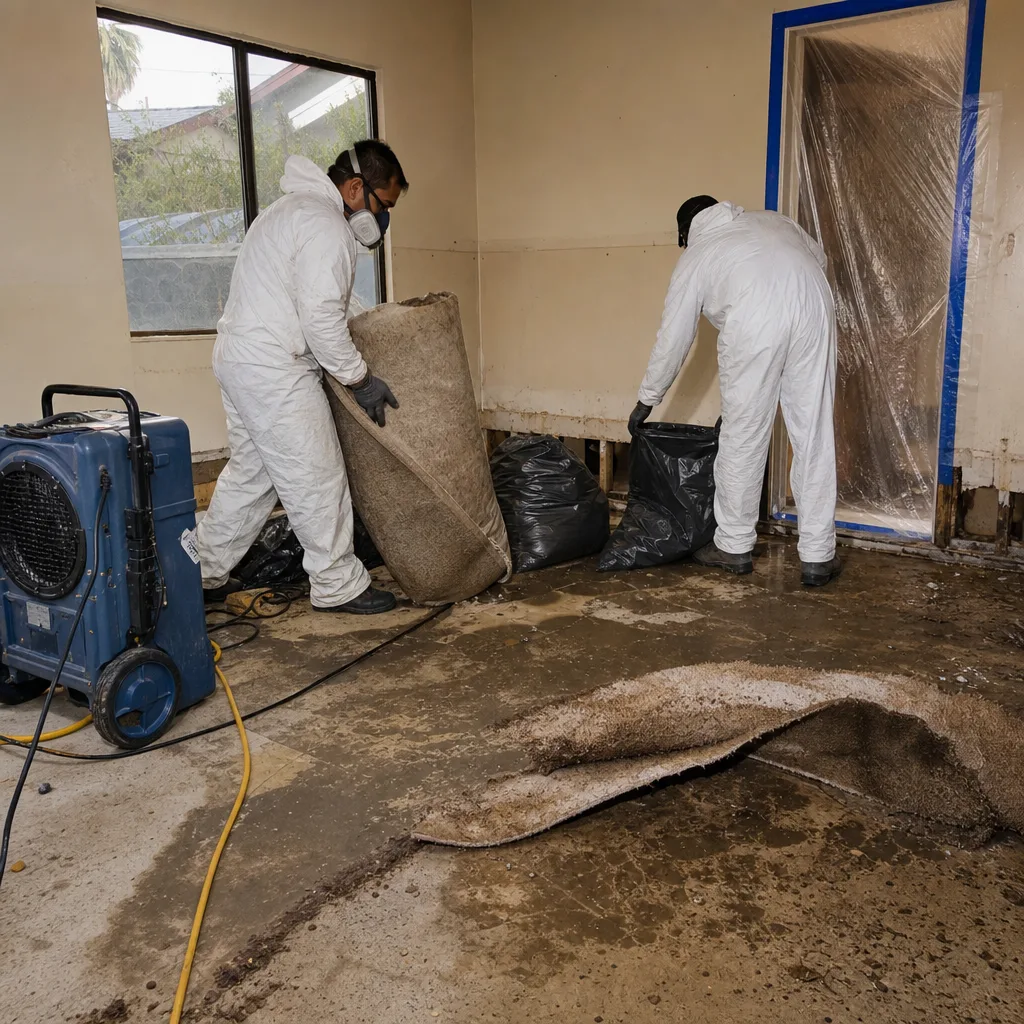
After extraction and removal, the drying phase begins. This is where most restoration companies either demonstrate professionalism or create future problems. Proper drying is not “running fans until it feels dry.” It’s the controlled reduction of moisture content to specific targets, documented daily with psychrometric data.
Psychrometrics is the study of air and moisture relationships. In restoration, we measure:
- Temperature (dry bulb and wet bulb), which determines the air’s capacity to hold moisture
- Relative humidity, the percentage of moisture the air currently holds relative to its capacity at that temperature
- Vapor pressure differential, the pressure difference between moisture in wet materials and moisture in the surrounding air, which drives the rate of evaporation
- Grain depression, the difference between the grains of moisture per pound of air entering and leaving the dehumidifier, which tells us if the system is actually removing water
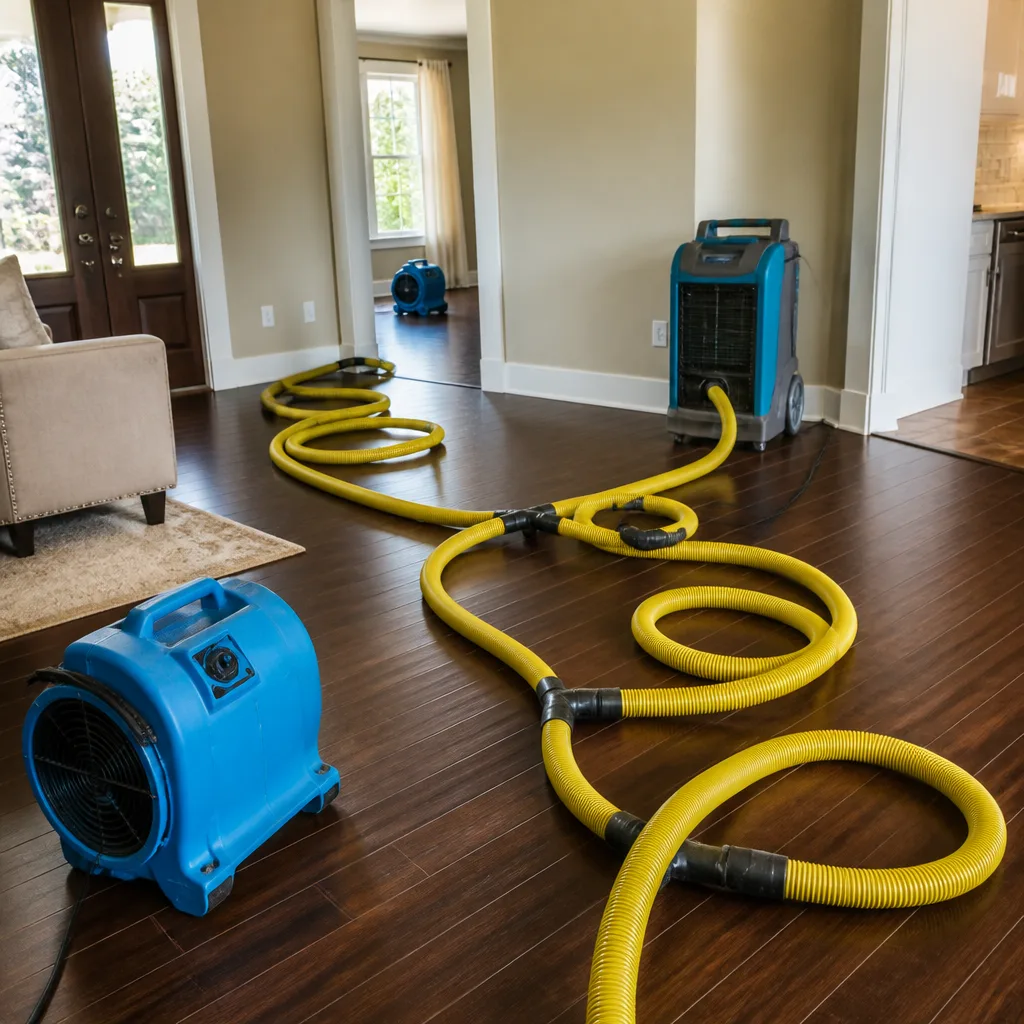
We deploy LGR (low-grain refrigerant) dehumidifiers from Phoenix and Dri-Eaz, supplemented with desiccant units in tight enclosures or during Bellflower’s humid summer months. Air movers from XPOWER create laminar airflow across wet surfaces. The equipment is positioned to create a drying chamber, with daily readings taken at consistent locations.
The daily drying log, delivered to you and your adjuster, includes:
- Date and time of readings
- Equipment serial numbers and positions
- Temperature and relative humidity at three points minimum
- Moisture content readings for each affected material, with meter type and calibration date
- Photos of equipment positions and material conditions
- Technician signature and license number
Tertiary drying refers to the final phase where materials approach equilibrium moisture content with the surrounding environment. We don’t declare a structure dry when readings stop changing; we declare it dry when readings reach the specific target for that material in that climate zone. For wood framing in Bellflower’s coastal-influenced climate, that’s typically 12-16% moisture content. For concrete, it’s 4.0 lbs/1000 sq ft/24 hours on a calcium chloride test.
Without this documentation, your insurance claim is vulnerable to challenge. We’ve reviewed competitor files where “dry” was declared with no meter readings, no equipment logs, and no photos. Those claims get reduced or denied. Our documentation package, included as standard on every job, is designed to withstand audit.
Post-Cleanup Clearance Testing: What to Request in Writing
This is the section most competitors skip entirely, and it’s the one that determines whether your home is actually safe or just smells better.
Clearance testing after Category 3 water damage should be conducted by an independent third party, not by the restoration company that performed the work. This is a conflict of interest that some insurers now require disclosure of. The testing should include:
| Test | What It Measures | Passing Criteria | When to Request |
|---|---|---|---|
| Coliform bacteria (total) | Presence of fecal indicator organisms | <1 CFU per 100 mL for water samples; negative swab for surfaces | Always, minimum |
| E. coli (specific) | Direct fecal contamination marker | Absent/negative | Always, minimum |
| Enterococcus | Secondary fecal indicator, more persistent than coliform | <1 CFU per 100 mL | Recommended for immunocompromised occupants |
| Salmonella/Shigella culture | Specific enteric pathogens | Negative | When backup included known infectious source |
| ATP bioluminescence | Total organic load on surfaces | <150 RLU for food-contact surfaces; <300 RLU for general surfaces | Rapid screening, not standalone |
| Airborne bacteria (viable sampling) | Aerosolized contamination in HVAC or enclosed spaces | Within 1 log of outdoor control sample | When HVAC was operating during event |
The test results must be delivered in writing, with the laboratory’s accreditation (AIHA-LAP, LLC, or equivalent), chain of custody documentation, and a clear pass/fail statement for each parameter. A “clean” verbal assurance from your contractor is not clearance testing. A lab report that says “sample received” without interpretation is not clearance testing.
We require clearance testing on every Category 3 job before we issue our completion certificate. If testing fails, we retreat at no additional charge under our 365-Day Done Right Promise. This is Haven Standard, Clause 7: the job isn’t done until independent verification confirms it’s done. We’ve had to retreat jobs where competitors declared them complete, usually because the original scope omitted hidden cavities or because drying was terminated prematurely.
The 10-day recurrence phenomenon mentioned in our opening is real. Bacteria can enter viable but non-culturable states under stress, then resuscitate when conditions improve. A 48-hour negative test means nothing without a follow-up protocol. For Bellflower homeowners, we recommend a 30-day follow-up moisture and visual inspection, with optional re-testing for high-risk scenarios.
Bellflower Sewer Infrastructure: Age, Laterals, and Recurrence Risk
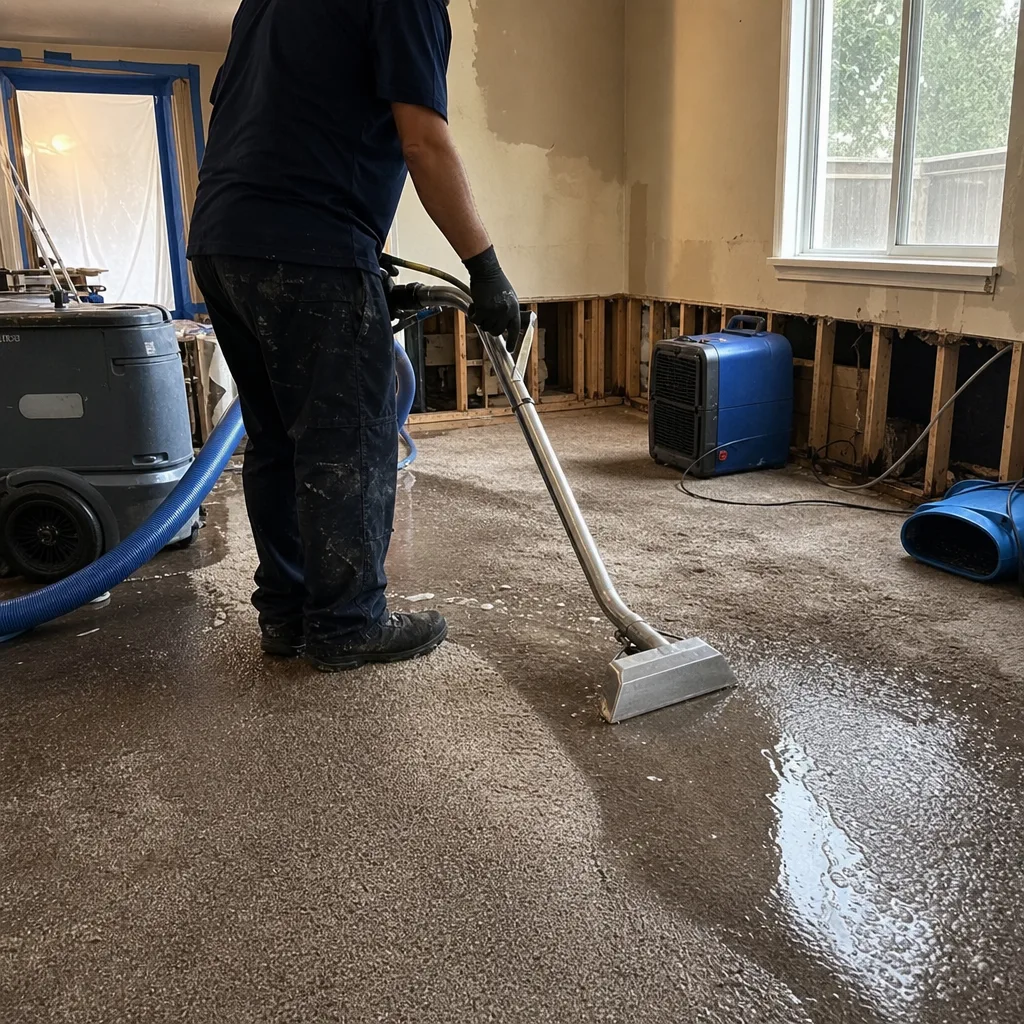
Bellflower’s municipal sewer system includes significant infrastructure installed during the postwar building boom of 1945-1965, with additional expansion during the 1970s. Much of this original piping is vitrified clay or early concrete, with joints that have degraded through ground movement, root intrusion, and internal corrosion. The city’s ongoing sewer rehabilitation program, managed by the Los Angeles County Sanitation District, prioritizes main lines based on failure history, but lateral lines from the main to the property line are typically the homeowner’s responsibility.
This matters for your maintenance checklist because lateral line condition is the strongest predictor of backup recurrence. A 2020 study by the Water Environment Federation found that homes with clay lateral lines in seismic zones had a 34% probability of backup recurrence within 18 months if the line was not camera-inspected and repaired after the initial event. Bellflower’s location on the Newport-Inglewood fault zone amplifies this risk through ongoing micro-seismic activity that shifts pipe joints.
For Bellflower homeowners, we recommend:
- Camera inspection of the lateral line within 30 days of any sewage backup, documented with video file provided to you. This identifies bellies, root intrusion, joint separation, or collapse.
- Review of the city’s sewer map for your address, available through the Sanitation District, to determine if your lateral connects to a rehabilitated main or an original segment.
- Installation of a backwater valve if your home’s lowest drain is below the rim of the nearest upstream manhole, which is common in the Somerset Ranch and Bellflower Gardens areas. This requires a plumbing permit from the City of Bellflower Building Division and must be installed with proper venting to prevent trap siphonage.
- Annual cleanout cap inspection to verify the cap is intact and threads are functional. A missing or damaged cap allows surface water and debris into the lateral, accelerating blockage formation.
Insurance implications are significant. Most homeowner policies exclude damage from “continuous or repeated seepage” if the homeowner knew of a defect and failed to address it. A camera inspection after your first backup, with documented repair recommendations, protects your coverage position for any future event. We include the video file and our written assessment in your documentation package, with recommendations for licensed plumbing contractors if repair is indicated.
HVAC Cross-Contamination and Re-Energization Protocols
Perhaps the most under-addressed risk in Category 3 restoration is HVAC system contamination. When a sewage backup occurs while heating or air conditioning is operating, the negative pressure in return ducts can draw aerosolized bacteria and moisture into the system. The ducts then become a distribution network, spreading contamination to unaffected areas of the home every time the system cycles.
The IICRC S520 Standard for mold remediation addresses this for fungal contamination, but Category 3 bacterial contamination requires additional specificity. Here’s what should happen before your HVAC is re-energized:
- Visual inspection of all accessible ductwork in the contamination zone and adjacent areas, with photo documentation. Flexible duct with internal insulation is particularly vulnerable; if the interior liner is wetted, the duct must be replaced, not cleaned.
- Air handler inspection, including the blower wheel, evaporator coil, and drain pan. These components can harbor bacteria and distribute them system-wide. The coil requires cleaning with foaming antimicrobial and verification of drainage function.
- Filter replacement with minimum MERV 13 filtration, documented with filter brand and installation date. Standard fiberglass filters do not capture bacteria.
- Duct cleaning only if indicated, using HEPA-filtered collection and mechanical agitation. Note: duct cleaning alone does not address Category 3 contamination; it is appropriate only after the source has been eliminated and surfaces treated.
- Post-cleaning verification with airborne bacteria sampling at supply and return registers, compared to outdoor control. The system should not be re-energized until results are within acceptable limits.
We document HVAC status on every job scope, with a specific “do not operate” notice posted at the thermostat until clearance is achieved. In Bellflower’s climate, where air conditioning runs heavily from June through October, homeowners often want to restore cooling as soon as possible. We understand the pressure, but re-energizing a contaminated system distributes liability throughout the structure. The written scope specifies the HVAC hold protocol, and we don’t lift it without test results in hand.
For homes with mini-split systems, the risk profile differs. These units don’t use ductwork, but the wall-mounted cassettes have internal drain pans and blower wheels that can be contaminated if the unit was operating during the event. We inspect and treat these components with the same documentation standards as central systems.
Maintenance Intervals That Reduce Backup Probability
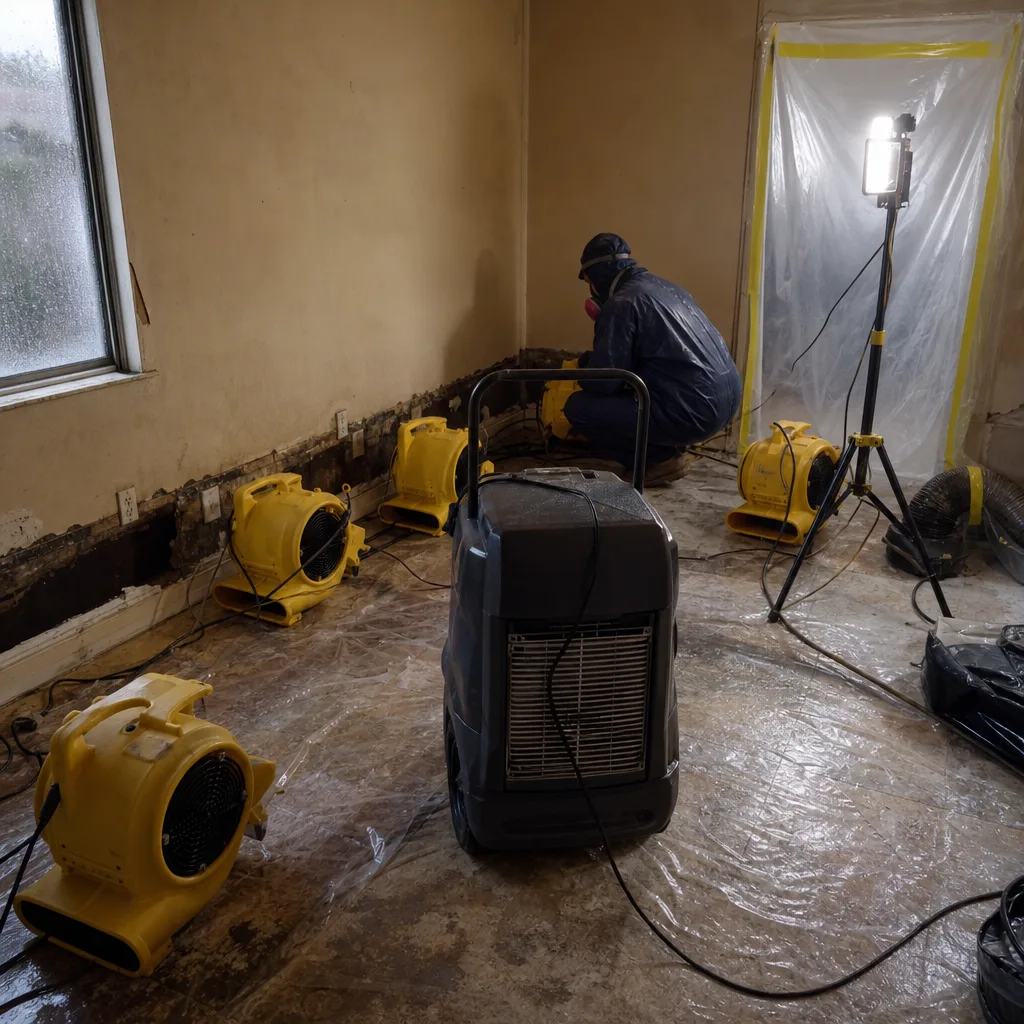
Prevention documentation serves two purposes: it reduces your actual risk of recurrence, and it strengthens your insurance position if recurrence occurs despite proper maintenance. Here’s the maintenance schedule we recommend for Bellflower homeowners, with specific intervals tied to local conditions:
| Task | Interval | Documentation to Keep | Local Consideration |
|---|---|---|---|
| Cleanout cap inspection | Quarterly | Photo with date stamp | Tree root intrusion is common in Bellflower’s mature neighborhoods; caps should be tight and threads lubricated |
| Enzyme treatment of lateral line | Monthly during root growth season (March-October) | Product label, application date, receipt | Use copper-sulfate-free formulations to protect municipal treatment systems |
| Camera inspection of lateral | Annually, or within 30 days of any backup | Video file, contractor report, any repair recommendations | Request video in MP4 format, not proprietary viewer files |
| Grease trap cleaning (if applicable) | Quarterly minimum | Service ticket with volume removed | Required for some commercial properties; recommended for homes with garbage disposals and older lines |
| Sump pump and backwater valve test | Monthly during rainy season (November-March) | Test log with pump cycle time and float operation | Bellflower’s winter rains can overwhelm drainage; verify discharge point is clear |
| Main line hydro-jetting | Every 2-3 years for clay laterals; every 5 years for PVC | Service ticket with pressure settings and video | Hydro-jetting at excessive pressure can damage clay joints; verify contractor uses appropriate PSI |
| Building sewer permit review | At property purchase and after any major renovation | Permit history from City of Bellflower | Unpermitted additions may have compromised drain sizing |
This documentation becomes critical if you experience a second backup and your insurer invokes the “repeated loss” exclusion. Demonstrating proactive maintenance with dated records can overcome this exclusion and preserve your coverage. We advise homeowners to maintain these records in cloud storage, with backup, for the duration of home ownership plus seven years.
For homes in Bellflower’s specific high-risk zones, the Somerset Ranch area with its flat grading and older laterals, and the neighborhoods near the San Gabriel River wash with higher water tables, we recommend the more frequent end of each interval. The incremental cost of quarterly versus annual inspection is small compared to the deductible and disruption of a Category 3 event.
Common Mistakes to Avoid
- Accepting “sanitized” without specification. The word means nothing without the product name, concentration, contact time, and EPA registration number for the specific pathogen class. Ask for the SDS sheet.
- Trusting visual dryness. We’ve removed drywall that looked perfect on the surface and found 80% moisture content in the stud cavity. Only meter readings matter, and only calibrated meters at that.
- Skipping lateral camera inspection after a “one-time” backup. In Bellflower’s clay lateral inventory, “one-time” usually means “first-time.” The camera inspection is typically $200-350; the second backup without documentation costs your deductible plus potential coverage denial.
- Re-occupying before clearance testing. The EPA has no residential standard for post-sewage bacterial clearance, but the absence of a standard doesn’t mean any level is acceptable. Independent testing with written pass criteria is the only verification that matters.
- Letting the restoration company choose the testing lab. This creates obvious conflict of interest. You or your insurer should select the lab, and the restoration company should have no prior relationship with it.
- Not documenting HVAC status during the event. If your air conditioner was running, say so explicitly. If you don’t mention it and contamination is later found in ducts, your insurer may argue you concealed material information.
- Accepting a completion certificate without a warranty. Our 365-Day Done Right Promise is a signed document under The Haven Standard, not a verbal assurance. Any contractor who won’t put their guarantee in writing is telling you something about their confidence in the work.
When to Call a Professional
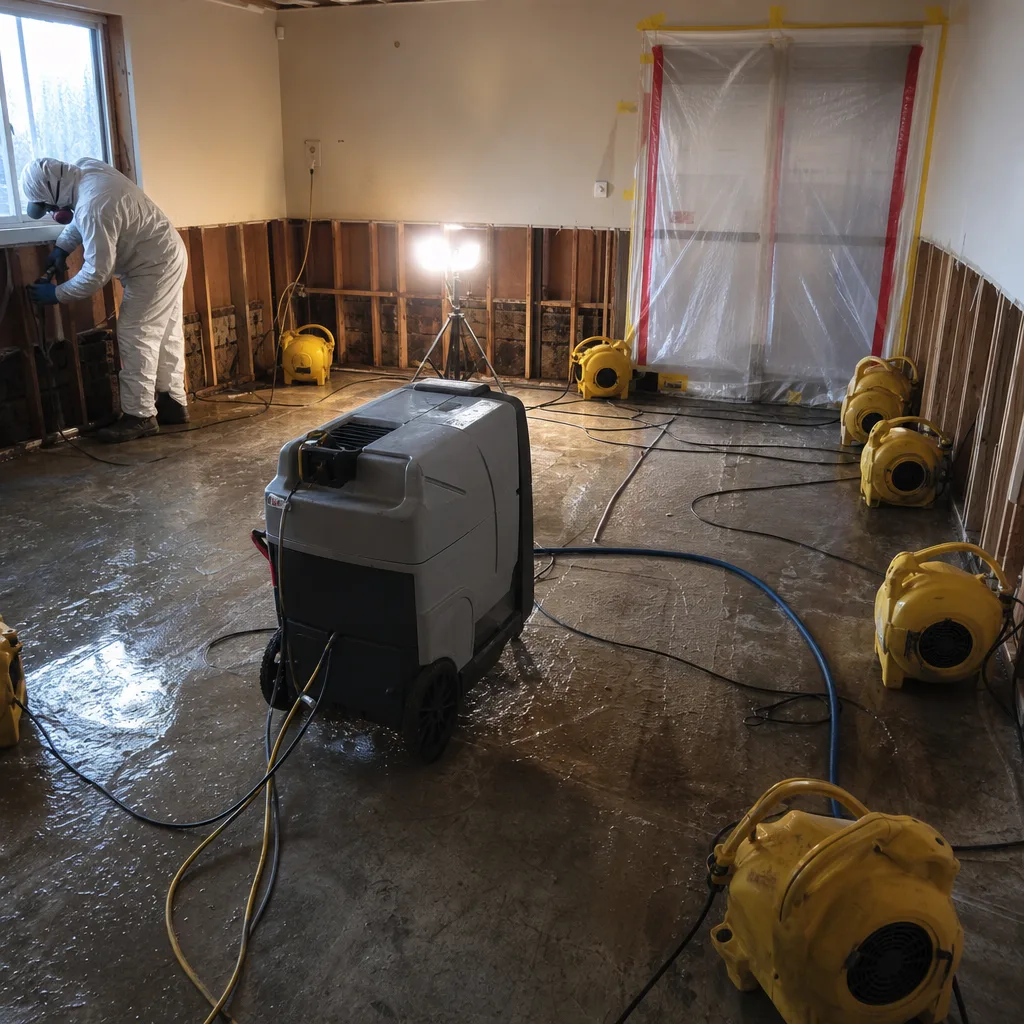
Call for professional Category 3 restoration when: the backup involves any toilet overflow, sewer line backup, or septic system failure; the water has contacted any porous structural material; the affected area exceeds 10 square feet; or any occupant has compromised immunity, including young children, elderly residents, or anyone on immunosuppressive medication. Also call when your insurer requests documentation that exceeds what a standard cleaning service can provide, which is nearly always.
Sewage Cleanup in Bellflower requires specific expertise in local infrastructure, municipal coordination, and insurance documentation. DryMark Restoration Bellflower offers free estimates in Bellflower - call (424) 347-8338. We’ll provide a written scope before any work begins, with every material, every test, and every documentation deliverable specified in plain language. Our estimates include no obligation, and we offer a Free Second Opinion on any competitor’s written estimate if you want verification that nothing was omitted.
Frequently Asked Questions
Typical Category 3 sewage cleanup in Bellflower ranges from $3,200 for a contained bathroom backup with minimal material removal to $14,000+ for whole-basement events with HVAC contamination and full reconstruction. See our Damage Restoration Cost Breakdown: The Bellflower Homeowner’s Reference for 2026 for detailed pricing factors. The variables are affected square footage, material types (tile versus hardwood versus carpet), whether the lateral line requires camera inspection or repair, and whether clearance testing is included. We deliver a written price before work starts on every job, with line-item breakdown, per Haven Standard, Clause 1. Call (424) 347-8338 for an exact quote - estimates are free.
Most homeowner policies cover sudden and accidental sewage backups if you have sewer backup endorsement, which is optional in California and typically costs $50-150 annually. Without this endorsement, coverage is usually denied. Even with endorsement, insurers require documentation: photos of the event, a written scope with material classifications, daily drying logs, and independent clearance testing. We coordinate directly with adjusters and provide the documentation package that supports claim payment. If your claim is denied for documentation reasons, we can review the file and advise on appeal.
Our live dispatch answers every call, 24 hours a day, 7 days a week, with no voicemail trees. Emergency crews are typically on site in Bellflower within 60-90 minutes during normal demand periods. During regional storm events affecting multiple cities, response time extends based on call volume, but we communicate expected arrival and do not accept jobs we cannot service within a reasonable window. Speed matters for mitigation, but not at the cost of proper documentation; our crews arrive with documentation protocols already initiated.
“Cleaning” is appropriate only for Category 1 water (clean source, no contamination). Sewage is Category 3 by definition, which mandates material removal, antimicrobial treatment with documented dwell times, and verification testing. A service that offers “sewage cleaning” without material removal or testing is not performing restoration; they’re performing surface treatment that leaves hidden contamination. This distinction matters for your health, your home’s value, and your liability if you later sell the property. Explore more guides & resources to protect your investment.
We do, if you authorize us. Our documentation package, delivered to your adjuster with your approval, includes the written scope, daily drying logs with psychrometric data, photo record from every visit, material removal receipts, clearance testing results, and our completion certificate. We’ve processed claims with every major insurer in California. The key is starting documentation immediately, before conditions change, which is why we photograph before touching anything. If your adjuster requests additional information, we provide it without charge.
Multiple backups indicate a systemic problem, usually lateral line deterioration, main line defect, or improper drain sizing. Request a camera inspection with video documentation, review your policy for repeated-loss exclusions, and consider backwater valve installation with proper permitting. Maintain all maintenance records. If your insurer has non-renewed or restricted coverage, we can provide documentation of proper remediation that may support reinstatement or placement with a new carrier. The worst response is doing nothing and hoping the problem resolves itself.
The Bottom Line
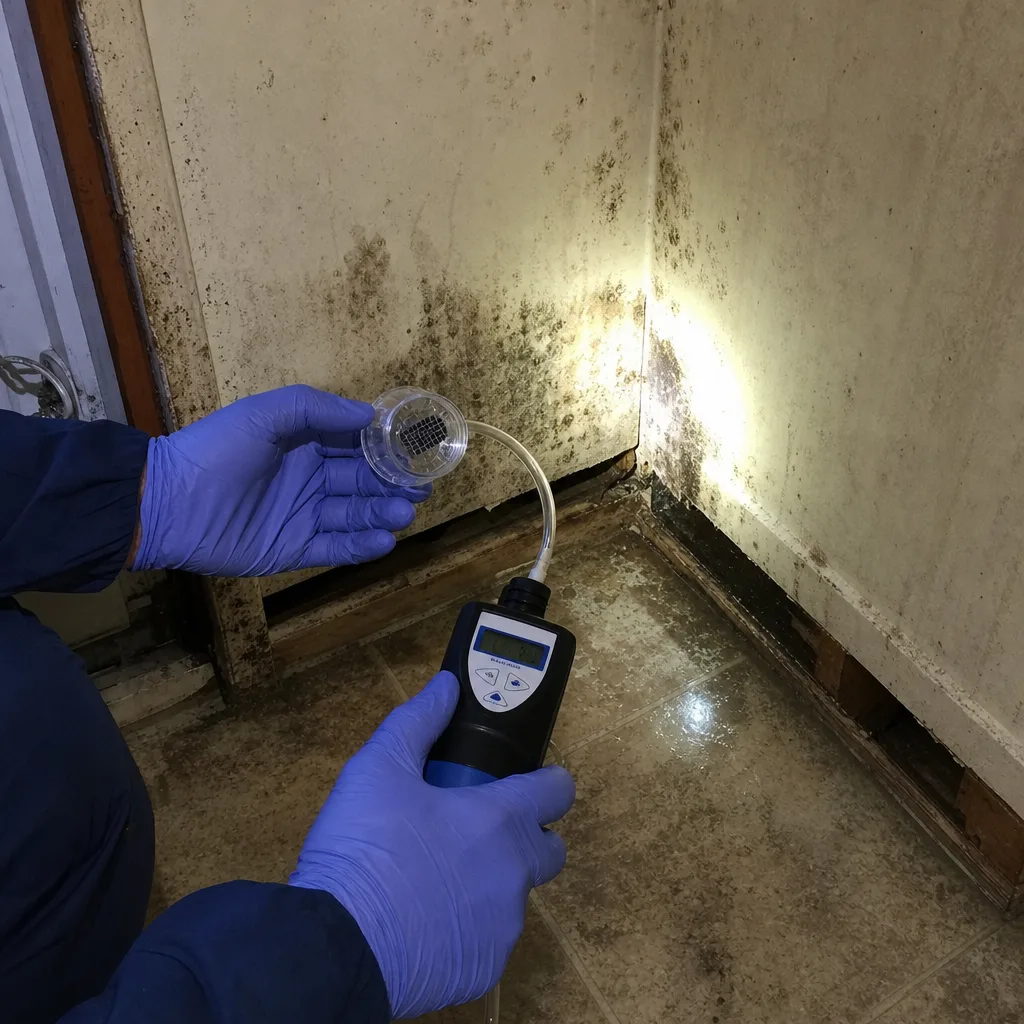
Sewage cleanup in Bellflower is complete only when three conditions are met: all Category 3 materials have been removed or treated with documented methodology; independent clearance testing confirms bacterial absence in writing; and every step exists in a photo-documented record that will satisfy your insurer and protect you in a future property transaction. Anything less leaves you exposed. The checklist in this guide is not excessive; it’s the minimum that responsible restoration requires. Use it to evaluate any contractor’s proposal, including ours. The Haven Standard was built precisely because most proposals fall short.
For a written estimate with line-item pricing before any work begins, call DryMark Restoration Bellflower at (424) 347-8338. We serve Bellflower and surrounding communities with Water Damage Restoration in Bellflower, Mold Remediation in Bellflower, and full DryMark Restoration Bellflower home restoration services. Our 365-Day Done Right Promise applies to every job, documented and signed, not promised and forgotten.
Written by Alicia Brennan, Owner at DryMark Restoration Bellflower, serving Bellflower since 2011.